Texting abbreviations can be confusing, especially when the same three letters seem to have different meanings depending on the conversation.
If you’ve received “WTD” in a text, Snapchat message, or social media chat, you’re probably wondering what the sender meant.
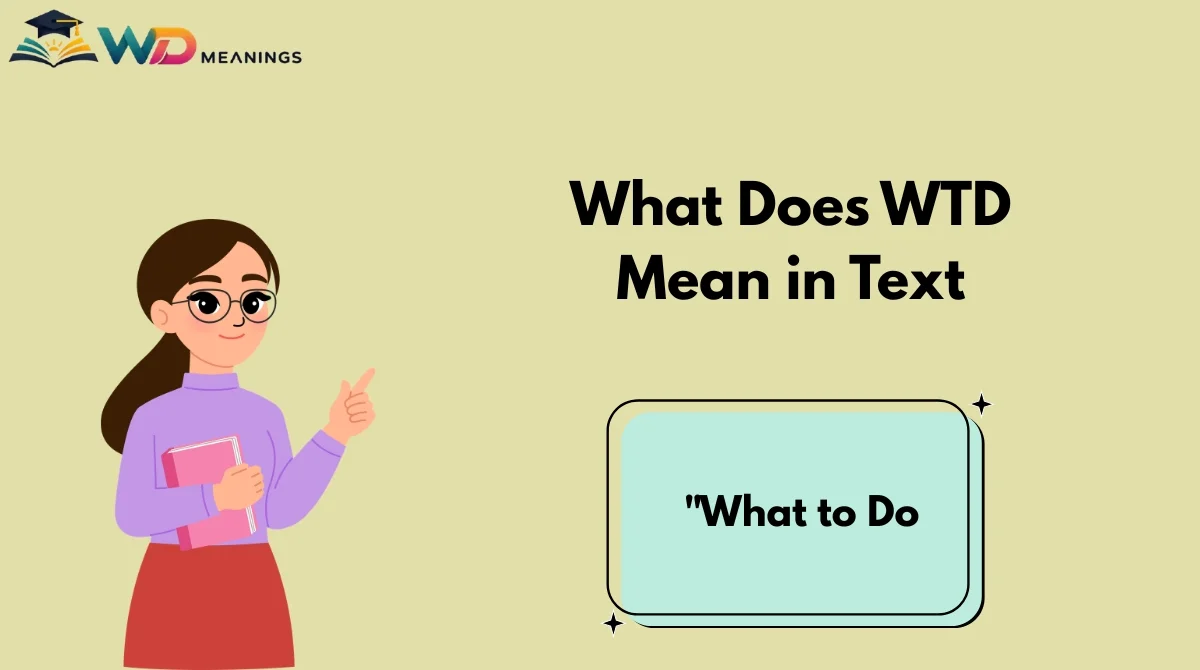
The good news is that WTD usually stands for “What to Do?” or “What to Do” in everyday texting.
People use it when they’re asking for ideas, advice, or suggestions about a situation.
However, in some conversations, WTD can have other meanings, so understanding the context is important.
This guide explains what WTD means in text, how people use it across different platforms, how to respond naturally, and the situations where it may mean something else.
Quick Answer
WTD most commonly means “What to Do?” or “What to Do” in texting. It’s an informal abbreviation people use when they need advice, don’t know what decision to make, or want suggestions. The exact meaning depends on the conversation, but it is generally friendly and casual rather than rude or offensive.
What Does WTD Mean in Text?
In modern texting, WTD most often means “What to Do?”
People type it when they’re unsure about something and want another person’s opinion or help deciding what to do next.
There isn’t an official “expanded phrase” recognised by every dictionary because internet abbreviations often develop naturally through everyday conversations. Still, “What to Do” is the meaning most people intend in casual chats.
Pronunciation
Most people don’t pronounce it as a word. Instead, they simply say each letter:
“Double-you Tee Dee.”
Emotional Tone
The tone depends on the conversation. WTD can sound:
- Curious
- Confused
- Frustrated
- Playful
- Stressed
- Seeking advice
By itself, WTD isn’t positive or negative. The surrounding messages determine its emotional meaning.
Example
Alex: My flight got cancelled.
Jordan: Oh no. WTD now?
Here, Jordan is asking, “What should we do now?”
Origin and Background
Like many internet abbreviations, WTD became popular because people wanted quicker ways to type during text messaging and online chatting.
Its exact origin isn’t documented, and there isn’t a single event that introduced it. Instead, it appears to have developed naturally as texting became faster and character limits encouraged shorter messages.
Today, WTD appears in:
- SMS texts
- Snapchat
- Instagram DMs
- Discord
- Facebook Messenger
- Gaming chats
Although it isn’t as universally recognised as abbreviations like LOL or BRB, many frequent texters understand it from context.
How WTD Is Used in Text Conversations
People usually send WTD when they need suggestions or aren’t sure about their next step.
Asking for Advice
Emma: I forgot my homework.
Lily: WTD?
Meaning:
“What are you going to do?”
Looking for Ideas
Chris: It’s raining all weekend.
Sam: WTD today?
Meaning:
“What should we do today?”
Feeling Stuck
Taylor: My laptop stopped working before the deadline.
Morgan: WTD now?
Meaning:
“What should you do now?”
Lighthearted Conversation
Jake: Everyone cancelled our plans.
Ryan: WTD 😂
Here, the emoji makes the message feel playful instead of stressful.
Romantic Conversation
Jamie: I miss you.
Alex: WTD… I wish we lived closer ❤️
In this context, WTD expresses uncertainty rather than asking for a literal answer.
What WTD Means on Different Platforms
The meaning of WTD usually stays the same across platforms. The surrounding conversation matters much more than the app itself.
People often use WTD when asking friends or family for advice.
Example:
“WTD about dinner?”
Snapchat
On Snapchat, WTD commonly appears in casual conversations.
Example:
“WTD tonight?”
Instagram DMs use WTD similarly, especially when discussing plans.
Example:
“WTD after class?”
TikTok
You may see WTD in comments or captions when someone asks followers for suggestions.
Example:
“WTD with this outfit?”
Facebook Messenger
Friends frequently use WTD while planning events or discussing problems.
Example:
“WTD this weekend?”
Discord
Gamers may type WTD when deciding the next move.
Example:
“WTD after this mission?”
Dating Apps
People sometimes use WTD while discussing future plans.
Example:
“WTD for our first date?”
Across all these platforms, the abbreviation generally keeps the same meaning.
What Does WTD Mean From a Girl or Guy?
The abbreviation itself does not change meaning based on gender.
Instead, interpretation depends on:
- Your relationship
- The conversation
- Emojis
- Previous messages
- Punctuation
- Tone
For example:
From a Friend
“WTD tonight?”
This simply means they’re asking for ideas.
From Someone You’re Dating
“WTD this weekend? ❤️”
This may be an invitation to make plans together.
After an Argument
“WTD now?”
Here, it could express frustration or uncertainty rather than a simple question.
Always read the surrounding messages before assuming hidden meaning.
Other Possible Meanings
Although “What to Do” is the most common texting meaning, WTD can represent different phrases in specialised settings.
| Meaning | Context | Example |
|---|---|---|
| What to Do (most common) | Texting, chat | “WTD tonight?” |
| Working Time Directive | Employment law | “The WTD limits weekly working hours.” |
| Week to Date | Business, finance | “Sales are up WTD.” |
| Window to Display | Technical discussions | Used in software or interface documentation |
When you’re chatting with friends, “What to Do” is almost always the intended meaning.
How to Respond to WTD
Your reply depends on why the person asked.
Casual
“Let’s grab some food.”
Helpful
“Maybe ask your teacher first.”
Friendly
“We could watch a movie.”
Funny
“Panic for five minutes, then make a plan. 😄”
Romantic
“Spend the evening with me? ❤️”
Serious
“Take a deep breath and let’s figure it out together.”
If You’re Confused
“What do you mean by WTD?”
It’s perfectly okay to ask for clarification if the message isn’t clear.
Similar Texting Terms and Differences
| Term | Meaning | Key Difference |
|---|---|---|
| WTD | What to Do | Asking for ideas or advice |
| WYD | What You Doing? | Asking what someone is currently doing |
| IDC | I Don’t Care | Expresses indifference rather than seeking advice |
| IDK | I Don’t Know | States uncertainty instead of asking for suggestions |
| LMK | Let Me Know | Requests future information rather than advice |
These abbreviations often appear together in conversations but serve different purposes.
Common Misunderstandings
One of the biggest sources of confusion is assuming every abbreviation has only one meaning.
People sometimes mistake WTD for:
- WYD
- WTH
- WTM
- WTS
Because these abbreviations look similar, it’s easy to misread them.
Capitalisation usually doesn’t matter.
These all mean the same thing:
- WTD
- wtd
- Wtd
If the conversation involves work, finance, or legal topics, WTD could refer to another phrase. Otherwise, casual texting usually points to “What to Do.”
Is WTD Appropriate or Safe to Use?
Yes. WTD is generally safe, polite, and informal.
It isn’t considered offensive or rude.
However, because it’s informal internet slang, it’s usually best to avoid using it in:
- Professional emails
- Academic papers
- Formal workplace communication
- Official business documents
It’s perfectly appropriate in conversations with:
- Friends
- Family
- Classmates
- Partners
- Gaming communities
If someone sends WTD while describing a genuinely upsetting situation, focus on helping them rather than interpreting the abbreviation.
Examples of WTD in Text
- “Everyone cancelled. WTD now?”
- “My phone won’t turn on. WTD?”
- “We’re free all afternoon. WTD?”
- “I missed the bus again… WTD 😩”
- “WTD after the concert?”
- “I have two job offers. WTD?”
- “It’s your birthday tomorrow! WTD to celebrate?”
- “WTD this weekend? I’m finally free.”
- “My internet keeps disconnecting. WTD?”
- “WTD if it rains tomorrow?”
- “I forgot my password. WTD now?”
- “We’re all online already. WTD first?”
These examples show that WTD naturally fits many everyday conversations.
Frequently Asked Questions
Is WTD the same as WYD?
No. WTD usually means “What to Do,” while WYD means “What Are You Doing?” One asks for advice or ideas, and the other asks what someone is currently doing.
Does WTD always mean “What to Do”?
No. Although that’s the most common meaning in texting, WTD can also stand for phrases such as Week to Date in business or Working Time Directive in employment discussions. Context tells you which meaning is intended.
Is WTD popular on Snapchat?
Yes. Many Snapchat users type WTD when asking what they should do, what plans to make, or how to handle a situation. The meaning is generally the same as in regular text messages.
Can WTD be romantic?
It can be. The abbreviation itself isn’t romantic, but if it’s used while discussing dates, relationships, or future plans, it may carry a more personal tone depending on the conversation.
Should I use WTD in professional messages?
Generally, no. Since WTD is informal internet shorthand, writing the full phrase “What should we do?” is clearer and more appropriate in professional or academic settings.
What should I do if I don’t understand WTD?
Ask politely. A simple reply like “Do you mean ‘What to Do’?” or “Could you clarify what WTD means?” avoids misunderstandings and keeps the conversation clear.
Conclusion
WTD most commonly means “What to Do” in text messages and online chats.
People use it when they need advice, suggestions, or help deciding their next step.
Although the abbreviation has a few alternative meanings in business, legal, and technical contexts, casual conversations almost always point to the texting definition.
When you receive WTD, read the surrounding messages, emojis, and overall tone before interpreting it.
If you’re ever unsure, asking for clarification is the easiest way to avoid confusion.

Hamz Ellis is a content writer at WD Meanings, specializing in internet slang, texting abbreviations, and digital communication. He creates clear, well-researched, and easy-to-understand content to help readers quickly find the meanings of modern online terms.