When you receive a message that simply says “GNG”, it’s easy to wonder whether it’s an abbreviation, a typo, or a slang term.
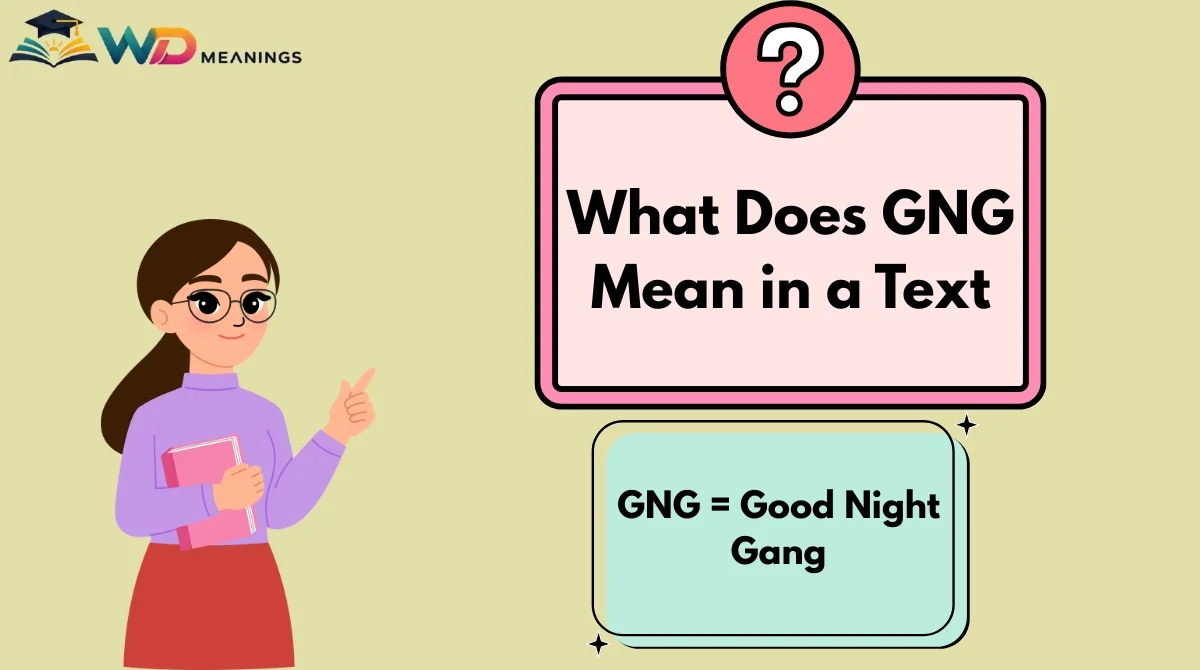
The answer depends on the conversation, but in modern texting and social media, GNG most commonly means “gang.”
It’s usually used as a friendly way to refer to a close friend, a group of friends, or someone’s circle.
If you’ve searched what does gng mean in a text, you’re probably trying to understand a message from a friend, someone on Snapchat, TikTok, Instagram, or another social platform.
Fortunately, the meaning is usually straightforward once you know the context.
This guide explains what GNG means, where it came from, how people use it, when it has other meanings, and how you should respond when someone sends it to you.
Quick Answer
GNG most commonly means “gang” in text messages and online slang. It refers to a close friend, a group of friends, or someone’s crew. Rather than referring to criminal gangs, it’s usually an affectionate or casual nickname similar to saying “bro,” “fam,” “team,” or “my people.” The exact meaning depends on the conversation.
What Does GNG Mean in Text?
The most common meaning of GNG is “gang.”
Instead of typing the full word, many people shorten it to GNG in casual texting, gaming chats, and social media comments.
Pronunciation: Most people simply say it as “gang,” although some may spell out the letters individually when discussing the abbreviation.
Simple Definition
GNG is an informal way to refer to a friend, a close group of people, or someone’s crew.
It often expresses:
- Friendship
- Loyalty
- Team spirit
- Excitement
- Casual familiarity
Unlike its literal dictionary meaning, GNG almost never refers to organized crime in everyday texting.
Example
Alex: You coming tonight, gng?
Jordan: Yep, I’ll be there around 8!
Here, “gng” simply means friend or bro.
Origin and Background
GNG developed as a shortened spelling of “gang,” which has long been used informally to describe a group of friends.
As texting became faster and social media encouraged shorter messages, people began dropping vowels and using abbreviations. Similar examples include:
- fr → for
- ppl → people
- rn → right now
- smh → shaking my head
Exactly when GNG first appeared isn’t clear, and there isn’t one documented origin. It gradually became popular through online communities, gaming, hip-hop culture, and social media where quick typing is common.
Today, many younger users recognize GNG as simply another friendly nickname.
How GNG Is Used in Text Conversations
The meaning of GNG usually depends on who is sending the message and what they’re talking about.
Friendly Greeting
Someone may use GNG instead of saying “friend.”
Sam: Morning gng!
Taylor: Morning! Hope you’re doing well.
Talking to a Close Friend
Many people use it exactly like “bro.”
Chris: Appreciate you, gng.
Ryan: Always got you.
Referring to a Group
Sometimes GNG means an entire friend group.
Emma: Where’s the gng meeting tonight?
Noah: Same café as always.
Celebrating Together
It can also express excitement.
Mia: We finally won!
Leo: Let’s go, GNG!
Playful or Humorous
Friends sometimes use it jokingly.
Olivia: GNG really forgot my birthday?
Sophia: Never! I was planning a surprise.
Romantic Conversations
Although less common, couples who already joke around like close friends may also use GNG playfully.
Jamie: Miss you, gng ❤️
Casey: Miss you too.
The romantic meaning comes from the relationship—not the abbreviation itself.
What GNG Means on Different Platforms
Although the wording stays mostly the same, the way people use GNG varies slightly depending on the platform.
Friends often use GNG during everyday conversations.
Example:
“GNG, where are you?”
Snapchat
GNG commonly appears in quick snaps or captions.
Example:
“Out with the gng.”
You’ll often see it in comments or story captions.
Example:
“My gng ❤️”
TikTok
Creators frequently use GNG in captions, hashtags, and comments referring to their followers or friend group.
Example:
“GNG pulled up.”
The abbreviation appears less often among older users but is still common in casual posts and younger communities.
Discord
Gamers may use GNG to refer to teammates or online friends.
Example:
“GNG ready for another match?”
Dating Apps
GNG isn’t usually romantic by itself.
If someone calls you GNG while flirting, they’re probably using it as a friendly nickname rather than expressing romantic interest directly.
What Does GNG Mean From a Girl or Guy?
The abbreviation itself does not change meaning based on gender.
Instead, the conversation determines the interpretation.
For example:
From a Friend
“GNG, thanks for helping today.”
Meaning: Appreciation and friendship.
From Someone You’re Dating
“Miss you gng ❤️”
Meaning: A playful nickname with affectionate undertones.
From Someone You Don’t Know Well
“What’s up gng?”
Meaning: Casual friendliness.
Context Matters More Than Gender
Pay attention to:
- Emojis
- Previous messages
- Your relationship
- Tone
- Punctuation
For example:
“GNG 😂”
feels playful.
“GNG ❤️”
feels affectionate.
“GNG.”
may sound more neutral depending on the rest of the conversation.
Other Possible Meanings
Although “gang” is by far the most common texting meaning, GNG can occasionally stand for something else depending on the topic.
| Meaning | Context | Example |
|---|---|---|
| Gang (most common) | Texting, social media | “What’s up gng?” |
| Good Night Gang | Group chats | “Good night GNG!” |
| Gaming clan or group name | Gaming communities | “Join our GNG tonight.” |
| Company, organisation, or project initials | Professional settings | “The GNG meeting starts at 10.” |
When reading messages, assume “gang” unless the surrounding conversation clearly suggests another meaning.
How to Respond to GNG
Your reply depends on the conversation.
Casual
“What’s up?”
Friendly
“Not much, how are you?”
Funny
“The whole gang is here 😄”
Supportive
“Always got you, gng.”
Romantic
“Miss you too ❤️”
Confused
“What does GNG mean?”
There’s nothing wrong with asking if you’re unsure.
Chat Examples
Friend: Thanks gng.
You: Anytime!
Friend: What’s up gng?
You: Just relaxing. You?
Friend: We made it, gng!
You: We definitely did!
Similar Texting Terms and Differences
| Term | Meaning | Key Difference |
|---|---|---|
| Bro | Friend or brother | More individual and widely used |
| Fam | Family or close friends | Emphasises closeness and belonging |
| Homie | Close friend | Slightly more personal than GNG |
| Bestie | Best friend | Usually refers to one close friend |
| Squad | Friend group | Refers specifically to the entire group rather than one person |
Although these terms overlap, GNG has a slightly more relaxed, street-style tone than words like bestie or friend.
Common Misunderstandings
One of the biggest misunderstandings is assuming GNG always refers to criminal gangs.
In ordinary texting, that’s rarely the case.
Other common mistakes include:
- Thinking it always has a romantic meaning.
- Assuming it means the same thing in every industry.
- Confusing it with company initials or gaming abbreviations.
- Reading too much into capital letters. Whether someone writes GNG, gng, or Gng, the meaning usually stays the same.
Always read the surrounding conversation before deciding what it means.
Is GNG Appropriate or Safe to Use?
For most conversations, yes.
GNG is generally:
- Informal
- Friendly
- Casual
- Non-offensive
However, it’s usually not appropriate for:
- Professional emails
- School assignments
- Formal business communication
- Official documents
Among friends, classmates, teammates, and family, it’s perfectly normal if everyone understands the slang.
If someone uses GNG in a conversation that appears threatening or references actual criminal activity, rely on the surrounding context rather than the abbreviation alone.
Examples of GNG in Text
Here are some realistic examples.
- “Morning gng! Hope today’s a good one.”
- “Where’s the gng meeting after class?”
- “Miss you, gng ❤️”
- “Thanks for always helping me, gng.”
- “The whole gng showed up unexpectedly.”
- “GNG, are we still playing tonight?”
- “That’s my gng right there!”
- “Let’s grab dinner, gng.”
- “Couldn’t have done it without you, gng.”
- “Our gng finally took the holiday trip.”
- “Pull up, gng—we’re already here.”
- “Goodnight, gng. See you tomorrow.”
Frequently Asked Questions
Is GNG always short for “gang”?
In texting and social media, yes—most of the time. While GNG can occasionally represent something different in gaming, organisations, or group names, “gang” is by far the most common meaning in everyday conversations.
Does GNG mean someone likes me?
Not necessarily. People often call friends “gng” without any romantic intention. If the message also includes affectionate language, heart emojis, or flirting, then the overall conversation—not the abbreviation itself—may suggest romantic interest.
Is GNG rude?
No. GNG is generally friendly and informal. It isn’t considered offensive by itself, although it may sound too casual for professional or academic settings.
Can adults use GNG?
Yes. Although it’s especially popular among younger people, anyone can use it if it fits the conversation and the other person understands the slang.
Why do people write GNG instead of gang?
Shortened spellings make typing quicker and match the informal style of texting and social media. Like many online abbreviations, GNG saves time while keeping the intended meaning clear.
Should I use GNG at work?
Usually no. Professional communication is clearer and more appropriate when you use complete words like “team,” “everyone,” or the person’s name instead of internet slang.
Conclusion
If you’ve been wondering what does GNG mean in a text, the answer is usually simple:
it means “gang,” referring to a close friend or group of friends in a friendly, informal way.
While it can have other meanings in specialised contexts, those are much less common than the everyday texting usage.
The best way to understand GNG is to consider the conversation, your relationship with the sender, and the overall tone.
In most cases, it’s simply a casual expression of friendship, loyalty, or familiarity.

Hamz Ellis is a content writer at WD Meanings, specializing in internet slang, texting abbreviations, and digital communication. He creates clear, well-researched, and easy-to-understand content to help readers quickly find the meanings of modern online terms.