If you’ve received a text that simply says “huh”, you might wonder what the sender actually means.
Is it confusion, surprise, disbelief, or something else entirely? The answer depends on the conversation, the tone, and sometimes even the punctuation.
Understanding what does huh mean in text can help you avoid misunderstandings and respond naturally.
Unlike many internet abbreviations, “huh” isn’t an acronym or slang with a hidden definition.
Instead, it’s a common conversational expression that has become just as popular in texting as it is in everyday speech.
In this guide, you’ll learn what “huh” means in messages, where it came from, how it’s used across popular social media platforms, what it can mean in different situations, and the best ways to reply without misreading the conversation.
Quick Answer
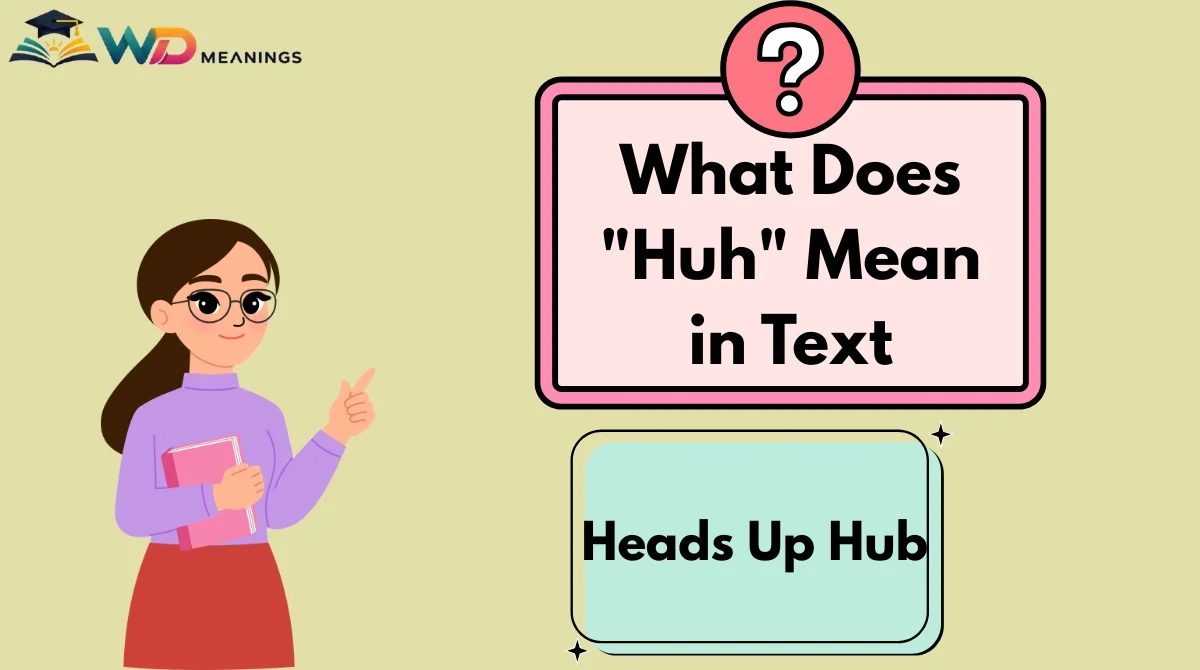
“Huh” in text is an informal expression that usually shows confusion, surprise, disbelief, or a request for clarification. It doesn’t have a full form. Its exact meaning depends on the conversation and tone. Sometimes it’s friendly and curious, while other times it can sound skeptical or mildly annoyed.
What Does “Huh” Mean in Text?
The most common meaning of “huh” in text is “I don’t understand,” “What do you mean?” or “Really?” It’s a short reaction people send when they need more information or when something they’ve just read catches them off guard.
Unlike abbreviations such as LOL or BRB, “huh” is a real English interjection, meaning it’s a natural spoken expression that has simply carried over into digital conversations.
Does “Huh” Have a Full Form?
No.
“Huh” is not an acronym and doesn’t stand for any words. It’s an interjection—a short expression people use to react emotionally or ask for clarification.
Pronunciation
Most English speakers pronounce it as:
/hʌ/
It sounds similar to:
- “HUH”
- “Huh?”
- “Huh…”
The punctuation often changes the tone more than the pronunciation itself.
What Emotion Does “Huh” Express?
Depending on the situation, “huh” can communicate:
- Confusion
- Surprise
- Curiosity
- Disbelief
- Mild skepticism
- Playful teasing
- Genuine interest
The surrounding conversation is what tells you which meaning is intended.
Simple Text Example
Alex: I accidentally booked two flights.
Jordan: Huh? How did that happen?
Here, “Huh?” simply means “Wait, what?” or “Can you explain?”
Origin and Background
“Huh” has existed in spoken English for a very long time. People have used it naturally in conversation to express confusion or ask someone to repeat what they said. Because it is such a simple and universal reaction, it gradually became just as common in text messages, online chats, and social media.
Unlike many internet expressions that originated on forums or social networking sites, “huh” wasn’t invented online. It simply transitioned from everyday speech into digital communication as texting became more popular.
Today, you’ll find people using it in personal messages, group chats, gaming conversations, comments, and social media discussions around the world. Although different languages have their own versions of this expression, English speakers generally use “huh” in much the same way whether they’re speaking face-to-face or typing on a phone.
How “Huh” Is Used in Text Conversations
One reason “huh” is so common is that it works in many different situations. The same word can express several emotions depending on context, punctuation, and the relationship between the people chatting.
When Someone Is Confused
This is the most common use.
Someone receives information they don’t understand and asks for clarification.
Emma: The meeting was moved to next Thursday.
Chris: Huh? I thought it was tomorrow.
Here, “huh?” simply asks for more explanation.
When Someone Is Surprised
Sometimes people aren’t confused—they’re just shocked by what they read.
Ryan: I won free concert tickets.
Mia: Huh, that’s awesome!
In this case, “huh” shows pleasant surprise before the conversation continues.
Showing Disbelief
“Huh” can also express doubt or skepticism.
Jake: I finished the entire project in twenty minutes.
Noah: Huh… seriously?
The extra dots suggest the person isn’t completely convinced.
Asking Someone to Repeat
Occasionally, the message wasn’t clear or was sent too quickly.
Taylor: I’ll meet you at the place by the thing.
Sam: Huh?
This simply means:
“I didn’t understand what you meant.”
Friendly Curiosity
Friends often use “huh” when they hear something unexpected and want to know more.
Olivia: Guess who texted me today.
Lily: Huh? Who?
There’s no negative emotion here—just curiosity.
Playful or Teasing
Among close friends, “huh” may be used jokingly.
Ben: I’m officially the best cook in town.
Mark: Huh… according to who?
The playful reply lightly teases without sounding rude.
Mild Frustration
Sometimes “huh” carries a slightly impatient tone, especially after repeated explanations.
Teacher: Read the instructions again.
Student: Huh…
Depending on the conversation, this could show confusion or mild frustration.
Punctuation often determines which feeling comes across.
Compare these:
- Huh? → I don’t understand.
- Huh! → I’m surprised.
- Huh… → I’m thinking or skeptical.
- Huh → Neutral reaction.
Because text messages lack facial expressions and voice tone, punctuation helps readers interpret the intended emotion.
What “Huh” Means on Different Platforms
The meaning of “huh” stays remarkably consistent across most messaging apps and social media platforms. While the context of conversations may differ from one platform to another, the word itself usually expresses confusion, surprise, curiosity, or disbelief rather than taking on a completely new definition.
On WhatsApp, “huh” is commonly used in one-on-one chats and family or group conversations when someone needs clarification.
Example:
Dad: Dinner is at 5 instead of 7.
You: Huh? Why so early?
The meaning is simply, “Can you explain?”
Snapchat
Snapchat conversations tend to be quick and informal, so “huh?” often appears as an immediate reaction to unexpected photos, messages, or stories.
Example:
Friend: I dyed my hair blue.
You: Huh?? No way!
Using multiple question marks usually makes the surprise feel stronger rather than changing the meaning.
On Instagram, people may comment “huh?” when they don’t understand a caption or react with “huh…” after seeing something unexpected in a post or Reel.
For example:
Caption: I quit my job today.
Comment: Huh? What happened?
The expression invites the creator to share more details.
TikTok
TikTok users often type “huh?” in comments when they’re confused by a video, don’t understand a joke, or want additional context.
Example:
“Huh? Can someone explain what’s happening?”
The meaning remains the same as in ordinary texting.
Facebook conversations are usually a mix of friends, relatives, and community groups. Here, “huh” is often used to question surprising news or ask someone to clarify a post.
Example:
Friend: I’m moving overseas next month.
Comment: Huh? I thought you just bought a house.
Again, the reaction expresses surprise mixed with curiosity.
Discord
Discord servers move quickly, especially in gaming or hobby communities. Members frequently reply with “huh?” when they miss part of a conversation or need someone to repeat information.
Example:
Player 1: The event starts in five minutes.
Player 2: Huh? I thought it was delayed.
The expression simply asks for clarification before the discussion continues.
Dating Apps
On dating apps, “huh?” usually indicates confusion about something the other person said. It can also be a playful way to encourage someone to explain themselves.
Example:
Match: I think we almost met years ago.
You: Huh? Really?
Because conversations are often between people who don’t know each other well, it’s helpful to follow up with a full sentence if your message might otherwise seem too abrupt.
Overall, the meaning of “huh” remains almost identical across WhatsApp, Snapchat, Instagram, TikTok, Facebook, Discord, and dating apps. What changes is the topic of the conversation—not the meaning of the expression itself.
What Does “Huh” Mean From a Girl or Guy?
Many people wonder whether “huh” means something different depending on whether it comes from a girl or a guy. In most cases, the answer is no. The word itself doesn’t have a gender-specific meaning. Instead, the sender’s relationship with you, the conversation, punctuation, emojis, and timing all provide the real clues.
From a Girl
If a girl texts “huh?”, she’s usually doing one of the following:
- Asking you to explain something.
- Showing surprise.
- Expressing curiosity.
- Reacting to unexpected news.
- Playfully questioning what you said.
Example 1
You: I think I saw you at the airport yesterday.
Her: Huh? I wasn’t even travelling.
Here, she’s simply correcting your assumption.
Example 2
You: I made dinner for everyone.
Her: Huh, that’s impressive!
In this case, “huh” expresses pleasant surprise.
From a Guy
A guy typically uses “huh” in the same situations.
He may be:
- Confused
- Curious
- Doubting something
- Asking for clarification
- Reacting to surprising information
Example
You: I quit my job today.
Him: Huh? Why?
He’s asking for more information, not sending a hidden message.
Context Matters More Than Gender
Instead of focusing on whether the sender is male or female, pay attention to:
- What was said immediately before “huh”
- Whether there’s a question mark
- Whether emojis are included
- Whether they’re joking
- Your relationship with them
For example:
Huh? 😂
This usually sounds playful.
Huh…
This often suggests they’re thinking or feeling skeptical.
HUH?!
This looks much stronger and can express genuine shock.
The same word can feel completely different depending on how it’s written.
Other Possible Meanings of “Huh”
Although confusion or surprise is by far the most common meaning in texting, “huh” can represent a few other reactions depending on context.
| Meaning | Context | Example |
|---|---|---|
| Confusion (Most Common) | Didn’t understand | “Huh? Can you explain?” |
| Surprise | Unexpected news | “Huh, I didn’t know that.” |
| Disbelief | Doubting a statement | “Huh… really?” |
| Curiosity | Wants more details | “Huh? Tell me more.” |
| Thinking or Processing | Taking a moment to react | “Huh… that’s interesting.” |
The first meaning—asking for clarification or expressing confusion—is the one you’ll encounter most often in texts and chats.
How to Respond to “Huh”
The best response depends on why the person said “huh.”
1. If They’re Confused
Simply explain yourself more clearly.
Them: Huh?
You: I meant we’re meeting tomorrow instead of today.
2. If They’re Surprised
Give them more details.
Them: Huh? You bought a motorcycle?
You: Yeah! I’ve been saving for months.
3. If They’re Curious
Answer their question.
Them: Huh? What happened?
You: My flight got cancelled because of bad weather.
4. If They’re Skeptical
Provide evidence or clarify.
Them: Huh… really?
You: Yep, I even have the confirmation email.
5. If They’re Joking
Play along.
Them: Huh? Since when are you a chef?
You: Since I successfully made instant noodles.
6. If They Didn’t Hear or Understand
Repeat yourself differently.
Them: Huh?
You: Sorry—I meant next Friday, not this Friday.
7. If They’re Flirting Playfully
Keep the conversation light.
Them: Huh? You’re saying you missed me?
You: Maybe a little more than I’d like to admit. 😊
Quick Tips
If someone texts “huh”, don’t assume they’re upset.
Usually they’re simply saying:
- “Can you explain?”
- “Really?”
- “What?”
- “I didn’t catch that.”
- “Tell me more.”
A calm, friendly reply is almost always the best response.
Similar Texting Terms and Their Differences
Several expressions are similar to “huh,” but each has a slightly different tone.
| Term | Meaning | Key Difference |
|---|---|---|
| Huh | Confusion or surprise | Neutral reaction asking for clarification |
| What? | Requests explanation | More direct and sometimes sounds harsher |
| Hm | Thinking or considering | Shows reflection rather than confusion |
| Oh? | Mild surprise or interest | Suggests curiosity instead of misunderstanding |
| Eh? | Asking someone to repeat | More common in some regional varieties of English |
Although these expressions overlap, choosing one over another changes how your message feels.
Common Misunderstandings
Because “huh” is so short, people sometimes misinterpret it.
Thinking It Has a Secret Meaning
Some assume “huh” is an abbreviation.
It isn’t.
It’s simply an English interjection.
Assuming It Means Someone Is Angry
A plain “huh?” usually isn’t rude.
However, if it’s written like:
HUH???
or
Huh?? Seriously??
it can sound more emotional because of the punctuation.
Confusing Curiosity With Disbelief
Compare these:
Huh? What happened?
This sounds curious.
Huh… sure.
This sounds doubtful.
The surrounding words make the difference.
Ignoring Punctuation
Small punctuation changes affect tone.
| Version | Likely Tone |
|---|---|
| Huh | Neutral |
| Huh? | Confused |
| Huh! | Surprised |
| Huh… | Thinking or doubtful |
| HUH?! | Shocked or strongly surprised |
Reading Too Much Into It
Sometimes people worry that a simple “huh” carries a hidden emotional message.
Most of the time, it doesn’t.
The sender is usually asking you to explain something or reacting naturally to what you said.
Is “Huh” Appropriate or Safe to Use?
Yes. “Huh” is generally safe, polite, and widely accepted in casual conversations. It’s one of the most common reaction words in English and is used by people of all ages.
That said, it’s considered informal, so it’s best suited to texting, messaging apps, and conversations with friends, family, or classmates.
Casual Conversations
“Huh” fits naturally in:
- Text messages
- WhatsApp chats
- Snapchat conversations
- Instagram DMs
- Gaming chats
- Family group chats
Professional Settings
In work emails, business messages, or formal communication, it’s better to use clearer alternatives such as:
- “Could you clarify?”
- “I’m not sure I understand.”
- “Could you explain that?”
These responses sound more professional while expressing the same idea.
Can It Sound Rude?
Sometimes.
A single “Huh?” isn’t usually rude, but tone matters.
For example:
Parent: Please clean your room.
Child: Huh?
This may sound like genuine confusion.
However:
Parent: Please clean your room.
Child: HUH?!
The capital letters and punctuation may make the response sound argumentative or disrespectful.
Similarly, replying with only “huh” after someone shares something important can seem dismissive if you don’t add any follow-up.
Is It Ever Concerning?
On its own, “huh” isn’t a warning sign or a harmful expression. It doesn’t suggest danger, offensive language, or inappropriate content.
However, if someone repeatedly replies with “huh?” because they seem confused about important information or distressed during a serious conversation, it’s worth slowing down, clarifying your message, and checking that you’ve understood each other correctly.
In most everyday chats, though, “huh” is simply a normal conversational reaction and nothing to worry about.
p 3
Examples of “Huh” in Text
The best way to understand what does huh mean in text is to see how people use it in everyday conversations. Below are original examples showing different emotions and situations.
1. Confusion
Emma: The science test has been moved to Monday.
Lucas: Huh? I thought it was on Friday.
Meaning: Lucas is asking for clarification because the news is unexpected.
2. Surprise
Sophia: I won two tickets to the concert!
Olivia: Huh! That’s amazing!
Meaning: “Huh!” expresses pleasant surprise.
3. Curiosity
Jake: Guess what happened after work today.
Noah: Huh? Tell me!
Meaning: Noah wants to hear the rest of the story.
4. Disbelief
Ava: I ran a marathon without training.
Mia: Huh… seriously?
Meaning: Mia finds the claim difficult to believe.
5. Didn’t Understand
Liam: Meet me by the old place near the bridge.
Ethan: Huh? Which bridge?
Meaning: Ethan needs more specific information.
6. Playful Conversation
Friend: I’m basically a professional chef now.
You: Huh? Since when?
Friend: Since I learned how to make pancakes.
Meaning: The conversation is lighthearted and humorous.
7. Romantic Chat
Alex: I think I like spending time with you.
Taylor: Huh? Are you flirting with me?
Meaning: Taylor is surprised and wants confirmation.
8. Family Chat
Mom: We’re leaving at 6 a.m. tomorrow.
You: Huh? That’s so early!
Meaning: You’re reacting with surprise rather than confusion.
9. Group Chat
Friend: The football match has been cancelled.
Chris: Huh? Because of the weather?
Meaning: Chris is asking for the reason.
10. Gaming Conversation
Player 1: The boss fight starts in two minutes.
Player 2: Huh? I thought the countdown was ten minutes.
Meaning: The player believes they missed something.
11. Social Media DM
Friend: I deleted all my social media accounts.
You: Huh? What made you do that?
Meaning: A natural response asking for more details.
12. Everyday Text
Friend: I’ll explain everything later.
You: Huh… okay.
Meaning: You may still be confused, but you’re willing to wait for more information.
Frequently Asked Questions
Is “huh” the same as saying “what?”
Not exactly. Both can ask for clarification, but “huh?” usually sounds softer and more conversational. Depending on the situation, “what?” can sound more direct or even impatient, while “huh?” often feels like a natural reaction to confusion or surprise.
Does “huh” always mean someone is confused?
No. While confusion is its most common meaning, “huh” can also express surprise, curiosity, disbelief, or a moment of thinking. The surrounding conversation and punctuation help determine what the sender really means.
Is “huh” considered rude?
Usually not. In casual conversations, “huh?” is perfectly normal. However, using all capital letters, repeated punctuation, or an abrupt tone—such as “HUH?!”—can make it seem impatient or confrontational.
Can “huh” be used in formal writing?
Generally, no. “Huh” is an informal conversational expression. In professional emails, workplace chats, or academic writing, phrases like “Could you clarify?”, “I’m not sure I understand,” or “Could you explain that?” are more appropriate.
Why do people text only “huh”?
A single “huh” is often the quickest way to show they didn’t understand, were surprised, or want more information. Because texting is fast and informal, people frequently use one-word responses instead of writing complete sentences.
Does punctuation change the meaning of “huh”?
Yes. Punctuation can noticeably change the tone.
- Huh – Neutral reaction.
- Huh? – Confused or asking a question.
- Huh! – Surprised.
- Huh… – Thinking, uncertain, or slightly skeptical.
- HUH?! – Strong shock or disbelief.
Looking at punctuation alongside the rest of the conversation helps you interpret the sender’s intent correctly.
Conclusion
If you’ve ever wondered what does huh mean in text, the answer is usually simple:
it’s an informal expression of confusion, surprise, curiosity, or disbelief.
Unlike internet abbreviations, “huh” isn’t a shortened phrase or acronym—it’s a common English interjection that has naturally become part of digital communication.
The key to understanding it is context.
A question mark, an emoji, or the previous message can completely change its tone.
In most conversations, “huh?” simply means, “I don’t understand,” “Really?” or “Can you explain?“ By paying attention to the conversation as a whole, you’ll be able to interpret—and respond to—”huh” naturally and confidently.

Hamz Ellis is a content writer at WD Meanings, specializing in internet slang, texting abbreviations, and digital communication. He creates clear, well-researched, and easy-to-understand content to help readers quickly find the meanings of modern online terms.