If you’ve received a message saying “WSP?” or noticed someone commenting “wsp” online, you might be wondering what it means.
The good news is that it’s one of the easiest texting abbreviations to understand once you know the context.
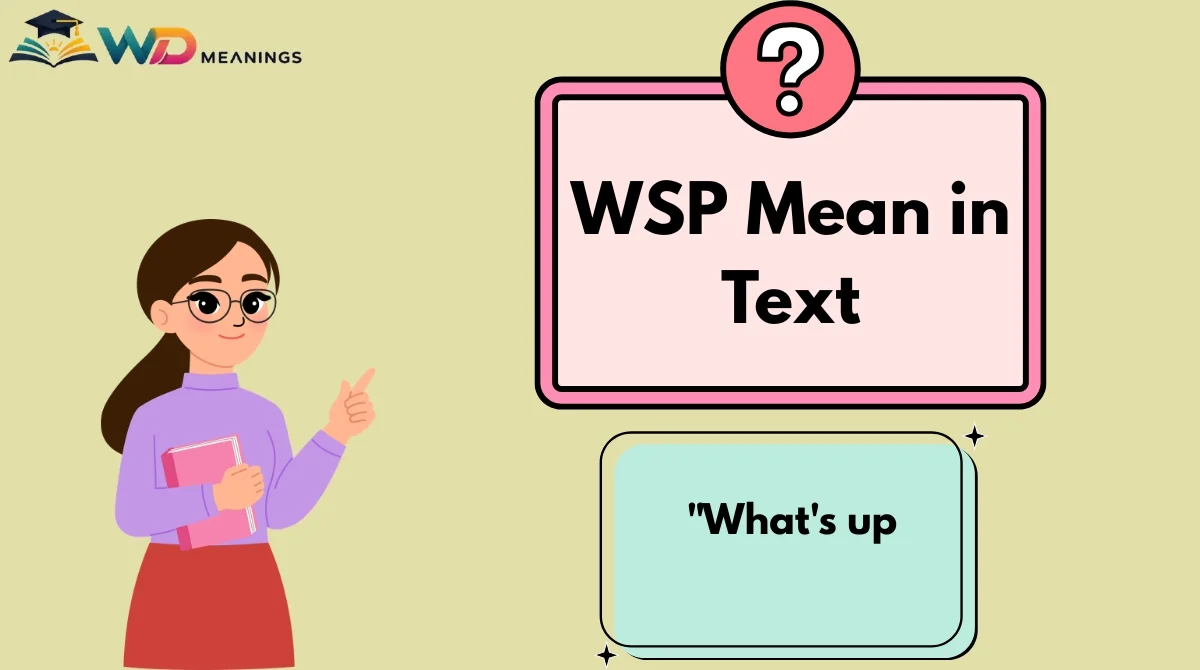
In most conversations, WSP simply means “What’s up?” It’s an informal way to greet someone, start a conversation, or check in.
You’ll commonly see it in text messages, Snapchat, Instagram DMs, WhatsApp, Discord, and other social platforms.
However, like many internet abbreviations, the exact meaning depends on the conversation.
A quick “wsp” from a close friend can feel casual and friendly, while the same message from someone you’re interested in might be an invitation to chat.
This guide explains what WSP means in text, how people use it, how to respond naturally, and when it may have other meanings.
Quick Answer
WSP most commonly stands for “What’s up?” in text messages and online chats. It’s an informal greeting used to ask how someone is doing, what they’re doing, or whether they want to talk. In nearly every texting context, WSP has the same meaning as saying “Hey, what’s going on?”
What Does WSP Mean in Text?
In texting, WSP is a shortened version of “What’s up?”
People use it to begin conversations without typing the full phrase. It’s quick, casual, and friendly, making it popular among teenagers and adults alike.
Full Form
WSP = What’s Up?
Simple Definition
WSP is an informal greeting that asks what someone is doing, how they’re feeling, or whether anything interesting is happening.
Pronunciation
Most people read it as:
- “What’s up?”
- Or by saying each letter individually: “Double-u, ess, pee”
In conversation, people almost always interpret it as “What’s up?”
Tone and Emotional Meaning
The tone depends on the conversation, but WSP is usually:
- Friendly
- Casual
- Relaxed
- Curious
- Social
It generally isn’t formal or rude.
Example
Alex: WSP? Haven’t heard from you all day.
Jordan: Not much. Just watching a movie.
Origin and Background
WSP developed naturally as texting became faster and more informal. Instead of typing the entire greeting “What’s up?”, users began shortening it to WSP, similar to abbreviations like wyd (“what are you doing”) and idk (“I don’t know”).
There’s no confirmed date or single person credited with creating the abbreviation. It spread through SMS texting, instant messaging, and later through social media platforms where short messages became the norm.
Today, it’s recognised as one of many casual internet abbreviations used in everyday digital conversations.
How WSP Is Used in Text Conversations
WSP can serve several conversational purposes depending on the situation.
Starting a Conversation
The most common use is simply saying hello.
Emma: WSP?
Liam: Hey! Just got home.
Checking In
Friends often use it to see how someone is doing.
Chris: WSP? Everything okay?
Taylor: Yeah, just been really busy.
Inviting Conversation
Sometimes it means the sender wants to chat.
Mia: WSP tonight?
Noah: Nothing planned. Want to hang out?
Romantic Interest
Someone you like may send WSP to start talking.
Jamie: WSP 😊
Casey: Just thinking about you.
The emoji changes the tone from casual to more affectionate.
Humorous Use
Friends may use it jokingly.
Friend: WSP, celebrity?
You: Just trying to survive Monday.
Slightly Sarcastic Use
Occasionally, WSP can sound sarcastic if paired with certain wording.
WSP… you finally remembered to reply? 😂
The sarcasm comes from the rest of the sentence—not the abbreviation itself.
What WSP Means on Different Platforms
The meaning of WSP stays remarkably consistent across platforms.
Usually starts a casual conversation.
WSP? You free later?
Snapchat
Often begins a chat after someone sends a Snap or wants to keep a conversation going.
Common in DMs between friends or followers.
Example:
“WSP! Love your latest post.”
TikTok
Usually appears in comments or direct messages as a friendly greeting.
Example:
“WSP everyone!”
Less common than among younger users but still understood as “What’s up?”
Discord
Frequently used while chatting with gaming friends or online communities.
Example:
“WSP guys, who’s joining tonight?”
Dating Apps
People often use WSP as an easy conversation starter.
Example:
“WSP? How’s your weekend going?”
Although simple, adding another question usually makes the conversation feel more engaging.
What Does WSP Mean From a Girl or Guy?
The abbreviation itself doesn’t change meaning based on gender.
Whether it’s sent by a girl, guy, or anyone else, WSP still means “What’s up?”
Instead, consider these clues:
Relationship
- Close friend: casual greeting
- Crush: possible interest in talking
- New acquaintance: conversation starter
Emojis
“WSP 😊”
Feels warmer and friendlier.
“WSP ❤️”
May suggest affection.
“WSP 😂”
Usually playful.
Punctuation
“WSP?”
A genuine question.
“WSP”
Very casual.
“WSP!!”
Excited or energetic.
Conversation Context
If someone suddenly messages “WSP” after not speaking for weeks, they may simply want to reconnect.
If it’s sent after flirting, it’s often a way to continue the conversation.
Context matters much more than gender.
Other Possible Meanings
Although “What’s up?” is by far the most common meaning in texting, WSP can occasionally stand for other phrases in different industries or organisations.
| Meaning | Context | Example |
|---|---|---|
| What’s Up? | Texting, social media | WSP? How’s your day? |
| Wireless Service Provider | Telecommunications | Contact your WSP for support. |
| Water Safety Plan | Public health | The city updated its WSP. |
| Workplace Safety Programme | Workplace documentation | Staff completed the WSP training. |
When chatting online, “What’s up?” is almost always the intended meaning.
How to Respond to WSP
There’s no single correct reply. Your response depends on your mood and relationship with the sender.
Casual
“Not much. You?”
Friendly
“Just relaxing after work. What’s up with you?”
Funny
“Trying to convince myself to do laundry.”
Romantic
“Nothing exciting until you texted 😊”
Busy
“Working right now. I’ll message you later.”
Confused
“Hey! Did you mean ‘What’s up?'”
Serious
“Been dealing with a few things lately, but thanks for checking in.”
Chat Examples
Friend: WSP?
You: Just finished class.
Crush: WSP ❤️
You: Thinking about grabbing coffee. Want to join?
Similar Texting Terms and Differences
| Term | Meaning | Key Difference |
|---|---|---|
| WYD | What are you doing? | Focuses on current activity. |
| SUP | What’s up? | Spelled differently but same idea. |
| HBU | How about you? | Usually follows another response. |
| YO | Informal hello | Doesn’t ask a question. |
| HMU | Hit me up | Invites someone to contact you later. |
Although these abbreviations are related, each serves a slightly different purpose during conversations.
Common Misunderstandings
People occasionally confuse WSP with other abbreviations because internet slang changes quickly.
Some common misunderstandings include:
- Thinking it always has a romantic meaning.
- Assuming it refers to a company or technical term.
- Reading it as an acronym unrelated to texting.
- Believing it is rude because it’s so short.
Capitalisation doesn’t change the meaning.
These are all interpreted the same way:
- wsp
- WSP
- Wsp
Likewise, punctuation usually affects tone rather than meaning.
“WSP?”
Sounds more like a genuine question.
“WSP!!”
Feels more energetic.
“WSP…”
May suggest hesitation or curiosity.
Is WSP Appropriate or Safe to Use?
Yes. WSP is generally a safe, polite, and informal texting abbreviation.
It’s appropriate when messaging:
- Friends
- Family
- Classmates
- Teammates
- Romantic partners
However, it isn’t usually suitable for:
- Professional emails
- Formal business communication
- Academic writing
- Official documents
If you’re messaging a teacher, employer, or client, writing “Hello” or “How are you?” is usually more appropriate.
Examples of WSP in Text
Here are some realistic examples showing different situations.
- WSP? You coming tonight?
- Hey! WSP? Haven’t talked in ages.
- WSP 😂 Did you really eat the whole pizza?
- WSP? I’m heading to the gym.
- WSP 😊 Hope your exam went well.
- WSP everyone! Ready for game night?
- WSP? Need help with homework?
- WSP, bro? Haven’t seen you online today.
- WSP ❤️ Miss talking to you.
- WSP? Got any weekend plans?
- WSP! Want to jump on Discord later?
- WSP? Just checking in to see how you’re doing.
These examples show that WSP works naturally in many everyday conversations.
Frequently Asked Questions
Is WSP the same as “What’s up?”
Yes. In nearly all text messages and social media conversations, WSP is simply a shortened way of writing “What’s up?” Both expressions are used to greet someone or start a casual conversation.
Is WSP considered slang?
Yes. WSP is internet slang and a texting abbreviation. It’s informal and best suited for conversations with friends, family, classmates, or people you already know.
Can WSP be used professionally?
Usually not. While most people understand it, professional communication is clearer and more appropriate when you write complete greetings such as “Hello” or “How are you?”
Why do people type WSP instead of “What’s up?”
People often shorten common phrases to save time while texting. WSP is faster to type and fits the informal style of messaging apps and social media.
Does WSP always mean “What’s up?”
In almost every personal text conversation, yes. Although WSP has other meanings in technical or professional fields, context usually makes the intended meaning obvious.
How should I reply to WSP?
A simple response works well. You might say, “Not much, you?”, “Just relaxing,” or answer with whatever you’re currently doing before asking the other person the same question.
Conclusion
When you see WSP in text, it almost always means “What’s up?” It’s a friendly, informal greeting used to start conversations, check in with someone, or simply say hello across messaging apps and social media.
The abbreviation itself isn’t romantic, rude, or offensive—its tone depends on the surrounding conversation, emojis, and your relationship with the sender.
If someone texts you WSP, a natural, relaxed reply is usually all that’s needed to keep the conversation going.

Hamz Ellis is a content writer at WD Meanings, specializing in internet slang, texting abbreviations, and digital communication. He creates clear, well-researched, and easy-to-understand content to help readers quickly find the meanings of modern online terms.