If you’ve received a message saying “IGY” and had no idea what it meant, you’re not alone.
Texting abbreviations change quickly, and many of them can have more than one meaning depending on the conversation.
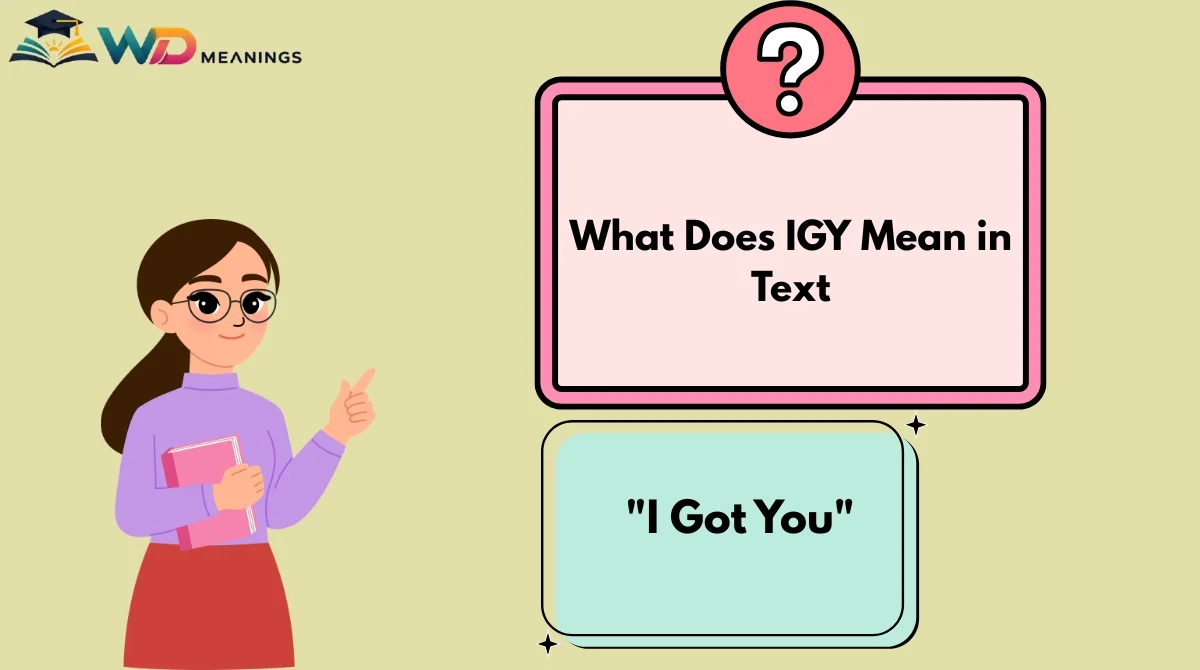
So, what does IGY mean in text?
In most text messages, social media chats, and online conversations, IGY most commonly means “I Got You.”
It’s a short, friendly way of saying someone understands, agrees, will help, or has something covered.
Whether you’re chatting with friends, family, classmates, or coworkers, you’ll often see IGY used to reassure someone or confirm that everything is under control.
This guide explains exactly what IGY means, where people use it, how to interpret it in different situations, alternative meanings, realistic examples, and the best ways to respond.
Quick Answer
IGY usually means “I Got You” in text messaging. People use it to show they understand what someone said, promise to help, confirm they’ll take care of something, or reassure another person. The exact meaning depends on the conversation, but it’s generally friendly, supportive, and informal.
What Does IGY Mean in Text?
In everyday texting, IGY stands for “I Got You.”
It’s a casual abbreviation people use instead of typing the full phrase. Depending on the situation, “I got you” can mean several closely related things:
- I understand.
- I’ll help you.
- I’ll handle it.
- Don’t worry.
- I agree.
- I’ve got your back.
Pronunciation
Most people simply say the letters individually:
“Eye-Gee-Why.”
When spoken naturally, however, people usually say the full phrase:
“I got you.”
Emotional Tone
The tone is usually:
- Friendly
- Supportive
- Reassuring
- Casual
- Confident
Occasionally, it can sound playful or flirtatious depending on the relationship between the people texting.
Example
Alex: Can you send me the notes after class?
Jordan: IGY 👍
Meaning: “I got you. I’ll send them.”
Origin and Background
IGY is simply a shortened form of the everyday English phrase “I got you.”
The expression has been part of spoken English for many years. As texting became faster and people looked for shorter ways to communicate, many common phrases were reduced to initials. IGY became one of those convenient abbreviations.
Unlike internet slang that originated from a specific platform, IGY appears to have developed naturally through everyday digital communication. There isn’t a single confirmed origin or date when it first became popular.
Today, it’s commonly used in private messages, group chats, gaming communities, and social media conversations.
How IGY Is Used in Text Conversations
Because “I got you” has several natural meanings, IGY can be used in different situations.
Offering Help
Someone asks for assistance, and IGY means you’ll help.
Emma: Can you pick me up after work?
Ryan: IGY.
Confirming You’ll Handle Something
It tells someone they don’t need to worry.
Chris: Can you book the tickets?
Taylor: IGY.
Showing Understanding
Sometimes it simply means “I understand.”
Sam: I was exhausted after work.
Lee: IGY. That sounds rough.
Reassuring Someone
It can comfort someone who’s worried.
Friend: I’m nervous about tomorrow.
You: IGY. Everything will be okay.
Playful or Romantic Use
Between close friends or partners, it may express emotional support.
Jamie: I need someone on my side.
Alex: IGY ❤️
What IGY Means on Different Platforms
The meaning of IGY stays remarkably consistent across most messaging apps and social platforms.
People commonly use IGY when confirming plans, offering help, or replying quickly.
Example:
“I’ll grab the food. IGY.”
Snapchat
On Snapchat, IGY usually appears in casual chats between friends.
It often means:
- I understand
- I’ve got it
- I’ll do it
In Instagram DMs, IGY is used much the same way as in texting.
Someone might reply:
“IGY 🙌”
to confirm they’ll help or agree with a request.
TikTok
On TikTok, IGY occasionally appears in comments or replies where someone is expressing support or understanding.
The meaning generally remains “I got you.”
Messenger conversations use IGY in exactly the same informal way as texting.
Discord
Gamers and online communities frequently use IGY when coordinating tasks.
Example:
“I’ll cover that area. IGY.”
Dating Apps
On dating apps, IGY often feels supportive or reassuring.
Example:
“I’ll plan our next date. IGY 😉”
The abbreviation itself doesn’t become romantic—it simply reflects the tone of the conversation.
What Does IGY Mean From a Girl or Guy?
The abbreviation itself does not change meaning based on gender.
Whether a girl, guy, or anyone else sends IGY, it almost always means:
- I understand.
- I’ll help.
- I’ve got your back.
- Don’t worry.
Instead of focusing on who sent it, pay attention to:
- Your relationship
- Previous messages
- Emojis
- Punctuation
- Overall conversation
For example:
IGY ❤️
can sound caring or affectionate.
IGY 👍
sounds practical and straightforward.
IGY 😂
may be playful.
The surrounding conversation provides the real meaning.
Other Possible Meanings
Although “I Got You” is by far the most common meaning in texting, IGY can occasionally represent other phrases in different contexts.
| Meaning | Context | Example |
|---|---|---|
| I Got You (most common) | Texting, chats, social media | “Need a ride?” “IGY.” |
| International Gospel Youth | Organisation or ministry name | “IGY conference starts Friday.” |
| Song title “IGY” | Music discussions | “IGY is one of my favourite tracks.” |
Unless you’re discussing music or a specific organisation, “I Got You” is almost certainly the intended meaning.
How to Respond to IGY
Your reply depends on the conversation.
Casual
Them: IGY
You: Thanks!
Friendly
“Appreciate it!”
Funny
“You’re officially my hero.”
Romantic
“Aww, you’re the best ❤️”
Confirming
“Perfect, thank you.”
Grateful
“I really appreciate your help.”
If You’re Confused
“What do you mean by IGY?”
It’s perfectly okay to ask for clarification if the context isn’t obvious.
Similar Texting Terms and Differences
| Term | Meaning | Key Difference |
|---|---|---|
| ILY | I Love You | Expresses love rather than support. |
| IMO | In My Opinion | Shares an opinion instead of offering help. |
| TBH | To Be Honest | Introduces an honest statement. |
| BRB | Be Right Back | Indicates a temporary absence. |
| NGL | Not Gonna Lie | Signals honesty or surprise rather than reassurance. |
Although these abbreviations often appear in the same conversations, they serve different purposes.
Common Misunderstandings
One common mistake is assuming IGY has a hidden slang meaning. Most of the time, it’s simply a shortened version of “I got you.”
Other misunderstandings include:
- Thinking it means “I guess yes.”
- Assuming it’s always romantic.
- Believing it’s exclusive to one social media platform.
- Confusing it with unrelated abbreviations that share similar letters.
Capitalisation
You’ll see all of these:
- IGY
- igy
- Igy
They all mean the same thing.
Context Matters
For example:
“Need help moving?”
“IGY.”
means “I’ll help.”
Whereas:
“I know exactly how you feel.”
“IGY.”
means “I understand.”
The surrounding conversation determines the exact interpretation.
Is IGY Appropriate or Safe to Use?
Yes.
IGY is considered informal, friendly, and generally safe to use.
It’s appropriate for:
- Friends
- Family
- Classmates
- Group chats
- Casual workplace messaging
- Gaming communities
It may be less suitable in formal emails, academic writing, legal documents, or professional reports where complete sentences are expected.
Unlike some internet abbreviations, IGY is not considered rude, offensive, or inappropriate.
Examples of IGY in Text
Here are some original examples showing how people naturally use IGY.
- “Don’t worry about the groceries—IGY.”
- “Need someone to proofread your essay? IGY.”
- “I’ll save you a seat. IGY.”
- “Running late? IGY, I’ll wait.”
- “Forgot your charger? IGY.”
- “Thanks for listening.” “IGY anytime.”
- “Can you explain this homework?” “IGY after dinner.”
- “I’m really stressed.” “IGY. Want to talk?”
- “Who’s bringing snacks?” “IGY 😂”
- “Can you cover my shift tomorrow?” “IGY.”
- “I’ll text you when I arrive.” “IGY 👍”
- “Need backup in the game?” “IGY. Joining now.”
Frequently Asked Questions
Does IGY always mean “I Got You”?
In most text conversations, yes. While IGY can represent other phrases in specialised contexts, “I Got You” is by far the most common meaning in everyday messaging and social media.
Is IGY positive?
Usually, yes. It often communicates reassurance, support, understanding, or willingness to help. The overall tone is generally friendly and encouraging.
Is IGY flirting?
Not by itself. However, if it’s used between romantic partners or accompanied by affectionate emojis or messages, it can feel caring or flirtatious. The context matters more than the abbreviation itself.
Can I use IGY at work?
It’s fine in informal workplace chats or messaging apps where abbreviations are common. For formal emails or professional documents, writing “I got you” or “I’ll take care of it” is usually more appropriate.
What’s the difference between IGY and ILY?
IGY means “I Got You,” expressing support or understanding. ILY means “I Love You,” expressing affection or love. Although both are friendly abbreviations, they communicate very different messages.
Why do people say IGY instead of typing the full phrase?
People often use abbreviations to type faster and keep conversations brief. IGY delivers the same reassuring message as “I got you” while saving time, especially in quick chats and group messages.
Conclusion
The answer to what does IGY mean in text is usually simple:
it means “I Got You.” Whether someone is promising to help, confirming they understand, or reassuring you that something is handled, IGY communicates support in a short, friendly way.
Although it has a few alternative meanings in specific contexts, texting conversations almost always use it to mean “I got you.”
When you’re unsure, look at the surrounding messages, emojis, and relationship with the sender to understand exactly what they mean.

Hamz Ellis is a content writer at WD Meanings, specializing in internet slang, texting abbreviations, and digital communication. He creates clear, well-researched, and easy-to-understand content to help readers quickly find the meanings of modern online terms.