Texting abbreviations can be confusing, especially when the same three letters seem to appear in different conversations.
If you’ve received “TTM” in a message and aren’t sure how to respond, you’re not alone.
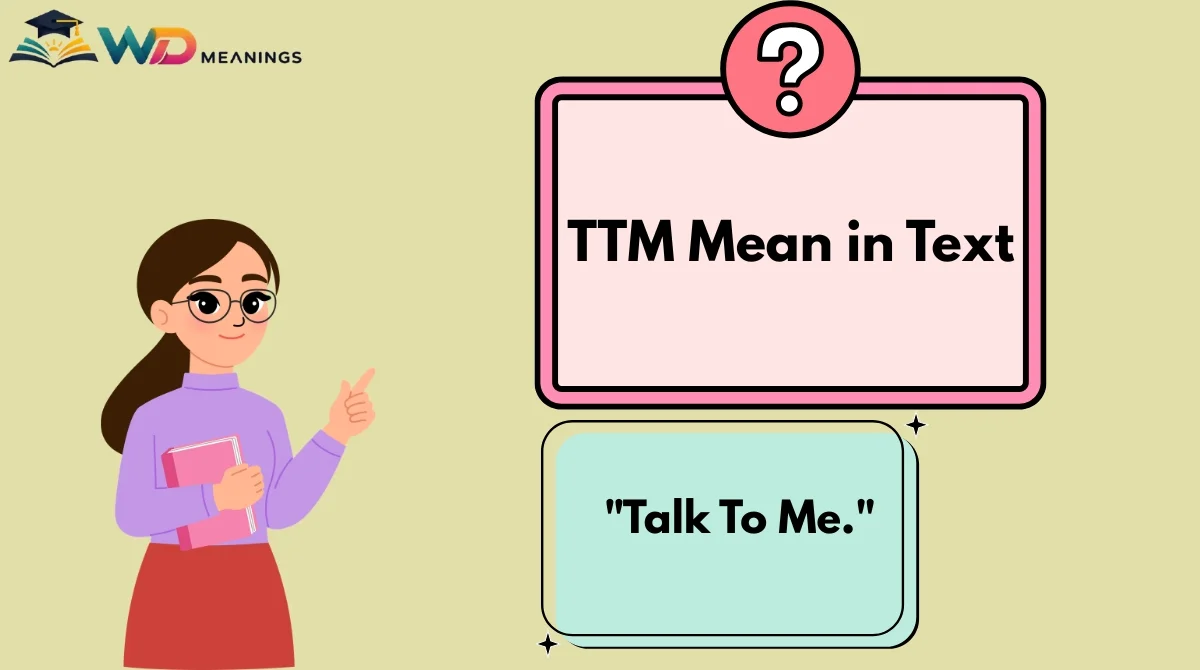
In most text conversations, TTM means “Talk To Me.”
It’s a casual way of asking someone to start chatting, reply, or continue a conversation.
Depending on the context, it can sound friendly, flirty, supportive, or simply like an invitation to catch up.
This guide explains exactly what TTM means in text, where people use it, how its meaning changes with context, how to respond naturally, and the few other meanings you might come across.
Quick Answer
TTM most commonly means “Talk To Me” in text messages and online chats. People use it to invite someone into a conversation, encourage a reply, or reconnect after a period of silence. The phrase is informal, friendly, and widely understood across texting and social media platforms.
What Does TTM Mean in Text?
The most common meaning of TTM is:
TTM = Talk To Me
It is an informal abbreviation used to invite conversation. Someone might send it when they want your attention, miss talking with you, or simply want to chat.
Pronunciation
Most people say the letters individually:
“T-T-M.”
They rarely pronounce it as a word.
Tone and Emotional Meaning
The tone depends on the conversation.
It can sound:
- Friendly
- Curious
- Supportive
- Flirty
- Playful
- Slightly impatient if someone hasn’t replied
The abbreviation itself isn’t positive or negative. The surrounding conversation determines how it should be interpreted.
Example
Alex: Haven’t heard from you all day.
Jordan: TTM when you’re free.
Meaning:
“Talk to me when you have time.”
Origin and Background
Unlike many internet slang terms that began on one specific platform, TTM appears to have developed naturally as a shorthand for “Talk To Me.”
Because texting encouraged people to shorten common phrases, abbreviations like TTM, BRB, LOL, and TTYL became convenient ways to communicate quickly.
There isn’t a confirmed date or single source that introduced TTM into online communication. Instead, it gradually became part of everyday texting and messaging where speed and brevity are valued.
Today, you’ll find it across messaging apps, social media, gaming communities, and direct messages.
How TTM Is Used in Text Conversations
Although “Talk To Me” is the primary meaning, people use it in several different situations.
Friendly Conversation
Someone simply wants to catch up.
Emma: It’s been forever.
Ryan: I know! TTM later tonight.
Asking for a Reply
Sometimes TTM politely reminds someone to respond.
Chris: You’ve disappeared.
Taylor: Sorry! Busy at work.
Chris: TTM when you finish.
Romantic or Flirty Use
Among couples or people getting to know each other, it often feels warm and inviting.
Sam: Missing you.
Jamie: Aww, TTM after dinner ❤️
Offering Support
Friends sometimes use TTM when they know someone is having a difficult day.
Friend: Rough day.
You: TTM if you need anything.
Here, the phrase means:
“I’m here if you want to talk.”
Playful Use
Sometimes it’s simply a humorous way to grab someone’s attention.
You: You vanished again 😂
Friend: Haha, TTM!
What TTM Means on Different Platforms
The meaning of TTM stays remarkably consistent across most online platforms.
| Platform | Typical Meaning |
|---|---|
| Talk To Me | |
| Snapchat | Talk To Me |
| Invitation to chat in DMs | |
| TikTok | Usually “Talk To Me” in comments or messages |
| Start a conversation or reconnect | |
| Discord | Ask someone to join the conversation |
| Dating Apps | Invitation to continue chatting or get to know someone |
Friends often use TTM to continue conversations after being busy.
Snapchat
Because conversations move quickly, TTM is commonly used to encourage replies.
You’ll frequently see TTM in direct messages or story replies when someone wants to continue talking.
TikTok
While less common than in messaging apps, users may comment “TTM” to encourage conversation or ask creators to respond.
Discord
Gamers and online communities sometimes use TTM when inviting someone into voice or text chat.
Dating Apps
TTM often carries a slightly more personal tone.
For example:
“TTM sometime this evening.”
This simply means:
“I’d like to chat with you.”
What Does TTM Mean From a Girl or Guy?
The abbreviation itself does not change meaning based on gender.
Whether it comes from a girl, guy, or anyone else, TTM still usually means “Talk To Me.”
Instead, look at factors like:
- Your relationship
- Previous messages
- Emojis
- Timing
- Overall tone
For example:
TTM 😊
Usually sounds friendly.
TTM ❤️
May feel affectionate or romantic.
TTM ASAP
Feels more urgent.
TTM?
Can sound like a genuine request for conversation.
Context always matters far more than the sender’s gender.
Other Possible Meanings
Although “Talk To Me” is by far the most common texting meaning, TTM can occasionally represent other phrases in different settings.
| Meaning | Context | Example |
|---|---|---|
| Talk To Me | Texting, social media, messaging | “TTM after class.” |
| Time To Market | Business, marketing | “The product’s TTM improved this year.” |
| Trailing Twelve Months | Finance and investing | “Revenue is based on TTM figures.” |
If someone sends you TTM in a personal conversation, “Talk To Me” is almost certainly the intended meaning.
How to Respond to TTM
Your reply depends on the situation.
Casual
Sure! What’s up?
Friendly
Hey! How’s your day going?
Funny
I’m here. You rang? 😄
Romantic
I’d love to. I’ve been thinking about you ❤️
If You’re Busy
I’m working right now, but I’ll message you later.
If You Don’t Understand
Sorry, what do you mean by TTM?
Supportive
Of course. I’m listening.
Chat Example
Friend: TTM when you can.
You: Absolutely! Give me about 20 minutes.
Similar Texting Terms and Differences
| Term | Meaning | Key Difference |
|---|---|---|
| TTM | Talk To Me | Invitation to chat |
| TTYL | Talk To You Later | Ends a conversation politely |
| HMU | Hit Me Up | Contact me later |
| DM | Direct Message | Refers to private messaging |
| WYD | What Are You Doing? | Starts a conversation by asking about current activity |
Although these abbreviations all relate to communication, TTM specifically encourages someone to begin or continue talking.
Common Misunderstandings
People sometimes misunderstand TTM because it also appears in business and finance.
Here are a few common mistakes.
Assuming Every TTM Means the Same Thing
In a finance report, TTM usually means Trailing Twelve Months, not Talk To Me.
Always consider where you saw it.
Thinking It Has a Hidden Meaning
Unlike some internet slang, TTM usually isn’t coded language.
Most of the time, it’s exactly what it sounds like:
“Talk To Me.”
Capitalization Doesn’t Matter
You’ll see:
- TTM
- ttm
- Ttm
All generally mean the same thing in casual conversations.
Context Is Everything
If someone sends:
“TTM after work.”
The meaning is obvious.
If you see:
“TTM earnings increased.”
You’re probably reading financial information instead.
Is TTM Appropriate or Safe to Use?
Yes.
TTM is generally considered a polite, informal, and safe texting abbreviation.
It isn’t offensive or rude.
It’s appropriate among:
- Friends
- Family
- Partners
- Classmates
- Casual online conversations
However, it may sound too informal for professional emails, formal reports, or workplace communication unless your team regularly uses casual messaging.
If someone sends TTM after mentioning they’re upset or struggling, it’s worth paying attention to the surrounding conversation. They may simply want someone to listen, so responding with kindness and checking how they’re doing can be helpful.
Examples of TTM in Text
Here are realistic examples showing how people naturally use the abbreviation.
- TTM when you get home.
- I haven’t heard from you all week. TTM!
- TTM if you’re feeling better later.
- I’m free tonight, TTM whenever.
- You disappeared again 😂 TTM.
- TTM after your meeting.
- Need advice? TTM anytime.
- TTM before you make your decision.
- Can’t sleep. TTM?
- TTM tomorrow—we have lots to catch up on.
- Miss our conversations. TTM soon.
- If you need someone to listen, just TTM.
These examples show that the abbreviation can feel friendly, caring, playful, or slightly romantic depending on the situation.
Frequently Asked Questions
Does TTM always mean “Talk To Me”?
In everyday texting, yes. Most people use TTM to mean “Talk To Me.” However, in business, finance, or professional documents, it can have completely different meanings such as Time To Market or Trailing Twelve Months.
Is TTM a romantic text?
Not necessarily. TTM simply invites conversation. Whether it feels romantic depends on who sends it, your relationship, and the surrounding messages. Between partners, it can sound affectionate, while between friends it usually means “let’s chat.”
Is TTM rude?
No. It’s generally friendly and informal. The tone comes from the conversation rather than the abbreviation itself. In most situations, people interpret it as welcoming rather than demanding.
Can I use TTM in professional emails?
It’s better to avoid it in formal writing. Instead, write the full phrase such as “Please contact me” or “Let’s discuss this.” TTM is best reserved for casual messaging and social conversations.
What’s the difference between TTM and HMU?
TTM means “Talk To Me,” encouraging conversation right away or whenever the other person is available. HMU (“Hit Me Up”) means contact me, often suggesting the other person should reach out later.
Why do people use TTM instead of typing the full phrase?
Like many texting abbreviations, TTM saves time and keeps conversations quick. It’s easy to type, widely understood, and fits naturally into fast-paced chats on messaging apps and social media.
Conclusion
The meaning of TTM in text is usually simple: “Talk To Me.” It’s a friendly, informal way to invite conversation, reconnect with someone, or encourage a reply.
While TTM can have different meanings in specialised fields like business or finance, context makes the intended meaning clear in most situations.
If you receive TTM in a personal message, it’s usually an invitation to chat—so a warm, natural response is often all that’s needed to keep the conversation going.

Hamz Ellis is a content writer at WD Meanings, specializing in internet slang, texting abbreviations, and digital communication. He creates clear, well-researched, and easy-to-understand content to help readers quickly find the meanings of modern online terms.