Have you received a message saying “LYM” and wondered what it means? You’re not alone.
Text abbreviations change quickly, and a short acronym can have different meanings depending on who sent it and the conversation you’re having.
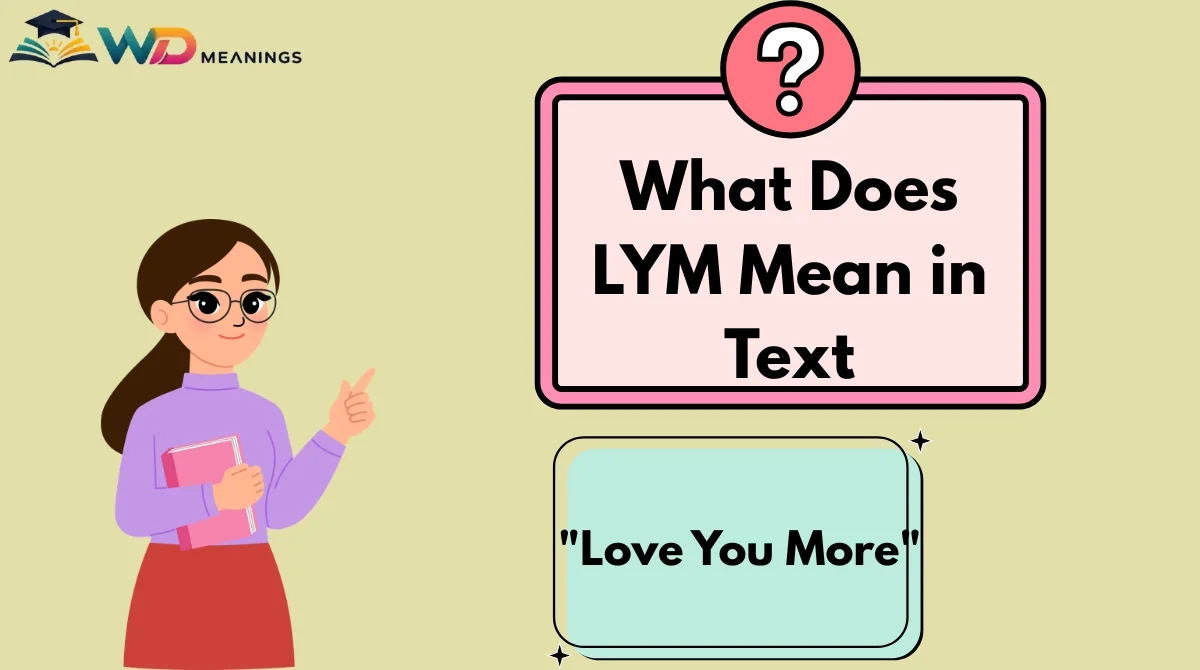
In most text messages and social media chats, LYM usually means “Love You More.” It’s a warm, affectionate reply that people use after someone says “I love you.”
You’ll often see it between romantic partners, close family members, and best friends.
However, like many internet abbreviations, the exact meaning depends on context, and there are a few less common interpretations worth knowing.
This guide explains what LYM means in text, where people use it, how to respond naturally, and how to avoid misunderstanding it in different conversations.
Quick Answer
LYM most commonly means “Love You More” in text messages. People use it to express affection by replying to “Love you” or “I love you.” You’ll often see it in personal conversations on WhatsApp, Snapchat, Instagram, Messenger, and other messaging apps. Although it can have other meanings in specific communities, “Love You More” is by far the most common texting meaning.
What Does LYM Mean in Text?
The most common meaning of LYM is:
LYM = Love You More
Simple definition
It is an affectionate abbreviation used to tell someone that your love or care for them is even stronger than what they expressed.
Pronunciation
Most people simply say each letter individually:
L-Y-M (“el-why-em”)
When speaking aloud, people usually say the full phrase “Love you more” rather than the abbreviation.
Emotional tone
The tone is generally:
- Warm
- Loving
- Caring
- Romantic
- Friendly
- Reassuring
It is almost always meant positively rather than sarcastically.
Example
Emma: Love you ❤️
Jake: LYM 😊
In this conversation, Jake is simply saying, “Love you more.”
Origin and Background
Unlike some internet slang that began on a particular website or forum, LYM appears to have developed naturally as a shortened version of “Love You More.”
As texting became more popular and character limits encouraged shorter messages, people began abbreviating common expressions. Just as “ILY” stands for “I Love You,” many people shortened “Love You More” to LYM for faster typing.
There is no widely accepted record showing exactly when or where the abbreviation first appeared. Instead, it seems to have spread gradually through text messaging, instant messaging, and social media.
Today, it remains an informal abbreviation used mainly in personal conversations.
How LYM Is Used in Text Conversations
People use LYM in several natural ways.
Between romantic partners
This is probably the most common situation.
Alex: Goodnight ❤️ Love you.
Taylor: LYM 😘
The abbreviation adds warmth without typing the full sentence.
Between family members
Parents, children, and siblings also use it.
Mum: Have a great day. Love you.
Daughter: LYM ❤️
Here it simply expresses affection.
Between close friends
Some close friends casually tell each other they love one another.
Friend 1: Thanks for always being there.
Friend 2: Anytime. LYM ❤️
In this context, it reflects appreciation and friendship rather than romance.
During emotional conversations
People sometimes use LYM when someone needs reassurance.
Sam: I really appreciate everything you’ve done.
Chris: Always. LYM ❤️
The message provides emotional comfort and support.
As a quick reply
Instead of typing a complete sentence, someone may simply send:
LYM
The recipient already understands it from the earlier conversation.
What LYM Means on Different Platforms
The meaning stays remarkably consistent across most messaging platforms.
People commonly use LYM in private chats with partners, family, or close friends. It usually means “Love You More.”
Snapchat
On Snapchat, users often exchange short affectionate messages. LYM carries the same meaning and may appear alongside hearts or smiling emojis.
Whether in direct messages or replies to Stories, LYM generally expresses affection or appreciation.
TikTok
TikTok users occasionally use LYM in comments or direct messages. It still usually means “Love You More,” although it is less common than abbreviations like ILY.
Friends and relatives may use LYM in Messenger chats or comments between people who know each other well.
Discord
Discord conversations tend to be more casual. Within close friend groups, LYM still means “Love You More,” although it is less frequently used than in personal messaging apps.
Dating apps
When two people have developed a close relationship, LYM can be a playful or sincere expression of affection.
Across these platforms, the meaning rarely changes. The conversation itself matters more than the platform.
What Does LYM Mean From a Girl or Guy?
The meaning usually does not change based on whether it comes from a girl or a guy.
Instead, pay attention to:
- Your relationship
- Previous messages
- Emojis
- Overall conversation
- Tone
For example:
Romantic partner
LYM ❤️ almost certainly means “Love You More.”
Best friend
It may simply express deep friendship and appreciation.
Family member
It usually reflects genuine family affection.
New acquaintance
If someone you barely know sends LYM, consider the surrounding conversation before assuming romantic interest.
Context always matters more than gender.
Other Possible Meanings
Although Love You More is the standard texting meaning, LYM occasionally represents other phrases in specialised settings.
| Meaning | Context | Example |
|---|---|---|
| Love You More | Texting and social media (most common) | “Sleep well. LYM ❤️” |
| Learning Young Minds | Education or organisation name | “The LYM programme starts next week.” |
| Local Youth Ministry | Churches or community organisations | “The LYM meeting is tonight.” |
If you receive LYM in a personal conversation, “Love You More” is almost always the correct interpretation.
How to Respond to LYM
Your reply depends on the conversation and your relationship.
1. Warm reply
“Aww, love you too ❤️”
2. Playful reply
“Impossible! I love you more 😄”
3. Romantic reply
“You’re the sweetest. Can’t wait to see you ❤️”
4. Friendly reply
“Right back at you!”
5. Funny reply
“We’re going to argue about this forever 😂”
6. Appreciative reply
“That means a lot. Thank you ❤️”
7. If you’re unsure
“Just checking—did you mean ‘Love You More’?”
Clarifying politely is always better than making assumptions.
Similar Texting Terms and Differences
| Term | Meaning | Key Difference |
|---|---|---|
| ILY | I Love You | Direct declaration of love |
| LY | Love You | Shorter version without “more” |
| LYSM | Love You So Much | Emphasises intensity |
| XOXO | Hugs and kisses | Expression of affection rather than a sentence |
| BFF | Best Friends Forever | Refers to friendship instead of expressing love |
Although these abbreviations all express positive feelings, LYM specifically responds with “Love You More.”
Common Misunderstandings
Several misunderstandings can occur with LYM.
Assuming every LYM is romantic
Not always. Parents, siblings, and close friends may use it affectionately without romantic intent.
Confusing it with other abbreviations
Because many internet abbreviations look similar, someone might mistake LYM for another acronym. Always read the surrounding messages.
Capitalisation
People write it in several ways:
- LYM
- lym
- Lym
The meaning usually remains identical.
Reading too much into it
Receiving LYM from someone doesn’t automatically mean they want a romantic relationship. Consider your existing relationship and conversation.
Is LYM Appropriate or Safe to Use?
Yes.
LYM is generally considered polite, friendly, and safe.
It is:
- Informal
- Positive
- Non-offensive
- Suitable for personal conversations
However, it is not usually appropriate in formal workplaces, professional emails, or business communication, unless you already have a very close personal relationship with the recipient.
Since LYM expresses affection, use it only when it matches the relationship and situation.
Examples of LYM in Text
Here are some realistic examples.
- Love you!
LYM ❤️ - Drive safely.
Thanks! LYM. - I’m so lucky to have you.
LYM always. - Goodnight 😊
Sleep well. LYM. - You made my day.
Aww, LYM! - Miss you already.
LYM ❤️ Can’t wait to see you. - Thanks for checking on me.
Of course. LYM. - Have fun on holiday!
Will do! LYM! - You’re the best friend ever.
LYM ❤️ - Hope your meeting goes well.
Thanks! LYM. - See you tomorrow!
Can’t wait. LYM 😊 - I’m proud of you.
That means everything. LYM.
Frequently Asked Questions
Does LYM always mean “Love You More”?
In most text messages, yes. It is the most widely recognised meaning. However, if you see it in an educational, organisational, or community setting, it may represent a different name or phrase. Context is the easiest way to determine the correct meaning.
Is LYM romantic?
Often, but not always. Romantic partners use it frequently, yet family members and close friends also use LYM to express affection and appreciation without romantic intent.
Is LYM the same as ILY?
No. ILY means “I Love You,” while LYM means “Love You More.” LYM is commonly used as a response after someone has already expressed love.
Can I use LYM with friends?
Yes. Many close friends comfortably exchange affectionate messages such as “Love you” and “LYM.” Whether it feels natural depends on your friendship and communication style.
Should I use LYM in work messages?
Generally, no. LYM is a personal and informal expression of affection. Professional conversations are usually better suited to more neutral language unless you’re communicating with someone you know personally outside work.
What if I’m not sure what someone meant by LYM?
Look at the surrounding conversation first. If the meaning still isn’t clear, asking politely is perfectly acceptable. A simple question such as, “Did you mean ‘Love You More’?” can avoid unnecessary confusion.
Conclusion
LYM most commonly means “Love You More” in text messages and online chats. It’s an affectionate abbreviation that people use with romantic partners, family members, and close friends to express warmth and appreciation.
While a few organisations may use the same letters for different names, those meanings are uncommon in everyday texting.
Whenever you receive LYM, consider the relationship, the conversation, and the overall tone.
In most personal chats, it’s simply a heartfelt way of saying that someone’s love and care are returned—and perhaps even multiplied.

Hamz Ellis is a content writer at WD Meanings, specializing in internet slang, texting abbreviations, and digital communication. He creates clear, well-researched, and easy-to-understand content to help readers quickly find the meanings of modern online terms.