Texting is full of abbreviations that can be confusing, especially when the same letters have more than one meaning.
If you’ve received “JM” in a message and aren’t sure what it means, you’re not alone.
The meaning of JM depends on the conversation, who sent it, and the platform you’re using.
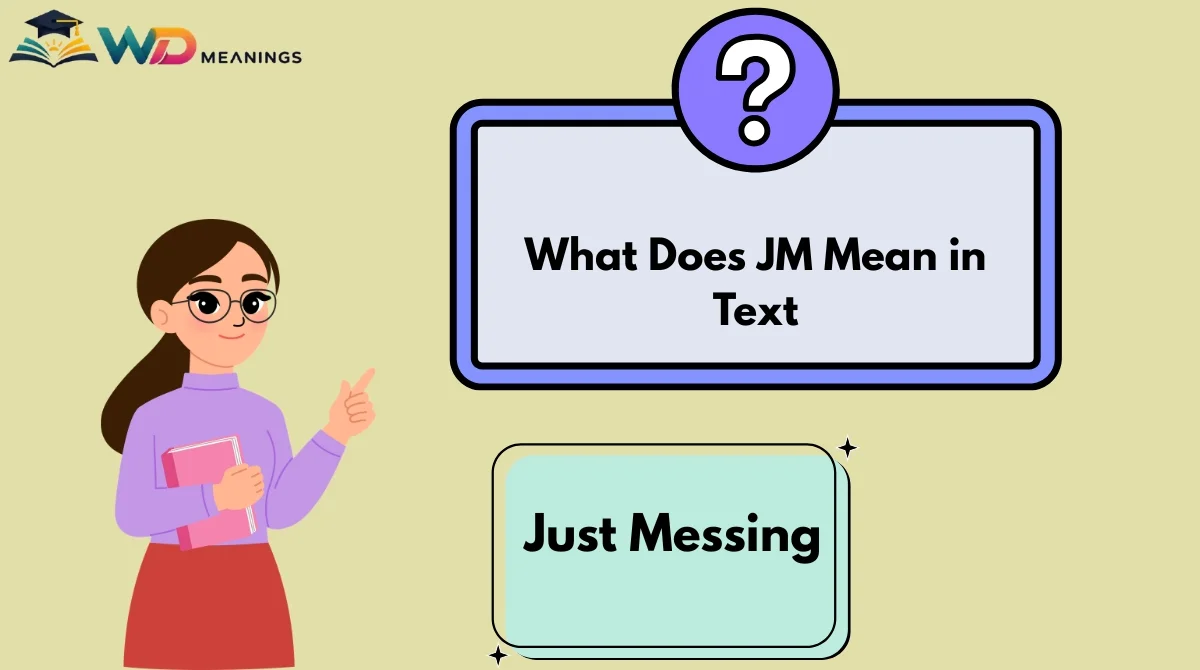
In most text conversations, JM commonly stands for “Just Messing,” a casual way to tell someone that a previous comment was a joke or shouldn’t be taken seriously.
However, in other situations, JM can refer to a person’s initials, mean “Just Married,” or have a few other context-specific meanings.
This guide explains what JM means in text, where it’s commonly used, how to interpret it correctly, and how to respond naturally.
Quick Answer
JM most commonly means “Just Messing” in text messages and online chats. People use it after teasing, joking, or making a playful comment to show they weren’t being serious. Depending on the context, JM can also represent someone’s initials or less commonly mean “Just Married.”
What Does JM Mean in Text?
The most common texting meaning of JM is:
JM = Just Messing
Pronunciation: People usually say the individual letters “J-M” rather than pronouncing it as a word.
When someone writes JM, they’re letting you know they were joking, teasing, or not being completely serious. It’s similar to saying:
- “Just kidding”
- “I’m joking”
- “Only teasing”
- “Don’t take that seriously”
The tone is usually light-hearted, friendly, and playful.
Example
Alex: I can’t believe you forgot my birthday. 😒
Taylor: JM 😂 I know it’s next week.
Here, JM reassures the other person that the previous statement was meant as a joke.
Origin and Background
Unlike some internet slang with a well-documented history, JM doesn’t have one universally recognised origin in online communication.
The abbreviation likely developed naturally as people looked for quicker ways to type common expressions during the early days of texting and instant messaging. Since abbreviations save time and characters, phrases like “Just Messing” became shortened to JM in casual conversations.
Today, the abbreviation appears occasionally in text messages, messaging apps, gaming chats, and social media conversations. However, it’s less common than alternatives such as JK (“Just Kidding”), which many people recognise instantly.
Because JM has multiple meanings, readers should always rely on the surrounding conversation rather than assuming a single definition.
How JM Is Used in Text Conversations
People mainly use JM after making a playful statement that could otherwise sound serious.
Friendly Teasing
Emma: Wow, you’re always late.
Chris: JM 😂 You’re actually early today.
The abbreviation softens the teasing and avoids misunderstandings.
Light Humour
Friend 1: I ate the last slice of pizza.
Friend 2: Seriously?
Friend 1: JM! There’s still plenty left.
Flirting
Someone may jokingly tease their crush before adding JM to make sure the message stays playful.
Sam: Maybe I won’t text you anymore.
Jordan: 😢
Sam: JM ❤️
After a Sarcastic Comment
Ryan: You’re the worst teammate ever.
Ben: Ouch.
Ryan: JM 😂 You carried us.
Avoiding Misunderstandings
Since text messages don’t include facial expressions or tone of voice, adding JM helps readers recognise that the sender wasn’t being mean.
What JM Means on Different Platforms
The meaning of JM generally stays the same across platforms. The biggest difference comes from the conversation itself rather than the app.
Friends often use JM after jokes, playful teasing, or humorous comments.
Snapchat
On Snapchat, JM usually appears in casual chats where people are joking with close friends.
You may see JM in direct messages or comment replies after someone posts a playful or sarcastic remark.
TikTok
Although less common in TikTok comments than abbreviations like LOL or LMAO, JM can still mean “Just Messing.”
Facebook Messenger users occasionally use JM in friendly conversations with family and friends.
Discord
Gamers sometimes use JM after playful trash talk to show there are no hard feelings.
Dating Apps
In dating conversations, JM often helps soften teasing or flirtatious jokes, making the conversation feel more relaxed.
Across all these platforms, context remains the most reliable clue.
What Does JM Mean From a Girl or Guy?
The meaning of JM doesn’t change based on whether the sender is a girl or a guy.
Instead, focus on:
- Your relationship with the sender
- The conversation before the abbreviation
- Emojis used
- Punctuation
- Overall tone
For example:
“You’re impossible 😂 JM.”
This sounds playful regardless of who sends it.
Similarly:
“Guess I don’t need you anymore… JM ❤️”
The heart emoji changes the tone to something more affectionate and flirtatious.
Always interpret the abbreviation alongside the rest of the conversation rather than making assumptions based on gender.
Other Possible Meanings
While “Just Messing” is the most common texting meaning, JM can have other legitimate interpretations.
| Meaning | Context | Example |
|---|---|---|
| Just Messing | Casual texting | “Relax, JM 😂” |
| Just Married | Wedding announcements | “JM! Thanks for celebrating with us.” |
| Person’s initials | Referring to someone | “JM will join the meeting later.” |
| Job Market | Career discussions | “The JM is competitive this year.” |
| Journey Manager (or another job title) | Workplace conversations | “Please ask the JM for approval.” |
In everyday personal texting, “Just Messing” is usually the intended meaning unless the conversation clearly points elsewhere.
How to Respond to JM
Your reply depends on the conversation and your relationship with the sender.
Casual
Haha, you got me!
Funny
I almost believed you!
Friendly
Good one 😂
Playful
Nice try!
Romantic
You scared me for a second ❤️
Confused
Oh! I thought you were serious.
Serious Conversation
Thanks for clearing that up.
Chat Example
Alex: I sold your bike.
Jamie: Wait…what?
Alex: JM 😂
Jamie: You almost gave me a heart attack!
Similar Texting Terms and Differences
| Term | Meaning | Key Difference |
|---|---|---|
| JK | Just Kidding | More widely recognised than JM. |
| JKJK | Just Kidding…Seriously Just Kidding | Adds extra emphasis. |
| LOL | Laughing Out Loud | Expresses laughter rather than correcting a joke. |
| LMAO | Laughing My Ass Off | Shows stronger amusement than LOL. |
| IDC | I Don’t Care | Expresses indifference, not humour. |
Among these, JK is the closest alternative to JM because both clarify that something wasn’t meant seriously.
Common Misunderstandings
Because JM has several possible meanings, misunderstandings can happen.
Some common mistakes include:
- Assuming it always means Just Married.
- Thinking it’s someone’s initials when it’s actually Just Messing.
- Believing a joke is serious because the abbreviation isn’t familiar.
- Mistaking it for another abbreviation like JK.
Capitalisation rarely changes the meaning.
You’ll commonly see:
- JM
- jm
- Jm
These versions generally mean the same thing in informal chats.
The best way to understand JM is by reading the surrounding messages.
Is JM Appropriate or Safe to Use?
Yes. JM is generally a polite, informal, and harmless abbreviation.
It’s appropriate for:
- Friends
- Family
- Casual conversations
- Group chats
- Gaming chats
- Social media messages
It’s usually best to avoid abbreviations like JM in:
- Professional emails
- Formal business communication
- Academic writing
- Official documents
If the recipient may not recognise internet slang, writing “Just kidding” or “Just messing” in full is often clearer.
Examples of JM in Text
Here are some realistic examples showing how people naturally use JM.
- “You’re officially banned from pizza night. JM 😂”
- “I deleted all your photos… JM!”
- “Relax, JM. I would never do that.”
- “You really believed me? JM 😄”
- “I can’t believe you fell for it. JM.”
- “Forget what I said—JM!”
- “You’re my least favourite sibling… JM ❤️”
- “I was only teasing. JM.”
- “Don’t panic, JM. Everything’s fine.”
- “I almost convinced you! JM 😂”
- “I’m cancelling our trip… JM, we’re still going.”
- “You looked so shocked! JM.”
These examples show that JM usually follows a playful or exaggerated statement to reassure the other person.
Frequently Asked Questions
What does JM usually mean in text messages?
In most casual text conversations, JM means “Just Messing.” It tells the reader that the previous comment was meant as a joke, tease, or playful remark rather than a serious statement.
Is JM the same as JK?
Not exactly. Both abbreviations indicate that someone is joking, but JK (Just Kidding) is much more common and widely recognised. JM (Just Messing) carries a very similar meaning but is used less frequently.
Can JM mean someone’s initials?
Yes. If people are discussing a specific person, JM may simply refer to that individual’s initials. The surrounding conversation usually makes this obvious.
Is JM used on Snapchat and Instagram?
Yes. People sometimes use JM on Snapchat, Instagram, WhatsApp, Discord, Facebook Messenger, and other messaging platforms. Its meaning generally stays the same across these services.
Is JM rude?
No. JM is typically friendly and informal. It’s used to soften jokes or teasing rather than offend someone. However, jokes can still hurt feelings if they’re insensitive, so context always matters.
Should I use JM in professional conversations?
Generally, no. While JM isn’t offensive, professional communication is usually clearer when you write complete phrases like “just joking” or “just kidding” instead of using informal abbreviations.
Conclusion
The answer to what does JM mean in text is usually “Just Messing.”
It’s a casual abbreviation used to show that a previous message was playful rather than serious. Although JM can occasionally mean something else—such as Just Married or someone’s initials—the surrounding conversation almost always reveals the intended meaning.
When you’re unsure, look at the context, emojis, and earlier messages instead of relying on the abbreviation alone.
Understanding these clues makes it much easier to interpret modern texting language accurately.

Hamz Ellis is a content writer at WD Meanings, specializing in internet slang, texting abbreviations, and digital communication. He creates clear, well-researched, and easy-to-understand content to help readers quickly find the meanings of modern online terms.