Have you received a message containing “FB” and wondered what it means? You’re not alone.
The abbreviation appears in everyday texts, social media posts, chats, and online conversations, but its meaning depends on the context.
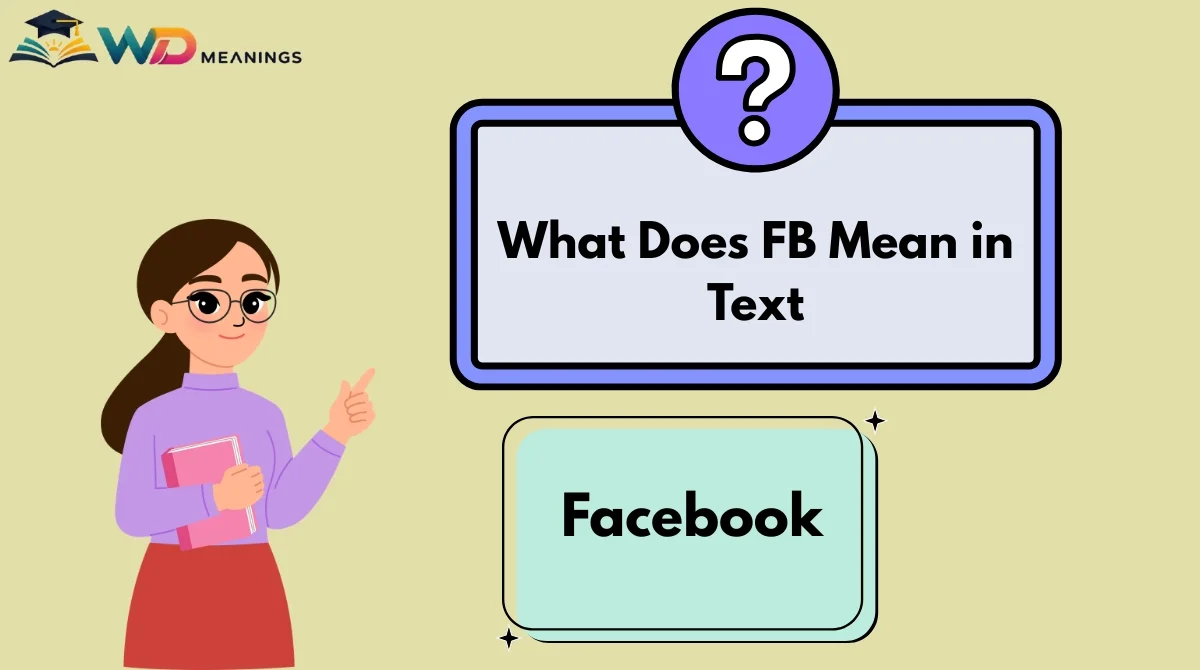
Most of the time, FB means “Facebook” in text messages. People use it as a quick way to refer to the social media platform without typing the full name.
However, in certain conversations, FB can also stand for other phrases, such as “Follow Back” on social media or a few industry-specific terms.
Understanding the surrounding conversation is the easiest way to figure out which meaning is intended.
This guide explains the most common definition, alternative meanings, examples, platform-specific usage, and natural ways to respond.
Quick Answer
FB most commonly means “Facebook” in text messages and online conversations. People use it when talking about the social media platform, sharing profiles, discussing posts, or asking someone to connect there. In some social media contexts, especially around following accounts, FB may also mean “Follow Back.” The conversation usually makes the intended meaning clear.
What Does FB Mean in Text?
In texting, FB most often stands for “Facebook.”
People shorten the platform’s name because it’s faster to type, especially in casual conversations.
Full form: Facebook
Pronunciation: People usually say the individual letters—“eff-bee.”
Simple definition: A short abbreviation referring to Facebook.
The tone is usually neutral, friendly, and informal. Unlike many internet abbreviations, FB doesn’t express an emotion by itself. Instead, it simply identifies the platform someone is talking about.
Example
Alex: Did you upload the photos?
Mia: Yeah, they’re on FB now.
In this conversation, FB simply means Facebook.
Origin and Background
The abbreviation FB developed naturally as people looked for faster ways to type online. Since Facebook became one of the world’s largest social networking platforms, users frequently shortened its name in chats, text messages, emails, and forum discussions.
There isn’t a single documented moment when FB first entered internet slang. Like many abbreviations, it gradually became common because it’s convenient and widely understood.
Today, many people still use FB even though they may spend more time on newer social platforms. It’s a familiar shorthand that remains easy to recognise.
How FB Is Used in Text Conversations
FB usually appears whenever someone is discussing Facebook-related activities.
Talking About Posts
Emma: Did you see my holiday pictures?
Ryan: Yeah, I saw them on FB this morning.
Sharing a Profile
Chris: What’s your Facebook?
Taylor: Just search my name on FB.
Asking Someone to Connect
Jordan: Are we friends on FB yet?
Sam: Not yet—send me a request.
Discussing Groups
Olivia: I found a helpful gardening group.
Ben: Is it on FB?
Referring to Marketplace
Lisa: Where did you find that chair?
Mark: I bought it through FB Marketplace.
Meaning “Follow Back”
Although much less common in ordinary texting, FB may occasionally mean “Follow Back”, especially on social media.
User A: I followed you!
User B: Thanks! FB?
Here, FB is a request asking whether the other person will follow back.
What FB Means on Different Platforms
On WhatsApp, FB almost always means Facebook. Friends may share links, profiles, events, or posts using the abbreviation.
Example:
“I sent the event on FB.”
Snapchat
Snapchat users sometimes mention FB when comparing social media apps or sharing other accounts.
Example:
“Add me on FB too.”
Instagram conversations sometimes use FB to mean Facebook or, less commonly, Follow Back if users are discussing followers.
Context is the key.
TikTok
On TikTok, people usually use FB when talking about Facebook videos, pages, or cross-posted content.
Example:
“I first saw that clip on FB.”
Ironically, people even use FB while chatting on Facebook itself because it’s shorter than typing the full platform name.
Example:
“FB has been slow today.”
Discord
Discord users may mention FB when comparing social platforms or sharing communities.
Example:
“Our old group moved from FB to Discord.”
Dating Apps
On dating apps, FB generally refers to Facebook, often when someone wants to verify a person’s identity or continue chatting elsewhere.
Example:
“Do you have FB?”
What Does FB Mean From a Girl or Guy?
The abbreviation itself does not change meaning based on gender.
Whether a girl, guy, or anyone else sends FB, it most likely refers to Facebook or, depending on the conversation, Follow Back.
Instead, pay attention to the surrounding conversation.
Context Matters More Than Gender
If someone says:
“Add me on FB 😊”
they’re simply inviting you to connect on Facebook.
If they write:
“FB?”
after you’ve followed them on Instagram, they’re probably asking for a follow back.
Emojis, punctuation, and the previous messages provide much stronger clues than the sender’s gender.
Other Possible Meanings
Although Facebook is by far the most common meaning in everyday texting, FB has a few other legitimate uses.
| Meaning | Context | Example |
|---|---|---|
| Texting, social media | “I saw your photos on FB.” | |
| Follow Back | Instagram, TikTok, X, social media | “I followed you. FB?” |
| Fullback | Sports discussions | “Our FB scored the winning touchdown.” |
| Feedback (occasionally shortened) | Work or school chats | “Can you send me your FB on the report?” |
Facebook remains the most common meaning in personal text conversations.
How to Respond to FB
Your reply depends on what FB means in the conversation.
If It Means Facebook
Them: Add me on FB.
You: Sure! What’s your profile name?
If They Shared Something
Them: I posted the photos on FB.
You: I’ll check them out later.
If They’re Asking About Facebook
Them: Are you on FB?
You: Yes, I am.
If They Mean Follow Back
Them: FB?
You: Absolutely—I just followed you back.
If You’re Unsure
Them: FB?
You: Do you mean Facebook or follow back?
Friendly Response
“Yep! I’ll find you on Facebook.”
Funny Response
“Only if you promise not to judge my old profile pictures.”
Professional Response
“Certainly. Please send me your Facebook profile link.”
Similar Texting Terms and Differences
| Term | Meaning | Key Difference |
|---|---|---|
| FB | Facebook or Follow Back | Usually refers to Facebook |
| IG | Refers specifically to Instagram | |
| DM | Direct Message | Means a private message rather than a platform |
| PM | Private Message | Similar to DM but used across many platforms |
| IRL | In Real Life | Describes offline situations rather than social media |
Common Misunderstandings
One common mistake is assuming FB always means Facebook.
While that’s usually correct, some situations call for a different interpretation.
For example:
- On Instagram, FB could mean Follow Back.
- During an American football discussion, FB usually means Fullback.
- In workplace chats, someone might shorten feedback to FB, although this is less common.
Capitalisation rarely changes the meaning. You’ll see:
- FB
- fb
- Fb
All three generally represent the same abbreviation.
Whenever you’re unsure, read the surrounding messages before making assumptions.
Is FB Appropriate or Safe to Use?
Yes. FB is generally a safe, polite, and informal abbreviation.
It doesn’t contain offensive language or inappropriate content.
However, because it’s informal, spelling out Facebook is often better in:
- business emails
- academic writing
- formal reports
- professional documents
In everyday conversations with friends and family, FB is perfectly acceptable.
Examples of FB in Text
- “I uploaded the pictures to FB.”
- “Can you send me your FB profile?”
- “We met through an FB group.”
- “Did you see that funny video on FB?”
- “Our event is listed on FB now.”
- “I’ll message you on FB later.”
- “Most of my relatives still use FB every day.”
- “I found that sofa on FB Marketplace.”
- “Thanks for the follow! FB?“
- “I’ll share the announcement on FB tonight.”
- “Are you still active on FB?”
- “Someone tagged me on FB, and I just noticed.”
Frequently Asked Questions
What does FB usually mean in text messages?
In most text conversations, FB means Facebook. People use it as a convenient abbreviation when talking about posts, profiles, groups, events, or messaging on the platform.
Can FB mean Follow Back?
Yes. On Instagram, TikTok, X, and some other social media platforms, FB can mean “Follow Back.” This usage is much less common in regular text messaging than the Facebook meaning.
Does FB always refer to Facebook?
No. Although Facebook is the most common meaning, FB can also stand for Follow Back, Fullback, or occasionally Feedback, depending on the topic of the conversation.
Is FB formal or informal?
FB is considered informal. It’s perfectly acceptable in personal texts, chats, and social media conversations but is generally avoided in formal business writing.
Should I ask if I don’t understand what FB means?
Yes. If the context isn’t clear, simply ask, “Do you mean Facebook or follow back?” A quick question prevents misunderstandings and keeps the conversation clear.
Is FB still commonly used?
Yes. Many people continue using FB as a quick abbreviation for Facebook, especially in text messages, online discussions, and casual conversations, even as newer social media platforms have grown in popularity.
Conclusion
FB most commonly means Facebook in text messages and online conversations.
Depending on the situation, it can also mean Follow Back, particularly on social media where users discuss followers and engagement.
The surrounding conversation almost always reveals the intended meaning.
If you’re ever uncertain, checking the context or asking for clarification is the simplest solution.
Once you know these common uses, you’ll have no trouble understanding what FB means the next time it appears in a chat.

Hamz Ellis is a content writer at WD Meanings, specializing in internet slang, texting abbreviations, and digital communication. He creates clear, well-researched, and easy-to-understand content to help readers quickly find the meanings of modern online terms.