If you have seen someone type “TSSS” in a text message, comment, or social media conversation, you may wonder whether it is an abbreviation, slang term, or an expression with a hidden meaning.
Unlike common texting shortcuts such as “LOL” or “BRB,” TSSS is less standardized, so its meaning depends heavily on the conversation and the person using it.
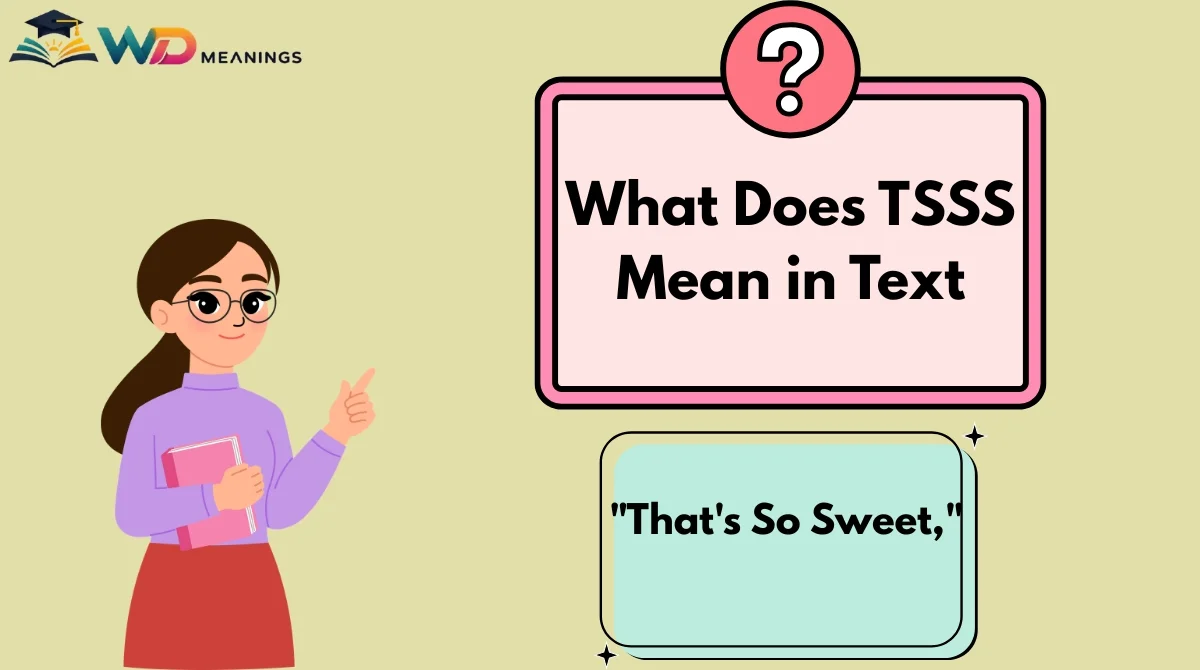
So, what does TSSS mean in text? In most casual online conversations, TSSS is often used as a playful sound or reaction rather than a formal abbreviation.
It can express teasing, disbelief, annoyance, a dramatic reaction, or a “shushing” type of feeling depending on the context.
This guide explains the meaning of TSSS, where it comes from, how people use it on different platforms, and how to understand the intention behind it.
Quick Answer
TSSS in text usually represents a sound or reaction rather than a fixed acronym. People often use it to show teasing, mild annoyance, disbelief, or a “shh”/hissing-style reaction. The exact meaning depends on the conversation, punctuation, emojis, and relationship between the people texting.
What Does TSSS Mean in Text?
TSSS usually does not have one official full form in texting. Unlike many internet abbreviations, it is commonly used as a written version of a sound or emotional reaction.
The meaning of TSSS can change depending on the situation. Someone typing “TSSS” may be trying to express:
- A playful reaction
- A teasing response
- Mild frustration
- Disbelief or doubt
- A dramatic “come on” feeling
- A quieting or “shush” sound
Think of it like writing a noise you would make in real life. Similar examples include “hmmm,” “ugh,” “pshh,” or “tsk.”
How Is TSSS Pronounced?
Most people read TSSS as a sound rather than saying each letter individually.
It may sound like:
- “Tsss”
- “Tss-tss”
- A soft hissing or clicking sound
The pronunciation depends on the writer’s intention. Some people use it similarly to the sound “tsk,” which is often used to show disappointment or playful disapproval.
Emotional Meaning of TSSS
The emotional meaning behind TSSS is usually found in the surrounding message.
For example:
Friendly teasing:
“You really thought you could beat me at that game? TSSS 😂”
Here, TSSS is playful and confident.
Mild annoyance:
“TSSS, you forgot again?”
Here, it may show disappointment or joking frustration.
Disbelief:
“TSSS… no way that actually happened.”
Here, it expresses surprise or doubt.
The same letters can create completely different feelings depending on the relationship and tone.
Example Text Message
Person A: “I finished the whole project in one hour.”
Person B: “TSSS, you’re definitely exaggerating 😂”
In this example, TSSS shows playful disbelief rather than anger.
Origin and Background of TSSS
The exact origin of TSSS as a texting expression is unclear because it developed naturally through online communication rather than being created as an official abbreviation.
Many internet expressions come from people trying to represent spoken sounds through writing. Before texting became popular, people already used written forms like “tsk,” “pshh,” and “hiss” in comics, books, and informal writing to show reactions.
As digital conversations became more expressive, users began creating their own versions of these sounds using repeated letters. TSSS follows this pattern by representing a sharp or breath-like sound.
It is important to note that TSSS is not universally recognized as having one fixed meaning. Some communities or individuals may use it differently, and in some cases, it may simply be a personal typing style.
When you see TSSS, the best way to understand it is to look at:
- The sentence before and after it
- The person who sent it
- Their usual texting style
- Emojis or punctuation used with it
For example:
“TSSS 😏” may feel playful or teasing.
“TSSS…” may feel more doubtful or dramatic.
“TSSS!” may sound stronger or more emotional.
How TSSS Is Used in Text Conversations
People usually use TSSS as an emotional reaction. It works like a small expression added before or after a message to show attitude.
Unlike words that provide information, TSSS mainly adds tone.
1. TSSS as a Playful Tease
Friends often use TSSS when joking with each other.
Example:
A: “I’m the best cook in the group.”
B: “TSSS, you burned toast yesterday 😂”
Here, TSSS creates a playful challenge.
2. TSSS to Show Disbelief
Someone may use TSSS when they do not fully believe something.
Example:
A: “I didn’t study and still got the highest score.”
B: “TSSS, lucky you 😭”
The person is showing surprise while keeping the conversation casual.
3. TSSS as Mild Annoyance
Sometimes TSSS can express a small amount of irritation.
Example:
A: “I told you three times already.”
B: “TSSS okay, okay, I get it.”
Here, it may show a joking complaint rather than serious anger.
4. TSSS in Flirty Conversations
In romantic or playful chats, TSSS can add personality.
Example:
A: “You know you missed talking to me.”
B: “TSSS, keep dreaming 😌”
The meaning depends on the relationship. It could be playful rejection while actually encouraging the conversation.
5. TSSS as a Dramatic Reaction
Some people use it simply to make their messages more expressive.
Example:
“TSSS… that movie ending was wild.”
Here, it works like saying “wow,” “seriously,” or “I can’t believe that.”
What Does TSSS Mean on Different Platforms?
TSSS does not have a separate official meaning on each social platform. In most cases, the meaning stays similar, but the style of use may change depending on the community.
TSSS on WhatsApp
On WhatsApp, TSSS is usually used in private conversations between friends, family members, or couples.
Common uses include:
- Playful teasing
- Expressing disbelief
- Reacting dramatically
Example:
“You ate the last slice of pizza? TSSS 😂”
Because WhatsApp conversations are often personal, the relationship between the sender and receiver matters more than the platform itself.
TSSS on Snapchat
Snapchat users often communicate with short reactions, emojis, and casual expressions. TSSS may appear as a quick response to a photo, story, or message.
Example:
“You posted that picture? TSSS 🔥”
Depending on the context, it could mean admiration, teasing, or playful surprise.
TSSS on Instagram
On Instagram, TSSS may appear in comments or direct messages.
Examples:
- Reacting to someone’s achievement
- Teasing a friend
- Responding to a funny post
Example comment:
“TSSS, someone is showing off today 😏”
The meaning is usually determined by whether the commenter is friendly or critical.
TSSS on TikTok
TikTok conversations often use exaggerated reactions, and TSSS fits into that style.
People may use it in comments to create a dramatic or humorous reaction.
Example:
“TSSS the confidence is unreal 😂”
It can add personality without needing a long explanation.
TSSS on Facebook
Facebook users may use TSSS less frequently than younger platforms, but it can still appear in casual comments or Messenger chats.
The meaning remains mostly the same: a reaction showing humor, disbelief, or mild disagreement.
TSSS on Discord
On Discord servers, especially gaming or community chats, TSSS may be used as a quick emotional reaction.
Example:
“You lost that easy round? TSSS 💀”
It is usually informal and depends on the group’s communication style.
TSSS on Dating Apps
On dating apps, TSSS can appear in playful flirting.
Example:
A: “I make the best coffee.”
B: “TSSS, everyone says that 😂”
In a romantic conversation, it may create playful tension rather than genuine criticism.
However, because text lacks facial expressions and voice tone, it is important not to assume the meaning without considering the whole conversation.
What Does TSSS Mean From a Girl or Guy?
Many people search for meanings like “What does TSSS mean from a girl?” or “What does TSSS mean from a guy?” because they want to understand hidden emotions.
The truth is that gender does not determine the meaning of TSSS. A girl or guy can use it in the same ways: joking, teasing, reacting, or showing disbelief.
The important factors are:
- Your relationship with the person
- The previous conversation
- Their personality
- Emojis used
- Whether the message sounds playful or serious
TSSS From a Girl
A girl texting:
“TSSS, you’re impossible 😂”
could mean playful teasing if you already have a friendly relationship.
But:
“TSSS… seriously?”
could show frustration or disappointment.
TSSS From a Guy
A guy texting:
“TSSS, you actually believed that?”
may simply be joking around.
In a flirting situation:
“TSSS, you know you like me 😏”
could be playful confidence.
How to Understand the Real Meaning
Instead of focusing on whether the sender is male or female, look for clues:
Positive signs:
- Laughing emojis 😂🤣
- Playful wording
- Friendly conversation
- Inside jokes
Possible negative signs:
- Short replies
- Angry emojis
- Serious topic
- Repeated complaints
TSSS itself is usually neutral. The surrounding message gives it meaning.
Other Possible Meanings of TSSS
Although TSSS most commonly appears as an expressive sound in texting, it can occasionally have other meanings depending on the situation. Unlike established abbreviations such as “LOL” or “OMG,” TSSS does not have one widely accepted definition across the internet.
The meaning most common in casual conversations is the reaction sound described earlier. Other interpretations are usually related to specific communities, organizations, or personal typing habits.
| Meaning | Context | Example |
|---|---|---|
| Expressive reaction sound (“tsss”) | Casual texting, social media, chats | “TSSS, you really said that? 😂” |
| A written “tsk” or disapproving sound | Showing disappointment or playful criticism | “TSSS, that wasn’t your best idea.” |
| Personal abbreviation | Private groups, usernames, communities, or inside jokes | “Everyone in our group knows what TSSS means.” |
| Technical or specialized abbreviation | Certain professional fields or organizations | Meaning depends completely on the specific field |
For everyday texting, the reaction sound meaning is by far the most likely interpretation. If someone sends TSSS in a normal conversation, they are usually expressing an emotion rather than referring to a formal term.
How to Respond to TSSS
The best reply to TSSS depends on the sender’s tone. Since TSSS can be playful, sarcastic, or slightly annoyed, match the energy of the conversation instead of assuming the worst.
Here are some natural responses for different situations.
1. Funny Reply
If someone uses TSSS while teasing you:
Them: “TSSS, you thought you could win? 😂”
You: “Let me enjoy my confidence for five seconds at least 😭”
2. Playful Reply
When the conversation is friendly:
Them: “TSSS, you’re so dramatic.”
You: “And you secretly love it 😌”
3. Confused Reply
If you are unsure what they mean:
You: “Wait 😂 what does TSSS mean here?”
This is often the easiest option because some people use expressions differently.
4. Friendly Reply
For a casual conversation:
Them: “TSSS, you’re always late.”
You: “Okay okay, I’ll try to improve my timing 😅”
5. Romantic or Flirty Reply
If the conversation is clearly playful:
Them: “TSSS, you’re trying to impress me.”
You: “Maybe it’s working though 😉”
6. Serious Reply
If TSSS seems connected to frustration:
Them: “TSSS… you forgot again.”
You: “Sorry, I didn’t mean to annoy you. What happened?”
A calm response works better than joking when the tone seems negative.
Similar Texting Terms and Differences
TSSS is related to other reaction-style expressions used in online conversations. However, each one creates a slightly different feeling.
| Term | Meaning | Key Difference |
|---|---|---|
| TSK | A sound showing disappointment or disapproval | Usually sounds more critical or judgmental |
| Pshh / Pssh | A dismissive or doubtful reaction | Often suggests “I don’t believe you” |
| Ugh | Annoyance, frustration, or tiredness | More clearly negative |
| Hmm | Thinking, uncertainty, or curiosity | Less emotional and more neutral |
| Hmph | Mild annoyance or stubborn disagreement | Often sounds dramatic or playful |
TSSS vs TSK
Both can show disapproval, but TSK often sounds more like a traditional “that’s not good” reaction.
Example:
“TSK, you should know better.”
TSSS is usually more flexible and can be playful.
TSSS vs Pshh
“Pshh” often means someone doubts something.
Example:
“Pshh, no way you did that.”
TSSS can also show disbelief, but it may carry more teasing energy.
TSSS vs Ugh
“Ugh” directly expresses frustration.
Example:
“Ugh, I forgot my keys.”
TSSS is usually less serious and more like a reaction sound.
Common Misunderstandings About TSSS
Because TSSS does not have one official definition, people sometimes misunderstand its intention.
1. Assuming It Always Means Anger
Some readers may think TSSS is automatically rude or negative.
That is not always true.
Example:
“TSSS, look who finally showed up 😂”
This could be a friendly joke between friends.
2. Confusing It With an Acronym
Many texting terms are shortened phrases, so people may assume TSSS stands for four words.
However, in most casual conversations, TSSS is simply a written sound.
3. Ignoring Emojis and Punctuation
The same word can feel completely different depending on how it is written.
Compare:
“TSSS 😂”
This feels playful.
“TSSS…”
This may feel doubtful or annoyed.
“TSSS!!!”
This feels more dramatic or intense.
4. Misreading It From Someone You Do Not Know Well
A close friend might use TSSS jokingly, while a stranger using it in a comment may sound more sarcastic.
Always consider:
- The relationship
- Previous messages
- The topic being discussed
5. Confusing TSSS With Similar-Looking Terms
Some people may mistake TSSS for other online abbreviations or community-specific meanings. If the conversation is about a specific topic, the meaning may change.
For example, a gaming community, workplace group, or online fandom may use unique abbreviations that are not common elsewhere.
Is TSSS Appropriate or Safe to Use?
TSSS is generally safe and informal to use in casual conversations. It is not considered a harmful or offensive expression by itself.
However, its tone depends on how and where it is used.
Casual Conversations
TSSS is usually acceptable among:
- Friends
- Family members
- Online communities
- Casual social media chats
Example:
“TSSS, you’re too funny 😂”
This is harmless and playful.
Workplace or Professional Messages
TSSS is usually not recommended in formal communication.
For example, avoid using it in:
- Emails to clients
- Professional reports
- Messages with managers
- Formal customer conversations
A professional setting usually requires clearer language.
Can TSSS Sound Rude?
Yes, depending on the situation.
Example:
“TSSS, that was a terrible idea.”
Without friendly context, it may sound dismissive.
If you are unsure how someone will interpret it, use clearer words instead.
Is TSSS Related to Serious or Dangerous Topics?
Unlike some internet slang that may hide serious meanings, TSSS generally does not commonly refer to self-harm, threats, abuse, or dangerous content.
However, every message should be judged by its full context. If someone uses unusual language while expressing distress, fear, or hopelessness, pay attention to the overall message rather than focusing only on the abbreviation.
Examples of TSSS in Text
Here are realistic examples showing different tones and situations:
1. Friendly Teasing
A: “I’m officially the funniest person here.”
B: “TSSS, your jokes are questionable 😂”
2. Playful Challenge
A: “Nobody can beat my score.”
B: “TSSS, watch me try 😏”
3. Surprise
A: “I met my favorite celebrity today.”
B: “TSSS, seriously?! That’s amazing!”
4. Mild Disagreement
A: “That movie was perfect.”
B: “TSSS, the ending was terrible 😂”
5. Flirty Conversation
A: “You definitely missed me.”
B: “TSSS, keep telling yourself that 😉”
6. Funny Reaction
A: “I stayed awake all night playing games.”
B: “TSSS, your sleep schedule is gone 💀”
7. Friend Group Chat
A: “I’m going to start exercising tomorrow.”
B: “TSSS, you say that every week.”
8. Expressing Doubt
A: “I totally didn’t eat the last cookie.”
B: “TSSS… there are crumbs everywhere.”
9. Dramatic Reaction
A: “The new update changed everything.”
B: “TSSS, my whole strategy is ruined.”
10. Light Complaint
A: “Sorry I replied late.”
B: “TSSS, only three days later 😂”
11. Friendly Competition
A: “I’m the best player in this group.”
B: “TSSS, prove it then.”
12. Casual Reaction
A: “I finally finished my homework.”
B: “TSSS, only took you forever 😭”
Frequently Asked Questions
What does TSSS mean in text messages?
TSSS usually means a reaction sound rather than a traditional abbreviation. People use it to show teasing, disbelief, mild annoyance, or playful disagreement. The exact meaning depends on the conversation, punctuation, emojis, and relationship between the people texting.
Is TSSS a bad word?
No, TSSS is not generally a bad word. It is usually a casual expression used to add emotion or attitude to a message. However, depending on the situation, it can sound sarcastic or slightly rude, especially when used during an argument or serious conversation.
Does TSSS mean “shut up”?
Not usually. Some people may use similar sounds as a playful “quiet” reaction, but TSSS does not commonly mean “shut up.” The meaning depends on the sender’s intention and the surrounding conversation.
What does TSSS mean from a girl?
A girl using TSSS does not have one special meaning. She may be teasing, joking, showing disbelief, or reacting dramatically. Look at the conversation, emojis, and relationship rather than focusing only on gender.
What does TSSS mean from a guy?
A guy using TSSS can have the same meanings: playful teasing, disbelief, joking, or mild frustration. The context matters more than who sent it.
Should I reply when someone says TSSS?
Yes, if you want to continue the conversation. A playful reply, joke, or simple question usually works well. If the message feels negative, ask for clarification instead of assuming the sender is angry.
Conclusion
So, what does TSSS mean in text? In most online conversations, TSSS is a reaction sound used to express teasing, disbelief, mild annoyance, or a dramatic response. It is not usually a formal abbreviation with a fixed meaning.
The best way to understand TSSS is to look at the surrounding message, emojis, punctuation, and relationship between the people chatting.
Among friends, it is often playful, while in serious conversations it may sound more critical.
When used naturally, TSSS is simply another way people add emotion and personality to digital conversations.

Hamz Ellis is a content writer at WD Meanings, specializing in internet slang, texting abbreviations, and digital communication. He creates clear, well-researched, and easy-to-understand content to help readers quickly find the meanings of modern online terms.