If you’ve ever received a text that simply says “what?” or wondered what does “what” mean in text, you’re not alone.
Although what is one of the most common English words, its meaning in text messages can vary depending on the conversation, punctuation, emojis, and the relationship between the people chatting.
In most cases, what is used to ask for information, express confusion, request clarification, or react to something surprising.
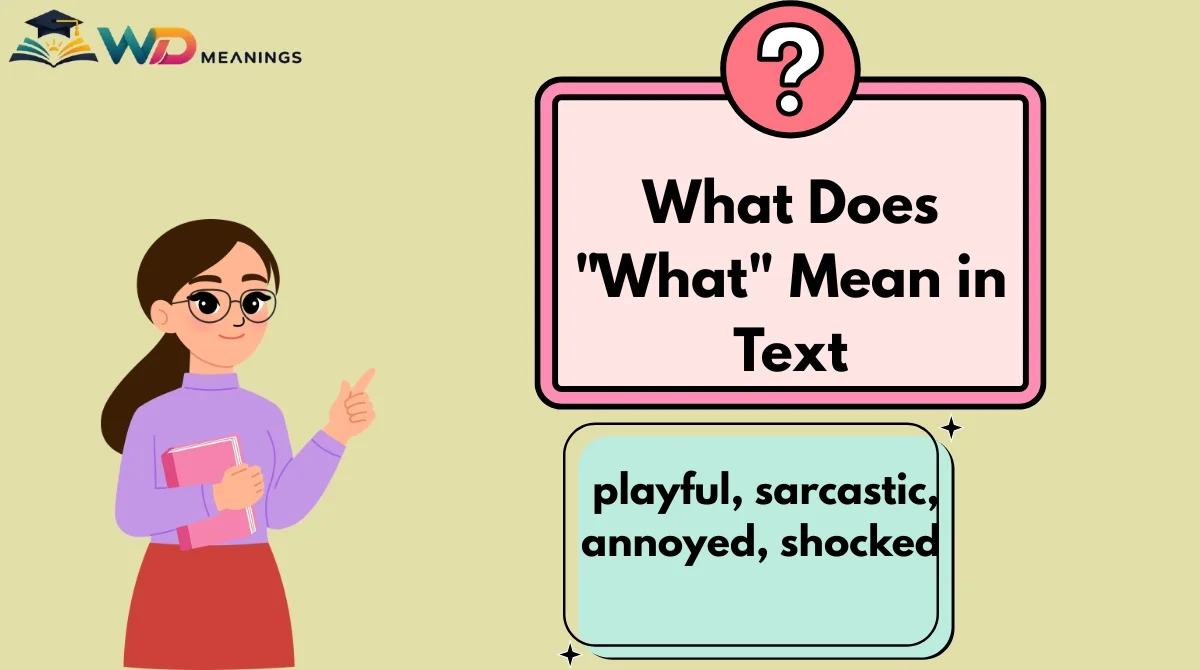
However, the same word can also sound playful, sarcastic, annoyed, shocked, or even concerned based on how it’s written and the surrounding messages.
This guide explains what what means in texting, how people use it across different messaging platforms, when its tone changes, and how to understand it correctly in different situations. By the end, you’ll know exactly how to interpret and respond to it naturally.
Quick Answer
“What” in text usually means the sender is asking for information, clarification, or an explanation. Depending on the context, it can also express surprise, disbelief, confusion, curiosity, or concern. The word itself isn’t slang, but its tone changes based on punctuation, emojis, and the surrounding conversation.
What Does “What” Mean in Text?
The word what is a standard English question word rather than an abbreviation or internet slang. In texting, it’s most commonly used when someone wants more information or doesn’t understand something that was just said.
Full Form
There is no full form for what. It is a regular English word that functions as an interrogative pronoun or determiner.
Simple Definition
In text messages, what generally means:
- Asking a question
- Requesting clarification
- Showing confusion
- Reacting to surprising news
- Expressing disbelief or curiosity
Pronunciation
What is commonly pronounced:
/wʌt/ (“wuht”)
The pronunciation stays the same whether it’s spoken or typed in a message.
Emotional Tone
The emotional tone depends almost entirely on context.
For example:
- Curious: “What are you doing?”
- Confused: “What do you mean?”
- Surprised: “What?!”
- Concerned: “Wait… what happened?”
- Playful: “What 😂”
Because texting lacks facial expressions and voice, punctuation often carries the emotion.
Example Text Message
Alex: I accidentally deleted the whole project.
Jordan: What?!
Here, what?! expresses immediate surprise and disbelief.
Origin and Background
Unlike internet abbreviations such as LOL, BRB, or IMO, what has been part of the English language for centuries. It wasn’t created for texting or social media.
As digital communication became more common, people naturally continued using what in messages because it’s one of the simplest ways to ask questions or react to unexpected information.
Texting has slightly changed how people use the word. For example, many users now rely on punctuation, repeated letters, emojis, or capitalization to communicate emotion:
- What?
- What??
- WHAT?!
- what…
- What 😂
- what 😭
These variations help replace facial expressions and tone of voice that are missing in written conversations.
How “What” Is Used in Text Conversations
Although the basic meaning stays the same, what can serve several different purposes in everyday messaging.
Asking for Information
This is the most common use.
Emma: What time does the movie start?
Noah: Around 8:00 PM.
Here, what simply introduces a question.
Asking Someone to Explain
People often send what? when they don’t understand a message.
Lily: I finally figured it out.
Ben: What do you mean?
The sender wants clarification before continuing the conversation.
Showing Surprise
Sometimes what isn’t really asking a question. Instead, it shows shock.
Ryan: I won free concert tickets.
Mia: What?!
The message communicates surprise more than confusion.
Expressing Disbelief
Someone may type what after hearing something difficult to believe.
Chris: I finished the marathon wearing flip-flops.
Taylor: What? Seriously?
The word signals disbelief while inviting more details.
Friendly Curiosity
Friends often use what casually.
Sam: Guess what!
Ella: What?
This is simply an invitation for the other person to continue.
Showing Concern
If someone sends worrying news, what may express genuine concern.
Jordan: Something happened at work today.
Casey: What happened?
The sender wants to understand the situation and may be preparing to offer support.
Playful or Teasing Use
Friends sometimes use what jokingly.
Alex: You’re buying everyone pizza.
Jamie: What? Since when? 😂
The emoji makes it clear the reply is lighthearted rather than argumentative.
What “What” Means on Different Platforms
The meaning of what remains largely consistent across messaging apps and social media. However, the style of communication can influence how it’s interpreted.
On WhatsApp, what is usually a straightforward request for information or clarification. Because conversations are often with family and friends, it frequently sounds casual and natural.
Examples include:
- What time are you leaving?
- What happened?
- What?
Voice notes, stickers, and emojis often add emotional context.
Snapchat
Snapchat conversations are usually quick and informal.
Users often send:
- What?
- What 😂
- What lol
- WHAT??
These versions can express surprise, amusement, or confusion while keeping the conversation light.
On Instagram, what commonly appears in direct messages and comments.
Someone might reply:
- What do you mean?
- What happened?
- What 😂
The meaning depends heavily on the previous message rather than the platform itself.
TikTok
TikTok users frequently comment what under surprising, funny, or unexpected videos.
Examples include:
- What did I just watch?
- What??
- WHAT 😭
In comments, the word often signals disbelief, amusement, or shock instead of requesting an actual explanation.
Facebook users typically use what in conversations the same way they do in everyday English.
It commonly appears when asking follow-up questions or responding to unexpected posts.
For example:
- What happened?
- What do you think?
- What’s going on?
Because Facebook includes friends, family, and community groups, the tone is often more conversational than trendy.
Discord
Discord conversations tend to move quickly, especially in gaming communities and group chats.
People often type:
- What?
- Wait what
- What lol
- What happened?
Here, what can express confusion after fast-moving discussions, react to surprising game moments, or ask another member to explain something.
What Does “What” Mean From a Girl or Guy?
Many people wonder whether the meaning of what changes depending on whether it comes from a girl or a guy. In reality, the word itself doesn’t have a gender-specific meaning. Instead, its interpretation depends on the relationship between the people, the conversation, and the way it’s written.
From a Girl
A girl might use what to:
- Ask for more information.
- Show genuine curiosity.
- Express surprise or disbelief.
- Respond playfully during a conversation.
- Ask for clarification if something isn’t clear.
Example:
You: I have something important to tell you.
Her: What? 😊
Here, the smiling emoji suggests interest and excitement rather than confusion.
Another example:
You: I can’t believe what happened today.
Her: What happened?
This simply shows that she wants to hear the story.
From a Guy
A guy may use what in exactly the same ways:
- Asking a question.
- Showing surprise.
- Reacting to unexpected news.
- Seeking clarification.
- Continuing a conversation.
Example:
You: I won concert tickets.
Him: What?! That’s awesome!
The excitement comes from the situation, not from the word itself.
Context Matters More Than Gender
Rather than focusing on whether the sender is a girl or a guy, pay attention to clues like:
- The previous messages.
- Punctuation.
- Capital letters.
- Emojis.
- The overall mood of the conversation.
Compare these examples:
What?
Usually sounds neutral.
What??
Often shows stronger confusion or surprise.
WHAT?!
Can express shock, excitement, or disbelief.
What 😂
Clearly playful or amused.
What…
May suggest hesitation, uncertainty, or confusion.
Looking at the full conversation is always the best way to understand the intended meaning.
Other Possible Meanings
While what is most commonly used as a question word in texting, it can serve several purposes depending on the situation.
| Meaning | Context | Example |
|---|---|---|
| Asking for information | Everyday conversation | “What time is dinner?” |
| Requesting clarification | Someone wasn’t understood | “What do you mean?” |
| Showing surprise | Unexpected news | “What?!” |
| Expressing disbelief | Hard-to-believe statement | “What? Seriously?” |
| Reacting to something funny | Casual chats | “What 😂” |
| Showing concern | Worrying message | “What happened?” |
The most common texting meaning is simply asking for information or clarification.
How to Respond to “What”
The best reply depends on why the other person said what. Here are several natural responses for different situations.
1. If They’re Asking for Clarification
Them: What?
You: I meant we’re meeting tomorrow instead of today.
2. If They’re Curious
Them: What happened?
You: You’ll never guess—I bumped into my old teacher at the airport.
3. If They’re Surprised
Them: What?!
You: I know! I couldn’t believe it either.
4. If They’re Confused
Them: What do you mean?
You: Let me explain it a different way.
5. If They’re Being Funny
Them: What 😂
You: I said exactly what you think I said!
6. If They’re Concerned
Them: What happened?
You: Don’t worry, everyone’s okay. I’ll explain.
7. If You Sent Something by Mistake
Them: What?
You: Sorry, that message wasn’t meant for you.
8. If You Want to Keep the Conversation Going
Them: What?
You: I have some exciting news to share!
Similar Texting Terms and Differences
Although what is a regular English word rather than slang, several other expressions serve similar purposes in text conversations.
| Term | Meaning | Key Difference |
|---|---|---|
| Huh? | Didn’t understand | More informal and conversational. |
| Pardon? | Please repeat | More polite and formal. |
| Excuse me? | Asking for clarification or reacting to something unexpected | Can sound polite or offended depending on tone. |
| Wait, what? | Surprise and confusion | Shows stronger disbelief than simply saying “what?” |
| Seriously? | Doubting something | Focuses on disbelief rather than requesting information. |
Although these expressions overlap, each carries a slightly different emotional tone.
Common Misunderstandings
Because texting removes voice and facial expressions, what is sometimes interpreted differently than the sender intended.
Thinking It Always Sounds Rude
A simple what? usually isn’t rude. Most of the time, it’s just a request for more information.
However, replying with only WHAT in capital letters may sound much stronger or more emotional.
Ignoring Punctuation
Small punctuation changes can completely change the tone.
Compare:
- What
- What?
- What??
- What?!
- What…
Each version communicates a different level of emotion.
Assuming It Means Anger
People sometimes worry that receiving what? means the other person is upset.
Usually, that’s not true.
Instead, they may simply be:
- Confused
- Curious
- Surprised
- Asking you to explain
Reading earlier messages helps avoid unnecessary misunderstandings.
Overlooking Emojis
Emojis often reveal the sender’s real emotion.
Examples:
- What 😂 → amused
- What ❤️ → affectionate or playful
- What 😭 → shocked, overwhelmed, or laughing hard depending on context
- What 🤔 → thinking or curious
Without emojis, the message may feel more neutral.
Capitalisation Differences
These versions can feel different even though they use the same word.
- what – casual and relaxed.
- What – standard sentence style.
- WHAT – much stronger emotion, often surprise or frustration.
- WHAT?! – intense disbelief or shock.
Capital letters don’t automatically mean anger, but they usually add emphasis.
Common Variations You May See
Although the meaning stays similar, people often type what in creative ways online.
Some common variations include:
- What?
- What??
- WHAT?!
- Wait, what?
- What lol
- What 😂
- What 😭
- What the…?
- Umm… what?
- What on earth?
Each variation reflects a different emotional reaction, but they all revolve around confusion, surprise, or wanting more information.
p 3
Is “What” Appropriate or Safe to Use?
Yes, “what” is generally appropriate and safe to use in almost every casual conversation. It’s a standard English word, not offensive slang or an abbreviation with a hidden meaning.
However, the way you type it can affect how it’s received.
When It’s Appropriate
Using what is perfectly acceptable when you want to:
- Ask someone a question.
- Request clarification.
- Show curiosity.
- React to surprising news.
- Continue a conversation naturally.
Examples:
- “What time are we meeting?”
- “What do you mean?”
- “What happened?”
These are polite and commonly used in both text messages and face-to-face conversations.
When It Might Sound Rude
The word itself isn’t rude, but tone matters.
For example:
- What? – Usually neutral.
- WHAT?! – Can sound shocked, frustrated, or angry.
- What. – Depending on the conversation, it may seem cold or irritated.
If you’re texting someone you don’t know well, adding a few extra words can make your message sound friendlier.
Instead of:
What?
You could write:
What do you mean?
or
Sorry, what happened?
These responses feel more polite and inviting.
Is It Suitable for Work?
Yes. Since what is a normal English question word, it’s completely appropriate in workplaces, schools, and professional emails when used respectfully.
For example:
- “What time is the meeting?”
- “What information do you need?”
- “What would you recommend?”
In professional settings, complete sentences are usually better than replying with only “What?”
Examples of “What” in Text
Here are some original, realistic examples showing how what can be used in different conversations.
1. Asking for Details
Emma: I have exciting news.
Lucas: What is it?
2. Showing Surprise
Ryan: I won the competition.
Mia: What?! Congratulations!
3. Requesting Clarification
Ava: That’s not what I meant.
Noah: What did you mean then?
4. Friendly Curiosity
Olivia: Guess what!
James: What?
5. Reacting to Unexpected News
Ben: My flight was cancelled.
Sophia: What? That’s awful.
6. Playful Conversation
Chris: I ate the last slice of pizza.
Ella: What 😂 I was saving that!
7. Concern
Liam: Something happened today.
Grace: What happened? Are you okay?
8. Confusion
Daniel: You know exactly what I mean.
Chloe: What are you talking about?
9. Lighthearted Chat
Mason: You’ll never believe this story.
Harper: What? Tell me!
10. Casual Everyday Question
Emily: What time should I come over?
Jack: Around 7:30 works.
11. Curious Response
Nathan: I found something interesting.
Lily: What did you find?
12. Shock Mixed With Excitement
Zoe: We’re going to Hawaii next month!
Ethan: WHAT?! That’s amazing!
Frequently Asked Questions
What does “what” usually mean in text?
Most of the time, what is used to ask for information or request clarification. Depending on the conversation, it can also express surprise, disbelief, curiosity, or concern. The surrounding messages and punctuation help reveal the intended tone.
Is “what” considered texting slang?
No. What is a standard English word, not texting slang or an internet abbreviation. While people often use it in digital conversations, its meaning remains the same as it does in everyday spoken English.
Why did someone reply with just “What?”
A single “What?” usually means the person didn’t understand your message or wants you to explain further. It can also be a reaction to something unexpected. Looking at the previous messages will help you understand which meaning fits best.
Does “WHAT?!” mean someone is angry?
Not necessarily. Capital letters and punctuation usually add emphasis rather than anger. “WHAT?!” often expresses shock, excitement, or disbelief. Whether it sounds angry depends on the rest of the conversation and the relationship between the people chatting.
Does “what” have a different meaning on Snapchat or TikTok?
Generally, no. The core meaning stays the same across WhatsApp, Snapchat, Instagram, TikTok, Facebook, Discord, and other platforms. Users may pair it with emojis, GIFs, or memes, but it’s still most commonly used to ask questions or react to surprising content.
How should I reply when someone texts “What?”
Reply by giving the information they’re asking for or explaining your previous message more clearly. If they’re reacting with surprise, you can continue the conversation naturally by sharing more details about what happened.
Conclusion
The answer to what does “what” mean in text is usually straightforward:
it’s a request for information, clarification, or an explanation.
Depending on the context, punctuation, emojis, and previous messages, it can also express surprise, curiosity, disbelief, concern, or playful humor.
Since what is a standard English word rather than internet slang, understanding the conversation around it is the key to interpreting its meaning correctly.
When someone texts “what?”, the best response is simply to answer their question or clarify what you meant.

Hamz Ellis is a content writer at WD Meanings, specializing in internet slang, texting abbreviations, and digital communication. He creates clear, well-researched, and easy-to-understand content to help readers quickly find the meanings of modern online terms.