Texting abbreviations can save time, but they can also be confusing when you come across one you haven’t seen before.
If you’ve been wondering what does TIA mean in a text, the good news is that it usually has a simple and friendly meaning.
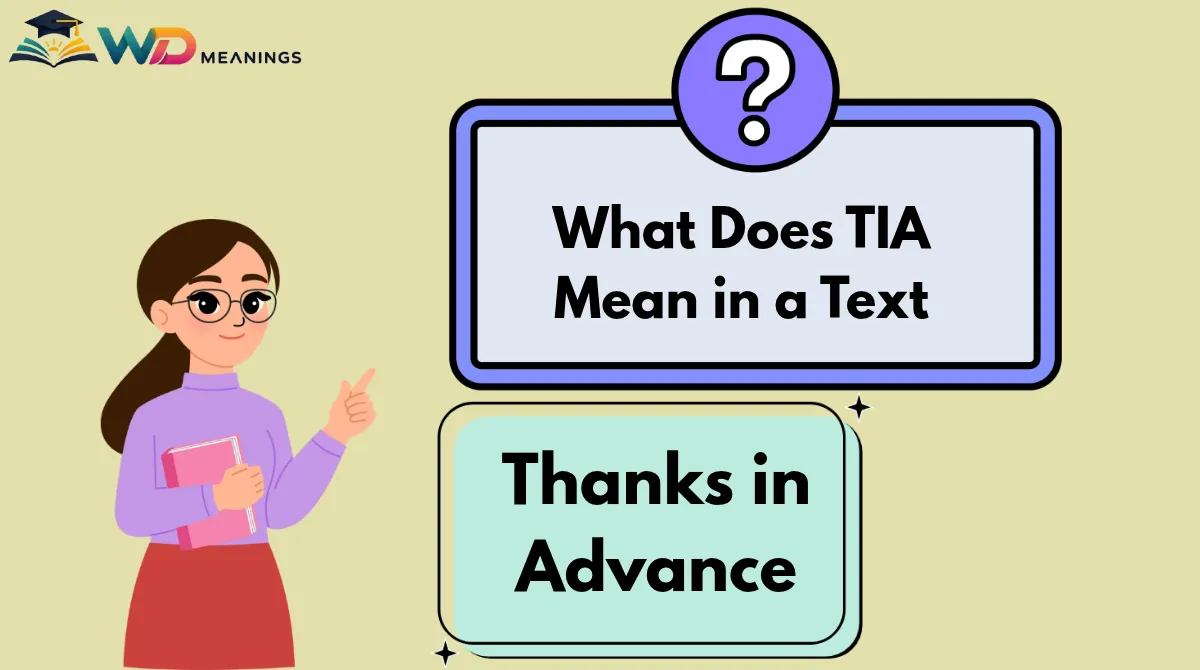
In most text messages, emails, and online conversations, TIA stands for “Thanks in Advance.” People use it when asking for help, requesting information, or hoping someone will do them a favour.
Rather than waiting until after receiving assistance, they express appreciation beforehand.
However, context matters. While “Thanks in Advance” is by far the most common meaning in texting, TIA can have other meanings in different situations, including healthcare and organisations.
This guide explains the most common definition, how people use it across social media and messaging apps, how to respond naturally, and when the abbreviation may mean something else.
Quick Answer
TIA most commonly means “Thanks in Advance” in text messages. It’s a polite way to thank someone before they answer a question or complete a request. You’ll often see it in texts, emails, group chats, and social media when someone is asking for advice, recommendations, or assistance.
What Does TIA Mean in Text?
In everyday texting, TIA stands for “Thanks in Advance.”
People add it at the end of a message to show appreciation before receiving help. It lets the other person know that their time and effort are valued.
Full form: Thanks in Advance
Pronunciation: Usually spoken as the individual letters “T-I-A” (“tee-eye-ay”), although many people simply say “thanks in advance” when speaking aloud.
Simple Definition
TIA is a polite abbreviation that means:
“Thank you ahead of time for helping me.”
It is commonly used when asking questions, requesting recommendations, or asking someone to complete a task.
Tone and Emotional Meaning
The tone is usually:
- Friendly
- Appreciative
- Respectful
- Casual
- Polite
Depending on how it’s written, TIA can sometimes feel slightly demanding if it’s attached to a large request without any additional courtesy. Adding words like “please” or softening the request usually makes it sound warmer.
Text Example
Alex: Does anyone know a good plumber nearby? TIA!
Jordan: Yes! I used Smith Plumbing last month. They were excellent.
Origin and Background
“Thanks in Advance” existed in written English long before smartphones became popular. People often ended letters and emails with the phrase as a polite way to thank someone before receiving a reply.
As texting, internet forums, and instant messaging became more common, many longer phrases were shortened into abbreviations. “Thanks in Advance” naturally became TIA, following the same pattern as abbreviations like FYI (“For Your Information”) and IMO (“In My Opinion”).
There isn’t one confirmed origin or exact date when TIA first appeared online. Instead, it gradually became part of internet communication because it saves time while keeping requests polite.
How TIA Is Used in Text Conversations
People use TIA in many everyday conversations where they’re requesting help, advice, recommendations, or information.
Asking for Recommendations
Emma: Can anyone recommend a good Italian restaurant? TIA!
Chris: Try Bella Roma. Their pasta is amazing.
Asking for Information
Taylor: Does anyone know what time the meeting starts? TIA.
Morgan: It begins at 9:30.
Requesting Help
Jamie: Can you send me yesterday’s notes when you get a chance? TIA!
Casey: Sure, I’ll send them over now.
Friendly Group Chats
TIA is especially common in neighbourhood groups, parenting groups, school chats, workplace chats, and hobby communities.
Sam: Looking for beginner hiking trails nearby. TIA!
Several group members then reply with suggestions.
Slightly Humorous Use
Sometimes people use TIA playfully.
Friend: If anyone wants to buy me pizza tonight, TIA. 😂
Here, everyone understands it’s meant as a joke.
Can It Sound Sarcastic?
Occasionally, yes.
If someone writes a demanding request followed only by “TIA,” it may seem like they’re assuming people will help without asking politely.
For example:
Send me the report by noon. TIA.
This can feel more like an expectation than genuine gratitude.
What TIA Means on Different Platforms
The meaning generally stays the same across platforms.
TIA commonly means “Thanks in Advance.” Friends, family, and community groups often use it when asking questions.
Example:
Anyone know a good babysitter? TIA!
Snapchat
It’s less common because Snapchat conversations tend to be shorter, but when used, it still means “Thanks in Advance.”
You’ll often see TIA in captions, Stories, comments, or direct messages asking for recommendations.
Example:
Looking for skincare recommendations. TIA!
TikTok
Creators may use TIA in captions when asking viewers for opinions or suggestions.
Example:
Which colour should I choose? TIA!
Facebook groups are one of the most common places to see TIA.
Examples include:
- Parenting advice
- Travel tips
- Local recommendations
- Buy-and-sell groups
- Community discussions
Discord
On Discord, TIA usually keeps the same meaning, especially in gaming communities, study servers, and hobby groups.
Dating Apps
People occasionally use TIA when asking practical questions.
Example:
Best coffee place in town? TIA!
The abbreviation doesn’t normally carry a romantic meaning by itself.
What Does TIA Mean From a Girl or Guy?
The abbreviation itself doesn’t change meaning based on gender.
Whether it’s sent by a girl, guy, colleague, friend, or family member, TIA almost always means “Thanks in Advance.”
Instead, pay attention to:
- The relationship between the people
- The rest of the conversation
- Emojis
- Punctuation
- Overall tone
For example:
“TIA 😊”
Feels warm and friendly.
“TIA!!”
Shows enthusiasm.
“TIA.”
Can sound neutral or businesslike.
“TIA ❤️”
Adds affection because of the emoji—not because of the abbreviation itself.
Other Possible Meanings
Although “Thanks in Advance” is the standard texting meaning, TIA can represent other phrases in different contexts.
| Meaning | Context | Example |
|---|---|---|
| Thanks in Advance | Texting, emails, online chats | Can you help me tomorrow? TIA! |
| Transient Ischaemic Attack | Medical discussions | The doctor diagnosed a TIA. |
| This Is Africa | Informal phrase discussing travel or culture | Some travellers use “TIA” in conversations about unexpected situations. |
For everyday texting, “Thanks in Advance” is by far the most common meaning.
How to Respond to TIA
You don’t need to reply directly to the abbreviation. Instead, respond to the request itself.
Casual
Sure! Happy to help.
Friendly
Of course—I hope this helps!
Helpful
Here’s what I found…
Funny
You’re welcome in advance too. 😄
If You Don’t Know
Sorry, I’m not sure, but hopefully someone else knows.
Romantic
Anything for you. 😊
Professional
Certainly. I’ll send the information shortly.
Chat Example
Chris: Can anyone recommend a good laptop? TIA!
Jordan: I’d recommend the Lenovo IdeaPad if you’re on a budget.
Similar Texting Terms and Differences
| Term | Meaning | Key Difference |
|---|---|---|
| TIA | Thanks in Advance | Thanks someone before receiving help. |
| TY | Thank You | Used after receiving help or as general thanks. |
| THX | Thanks | Casual version of “thank you.” |
| TYSM | Thank You So Much | Expresses stronger gratitude. |
| FYI | For Your Information | Shares information rather than appreciation. |
Common Misunderstandings
One common misunderstanding is assuming TIA always means “Thanks in Advance.”
While that’s true in most text conversations, medical discussions often use TIA to mean Transient Ischaemic Attack, which is a completely different subject.
Capitalisation usually doesn’t matter.
These all mean the same thing in texting:
- TIA
- tia
- Tia
However, if “Tia” is capitalised in a sentence, it may also simply be someone’s name.
Context makes the intended meaning clear.
Another mistake is thinking TIA sounds rude. By itself, it isn’t rude. However, pairing it with a demanding request without saying “please” or showing appreciation can make the overall message seem less polite.
Is TIA Appropriate or Safe to Use?
Yes. TIA is generally polite, friendly, and safe to use.
It’s suitable for:
- Friends
- Family
- School groups
- Community groups
- Social media
- Casual work chats
- Many emails
In formal business communication, some people prefer writing the full phrase “Thank you in advance“ instead of the abbreviation, especially when communicating with people who may not recognise internet shorthand.
If you encounter TIA in a medical conversation, remember that it may refer to Transient Ischaemic Attack rather than “Thanks in Advance.” Always consider the surrounding context before interpreting the abbreviation.
Examples of TIA in Text
- Can someone recommend a reliable electrician? TIA!
- Does anybody know today’s homework? TIA.
- Looking for a good dog groomer nearby. TIA!
- Can you send me the recipe when you have time? TIA 😊
- Which streaming service has this movie? TIA!
- Does anyone know when registration closes? TIA.
- I’m searching for beginner photography tips. TIA!
- Can someone explain this maths question? TIA.
- Any podcast recommendations for long drives? TIA!
- Does anyone have spare moving boxes? TIA!
- Which café has the best coffee in town? TIA!
- Can you proofread my email before I send it? TIA!
Frequently Asked Questions
Is TIA always “Thanks in Advance”?
In texting and online messaging, almost always yes. However, in medical conversations, TIA commonly refers to a Transient Ischaemic Attack, so the surrounding context is important before deciding which meaning applies.
Is TIA polite?
Yes. Most people consider TIA polite because it expresses gratitude before someone helps you. For larger requests, combining it with “please” often makes the message sound even more thoughtful.
Can I use TIA in work emails?
Yes, although many professionals prefer writing out “Thank you in advance” in formal emails. The abbreviation is more common in casual workplace chats or when communicating with colleagues who regularly use internet shorthand.
Does TIA have a romantic meaning?
No. TIA itself isn’t romantic. Any romantic tone comes from the overall conversation, emojis, or the relationship between the people rather than the abbreviation.
Is TIA common on social media?
Yes. You’ll regularly see it in Facebook groups, Instagram posts, WhatsApp chats, Discord servers, and other online communities where people ask questions or request recommendations.
Can TIA be mistaken for someone’s name?
Yes. “Tia” is also a common first name. Usually, the surrounding sentence makes it obvious whether someone is referring to a person or using the abbreviation for “Thanks in Advance.”
Conclusion
If you’ve been asking what does TIA mean in a text, the answer is usually straightforward: it stands for “Thanks in Advance.”
People use it to show appreciation before receiving help, advice, or information.
It’s a friendly, informal abbreviation that appears frequently in text messages, emails, social media posts, and online communities.
While TIA can have other meanings in medical or specialised contexts, everyday texting almost always refers to “Thanks in Advance.” Looking at the surrounding conversation will help you interpret it correctly every time.

Hamz Ellis is a content writer at WD Meanings, specializing in internet slang, texting abbreviations, and digital communication. He creates clear, well-researched, and easy-to-understand content to help readers quickly find the meanings of modern online terms.