When people search for what does PS mean in text freaky, they’re usually trying to figure out whether “PS” has a hidden sexual meaning in text messages or social media chats.
The answer depends entirely on the conversation.
Most of the time, PS simply means “postscript”—an extra thought added after the main message.
However, in flirtatious or intimate conversations, some people use “PS” to introduce a playful, suggestive, or “freaky” comment that they didn’t want to include in the main text.
In these situations, the letters themselves don’t stand for anything sexual.
Instead, the content that follows the PS is what gives it a flirtatious or provocative tone.
If you’ve received a message ending with “PS…” and it suddenly became romantic or spicy, this guide explains exactly what it means, how people use it, and how to respond.
Quick Answer
PS usually stands for postscript, meaning an extra note added after the main message. In “freaky” texting, people sometimes use PS to introduce a flirtatious, romantic, or suggestive comment. The abbreviation itself is not inherently sexual—its meaning depends on the words that come after it and the relationship between the people chatting.
What Does “PS” Mean in Text?
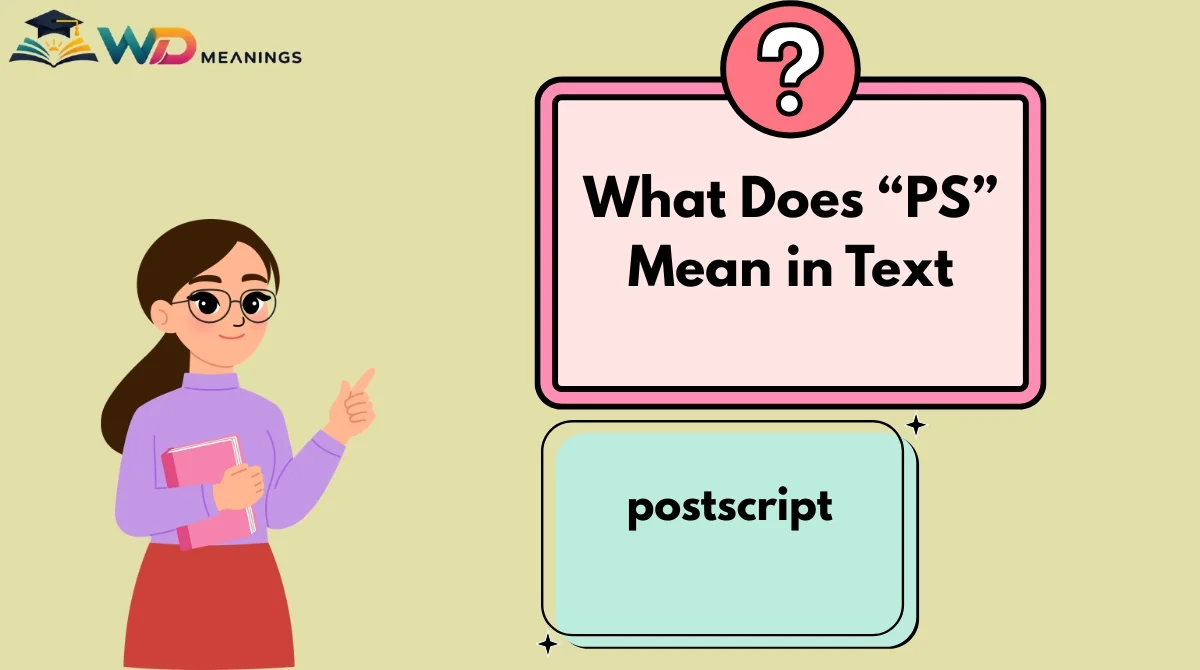
In texting, PS stands for postscript.
Originally, a postscript was an additional note written after a letter had already been finished. Today, the same idea exists in digital conversations.
Pronunciation: Pee-Ess
Simple Definition
PS = An extra thought, reminder, confession, joke, or comment added after the main message.
People often use it to:
- Add something they almost forgot
- Emphasize an important point
- End a conversation with humour
- Include a personal or affectionate message
- Add a flirty or “freaky” remark
Emotional Tone
The tone changes based on context:
- Friendly
- Funny
- Romantic
- Playful
- Sarcastic
- Suggestive
Example
Alex: Thanks for helping me study tonight.
PS: You’re really cute when you explain maths.
Here, PS simply introduces an extra thought.
Origin and Background
PS comes from the Latin phrase post scriptum, which literally means “written after.”
For centuries, writers added a P.S. at the end of handwritten letters whenever they remembered something after signing off.
As communication shifted to emails, text messages, and social media, people continued using PS for the same purpose. Instead of writing a formal postscript, many now use it to add a casual joke, confession, compliment, or unexpected ending.
The abbreviation itself has not developed an official sexual meaning. Instead, modern internet users sometimes use PS as a natural place to add flirtatious or intimate comments.
How PS Is Used in Text Conversations
The meaning depends almost entirely on what follows the PS.
Friendly
Emma: Have a great trip!
PS: Send lots of pictures.
Funny
Jake: Good luck with your interview.
PS: Don’t trip walking in.
Romantic
Taylor: Sleep well.
PS: I wish I was there to cuddle you.
Flirty
Chris: I had fun tonight.
PS: You looked incredibly attractive.
“Freaky” or Suggestive
Jordan: Can’t stop thinking about our date.
PS: I have a few ideas for next time. 😏
Notice that PS itself isn’t sexual. The suggestive message after it creates that interpretation.
What PS Means on Different Platforms
The meaning is almost always postscript.
Friends often use it for reminders, jokes, or affectionate comments.
Snapchat
Because conversations are casual, PS sometimes introduces teasing or flirtatious remarks.
People use PS in captions, comments, or direct messages to add an extra opinion or hidden message.
Example:
Loved tonight.
PS: You owe me another date.
TikTok
Creators occasionally use PS in captions to reveal an extra joke or surprising detail.
The meaning remains the same.
On Facebook, PS is commonly seen in longer posts where someone remembers an additional point after finishing their message.
Discord
Gamers and online communities often use PS for reminders or afterthoughts.
Example:
PS: The server maintenance starts in an hour.
Dating Apps
Dating conversations are where people most often search for the “freaky” meaning.
Someone may write:
PS: I’m still thinking about your smile.
or
PS: I can’t wait to see you again 😉
The abbreviation still means postscript, but the added comment is intentionally flirtatious.
What Does PS Mean From a Girl or Guy?
The meaning of PS does not change because the sender is a girl or a guy.
Instead, pay attention to:
- Your relationship
- Previous conversation
- Emojis
- Tone
- What comes after the PS
From a Girl
Possible meanings include:
- A sweet compliment
- A forgotten thought
- Gentle flirting
- A playful tease
Example:
PS: You looked really handsome today ❤️
From a Guy
Possible meanings include:
- Extra information
- A joke
- Romantic interest
- A playful confession
Example:
PS: I still owe you dinner 😉
Context Matters More Than Gender
A simple
PS: Don’t forget your charger.
is completely different from
PS: I can’t stop thinking about kissing you.
The letters stay the same, but the meaning changes because of the context.
Other Possible Meanings
| Meaning | Context | Example |
|---|---|---|
| Postscript (most common) | Text messages, emails, letters | PS: Don’t forget tomorrow’s meeting. |
| PlayStation | Gaming | I bought a new PS game yesterday. |
| Public Service | Organisations or government | He works in public service. |
| Photoshop | Design and photography | I edited it in PS. |
Postscript is by far the most common meaning in everyday texting unless the conversation is clearly about gaming or graphic design.
How to Respond to PS
Your reply should match the tone of the message.
Casual
Them: PS: Don’t forget your umbrella.
You: Thanks! I almost did.
Friendly
Them: PS: You’re awesome.
You: Thanks! That made my day.
Funny
Them: PS: You still owe me pizza.
You: I was hoping you’d forget!
Romantic
Them: PS: I miss you already.
You: I miss you too ❤️
Flirty
Them: PS: I can’t wait to see you again 😏
You: I was hoping you’d say that.
Confused
Them: PS: Guess what?
You: Now I’m curious—what is it?
Serious
Them: PS: We really need to talk.
You: Sure. When would you like to?
Similar Texting Terms and Differences
| Term | Meaning | Key Difference |
|---|---|---|
| PS | Postscript | Adds an extra thought after the main message. |
| BTW | By the way | Introduces another topic during the conversation rather than at the end. |
| FYI | For your information | Shares information without expecting a response. |
| IMO | In my opinion | Expresses a personal viewpoint. |
| TBH | To be honest | Introduces an honest or direct statement. |
Although these abbreviations all help organise messages, PS is unique because it signals an afterthought rather than changing the subject.
Common Misunderstandings
One of the biggest misconceptions is that PS always means something sexual.
In reality:
- It usually means postscript.
- It only seems “freaky” when the message after it is flirtatious or intimate.
- Some people confuse PS with PlayStation, especially in gaming chats.
- Others assume every message ending with PS contains a secret meaning, but often it’s simply an extra reminder or forgotten detail.
Capitalisation usually doesn’t matter.
These are all understood the same way:
- PS
- P.S.
- ps
- p.s.
Is PS Appropriate or Safe to Use?
Yes.
PS is a completely safe, polite, and widely accepted abbreviation.
It’s appropriate in:
- Text messages
- Emails
- School communication
- Social media
- Workplace conversations
- Friendly chats
However, if someone uses PS to introduce explicit sexual content, then it’s the message itself—not the abbreviation—that may be inappropriate depending on the audience or setting.
When chatting professionally, keep anything after PS respectful and work-related.
Examples of PS in Text
Here are some realistic examples.
- PS: Don’t forget to call your mum.
- PS: Thanks again for helping me move yesterday.
- PS: I still think you cheated at Monopoly. 😂
- PS: Your presentation was fantastic.
- PS: I can’t wait to see you this weekend. ❤️
- PS: You looked amazing tonight.
- PS: Save me a slice of cake!
- PS: I may have a surprise for you.
- PS: I miss your hugs already.
- PS: Meet me five minutes earlier tomorrow.
- PS: I have something I’ve been wanting to tell you.
- PS: You looked way too good in that outfit. 😏
These examples show how PS can be friendly, funny, romantic, or slightly suggestive without changing its basic meaning.
Frequently Asked Questions
Is PS a flirting abbreviation?
Not by itself. PS simply means postscript. It becomes flirtatious only when the message following it contains romantic or suggestive language.
Does PS always mean something freaky?
No. Most people use PS to add a forgotten thought, reminder, compliment, or joke. A “freaky” interpretation depends entirely on the content after the abbreviation.
What does PS mean from your crush?
Usually, it means they wanted to add one more thought after finishing their message. If that extra comment includes compliments, affection, or flirting, it may suggest romantic interest.
Is PS different from P.S.?
No. Both have the same meaning. P.S. is the traditional written form, while PS is more common in texting and online chats.
Can PS mean PlayStation in text?
Yes. In gaming conversations, PS often refers to PlayStation. Context makes the intended meaning clear.
Why do people use PS instead of typing another sentence?
Many people use PS because it feels like a natural way to add an afterthought, a joke, or a personal comment. It also gives the final line of a message extra emphasis.
Conclusion
If you’re wondering what does PS mean in text freaky, the short answer is that PS means postscript, not something inherently sexual.
In everyday texting, it’s simply a way to add one final thought after the main message.
The “freaky” interpretation comes only from the words that follow, especially in flirtatious or romantic conversations.
Always consider the relationship, the tone, the emojis, and the surrounding context before assuming a hidden meaning.
In most cases, PS is simply an extra note—not a secret code.

Hamz Ellis is a content writer at WD Meanings, specializing in internet slang, texting abbreviations, and digital communication. He creates clear, well-researched, and easy-to-understand content to help readers quickly find the meanings of modern online terms.