Texting abbreviations can save time, but they can also create confusion—especially when the same two letters can carry very different meanings depending on the conversation.
If you’ve received a message containing FU, you might be wondering whether it was meant as an insult, a joke, or something else entirely.
The answer depends heavily on context. In most text messages and online conversations, FU is a shortened version of a well-known offensive phrase.
However, it isn’t always used with serious anger. Friends sometimes use it jokingly, while in other situations it can be genuinely rude or hostile.
This guide explains what does fu mean in text, where people use it, how to tell what someone actually means, and the best way to respond without jumping to the wrong conclusion.
Quick Answer
FU most commonly means “F* You,”** an abbreviated version of an offensive insult. Depending on the conversation, it may express anger, frustration, sarcasm, or playful teasing between close friends. The meaning doesn’t usually change across social media platforms, but the relationship between the people involved and the surrounding messages are essential for interpreting its tone.
What Does FU Mean in Text?
In texting, FU is most commonly an abbreviation for “F* You.”** People shorten the phrase to just two letters to type faster or to avoid writing the full profanity.
Simple Definition
FU is an informal abbreviation that usually expresses anger, annoyance, disagreement, or playful teasing, depending on the relationship between the people chatting.
Is There a Full Form?
Yes. In most texting contexts:
FU = F* You**
Because it contains profanity, many people prefer using the abbreviation instead of spelling out the complete phrase.
Pronunciation
People usually say it by reading each letter individually:
“Eff You.”
Emotional Tone
The tone can vary significantly:
- Angry
- Frustrated
- Sarcastic
- Playful among close friends
- Rude or insulting
- Occasionally humorous
Example
Alex: You beat me by one point again!
Jordan: FU 😂 You’re way too lucky.
In this example, the laughing emoji makes it clear that the message is playful rather than genuinely hostile.
Origin and Background
The abbreviation FU developed naturally as text messaging, internet forums, online gaming, and instant messaging became more popular. Since people often shorten common expressions to save time, many offensive or emotional phrases were eventually reduced to initials.
Unlike some internet slang that has a clearly documented creator or first appearance, FU doesn’t have a single confirmed origin. Instead, it evolved organically alongside other abbreviations such as LOL, BRB, and IDK.
Today, you’ll find it across messaging apps, gaming chats, social media comments, and private conversations.
How FU Is Used in Text Conversations
Although the abbreviation has one primary meaning, its intent depends almost entirely on the relationship between the people involved.
Genuine Anger
Someone may use FU when they’re upset or ending an argument.
Person A: You lied to me.
Person B: FU.
Here, it’s clearly hostile.
Playful Teasing
Close friends sometimes exchange fake insults while joking.
Chris: I ate the last slice.
Taylor: FU 😂
The emoji changes the tone dramatically.
Frustration
Someone might direct the phrase toward a situation rather than a person.
FU Monday mornings 😩
Here, nobody is being insulted directly.
Competitive Banter
Gamers often use it jokingly after losing.
Player 1: Nice shot!
Player 2: FU 😂 GG.
The following “GG” (“Good Game”) softens the message.
Sarcasm
Sometimes FU is used dramatically without real anger.
Friend: Guess who’s doing another group project?
You: FU… I wish I had your luck.
What FU Means on Different Platforms
The abbreviation generally keeps the same meaning regardless of the app.
On WhatsApp, FU usually appears in private conversations between friends or during disagreements. Context and emojis help determine whether it’s playful or serious.
Snapchat
Snapchat users often exchange casual, humorous messages. FU may be used jokingly after pranks, funny photos, or friendly competition.
On Instagram, FU sometimes appears in comments, replies, or direct messages. It can express frustration, teasing, or criticism.
TikTok
TikTok users occasionally use FU in captions or comments as a shortened reaction, often paired with memes or jokes.
Facebook conversations generally follow the same pattern. Friends may joke with it, while strangers using FU are more likely expressing hostility.
Discord
Gaming communities on Discord frequently use FU during competitive matches. Among regular teammates, it’s often understood as light-hearted banter.
Dating Apps
On dating apps, FU is rarely positive. If someone sends it during a conversation, it’s generally a sign that the interaction has become unfriendly or should probably end.
What Does FU Mean From a Girl or Guy?
The abbreviation itself doesn’t change meaning based on whether it comes from a girl or a guy.
Instead, consider these clues:
- How well you know the sender
- Whether you’re arguing
- Whether emojis are included
- The overall conversation
- Previous messages
Friendly Example
“FU 😂 You always steal my fries!”
This sounds playful because of the emoji and familiar topic.
Serious Example
“FU. Don’t contact me again.”
This clearly signals anger.
Romantic Context
Partners sometimes jokingly use FU after harmless teasing.
“FU ❤️ You’re making me miss you even more.”
The heart emoji completely changes the emotional tone.
Always read the entire conversation before assuming the sender intended an insult.
Other Possible Meanings
Although “F* You”** is by far the most common texting meaning, FU occasionally stands for something different.
| Meaning | Context | Example |
|---|---|---|
| F* You (most common)** | Texting, chats, social media | “FU, I’m done arguing.” |
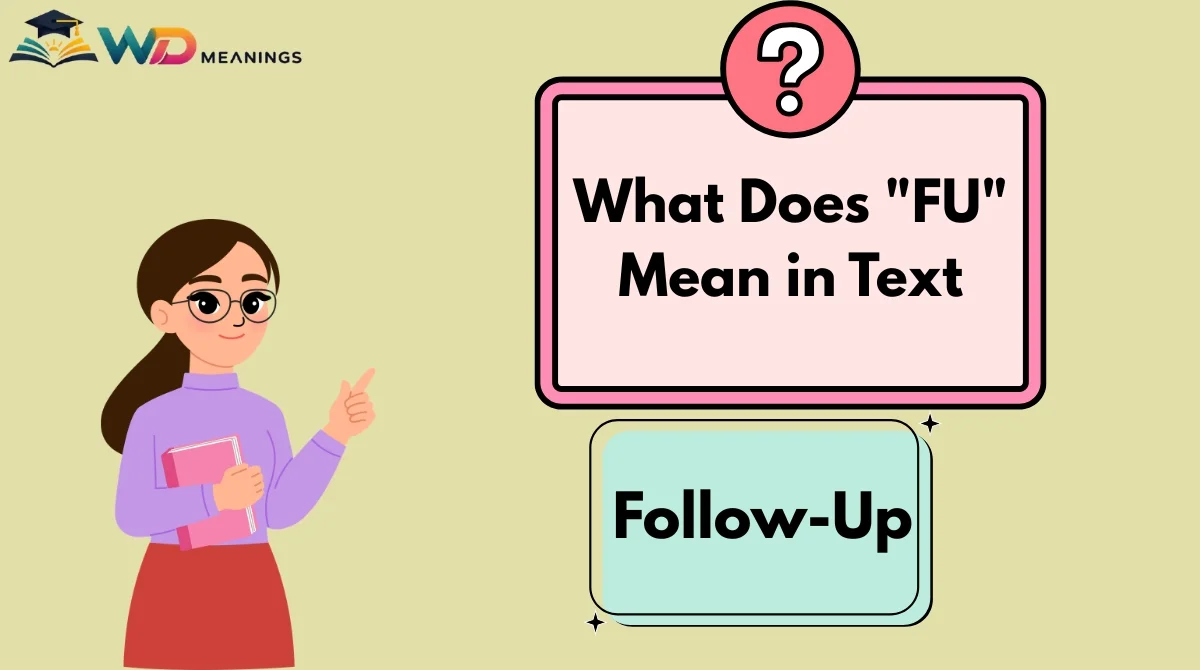
| Follow Up | Business emails or workplace notes | “Please send a FU tomorrow.” |
| Functional Unit | Engineering or technical discussions | “Each FU processes instructions.” |
| Field Unit | Military or field operations | “The FU has arrived on site.” |
In everyday messaging between friends, “F* You” is almost always the intended meaning.**
How to Respond to FU
Your response should depend on the sender’s tone.
If They’re Clearly Joking
Them: FU 😂
You: Haha, love you too!
If You’re Teasing Back
Them: FU!
You: That’s the nicest thing you’ve said today.
If You’re Unsure
You: Were you joking, or are you actually upset?
If Someone Is Angry
You: I think we should calm down and talk later.
If You Want to End the Conversation
You: I don’t want to continue if we’re insulting each other.
If It Was a Misunderstanding
You: I didn’t mean to upset you. Can we clear this up?
If Someone Is Being Disrespectful
You: I’d rather have a respectful conversation.
Similar Texting Terms and Differences
| Term | Meaning | Key Difference |
|---|---|---|
| FML | F*** My Life | Expresses frustration with one’s own situation rather than insulting someone else. |
| WTF | What The F*** | Shows surprise, confusion, or disbelief instead of directing an insult at someone. |
| STFU | Shut The F*** Up | Much more direct and often harsher than FU. |
| SMH | Shaking My Head | Indicates disappointment or disbelief without profanity directed at someone. |
| IDC | I Don’t Care | Shows indifference rather than anger or insult. |
Common Misunderstandings
Several factors can cause confusion when someone sends FU.
Assuming It’s Always Serious
Many close friends jokingly exchange fake insults. Emojis, laughter, and previous messages often reveal that nobody is genuinely offended.
Ignoring Context
A message saying:
“FU 😂”
feels very different from:
“FU. Never text me again.”
Capitalization
Whether someone writes:
- fu
- Fu
- FU
the meaning usually remains the same.
Confusing It With Other Abbreviations
In workplace emails or technical discussions, FU may mean Follow Up or another industry-specific term rather than profanity.
Is FU Appropriate or Safe to Use?
Generally, FU is considered informal and offensive because it represents a profanity.
Whether it’s appropriate depends on your audience.
Usually Appropriate
- Close friends who joke this way
- Casual gaming groups
- Humorous conversations where everyone understands the tone
Usually Inappropriate
- Workplace conversations
- School assignments
- Professional emails
- Talking with teachers
- Customer service interactions
- Speaking with strangers
If someone sends FU during an emotionally charged conversation, it may indicate genuine anger. Instead of responding with more insults, it’s often better to pause, clarify their meaning, or step away from the conversation until emotions cool down.
Examples of FU in Text
- FU 😂 I can’t believe you won again.
- Seriously? FU for hiding my keys.
- FU… just kidding. Happy birthday!
- He texted “FU” after we argued.
- FU, I’m logging off for tonight.
- My brother always texts FU after losing a game.
- FU 😅 You scared me!
- They laughed after saying FU, so nobody took it seriously.
- She replied with FU and a laughing emoji.
- Don’t send FU in work chats—it usually looks disrespectful.
- FU? Are you joking or actually mad?
- He typed FU but later apologized and explained he was frustrated.
Frequently Asked Questions
Is FU always an insult?
No. Although it usually represents an offensive phrase, close friends sometimes use it jokingly. Always consider the conversation, emojis, and your relationship with the sender before assuming they meant to offend you.
What does FU mean on Snapchat?
On Snapchat, FU usually has the same meaning as in regular texting. It can be playful between friends or genuinely rude during an argument. The surrounding conversation helps determine the intended tone.
Is FU worse than LOL or WTF?
Yes. Unlike LOL or WTF, FU directly targets another person in its most common form. Because of that, it’s generally considered more offensive and should be used with caution.
Can FU mean something other than an insult?
Yes. In professional or technical settings, FU may stand for terms such as Follow Up or Functional Unit. However, those meanings are uncommon in casual text conversations.
Should I respond if someone texts FU?
That depends on the situation. If it appears playful, responding with humour may be appropriate. If it seems serious or disrespectful, it’s usually better to stay calm, ask for clarification, or end the conversation respectfully.
Is FU appropriate in professional communication?
No. Since most people recognise FU as an abbreviation for a profanity, it should be avoided in workplaces, schools, formal emails, and professional messaging.
Conclusion
The answer to what does fu mean in text is usually straightforward:
it most commonly stands for “F* You.”**
However, the emotional meaning depends on context.
Between close friends, it may be playful banter, while during an argument it often signals genuine anger or frustration.
Before reacting, consider the relationship, previous messages, emojis, and overall tone of the conversation.
When in doubt, asking for clarification is usually the safest approach and can help prevent unnecessary misunderstandings.

Hamz Ellis is a content writer at WD Meanings, specializing in internet slang, texting abbreviations, and digital communication. He creates clear, well-researched, and easy-to-understand content to help readers quickly find the meanings of modern online terms.