If you have received a message containing “DW” and wondered what it means, you are not alone.
Texting abbreviations change quickly, and many short forms can have different meanings depending on the conversation.
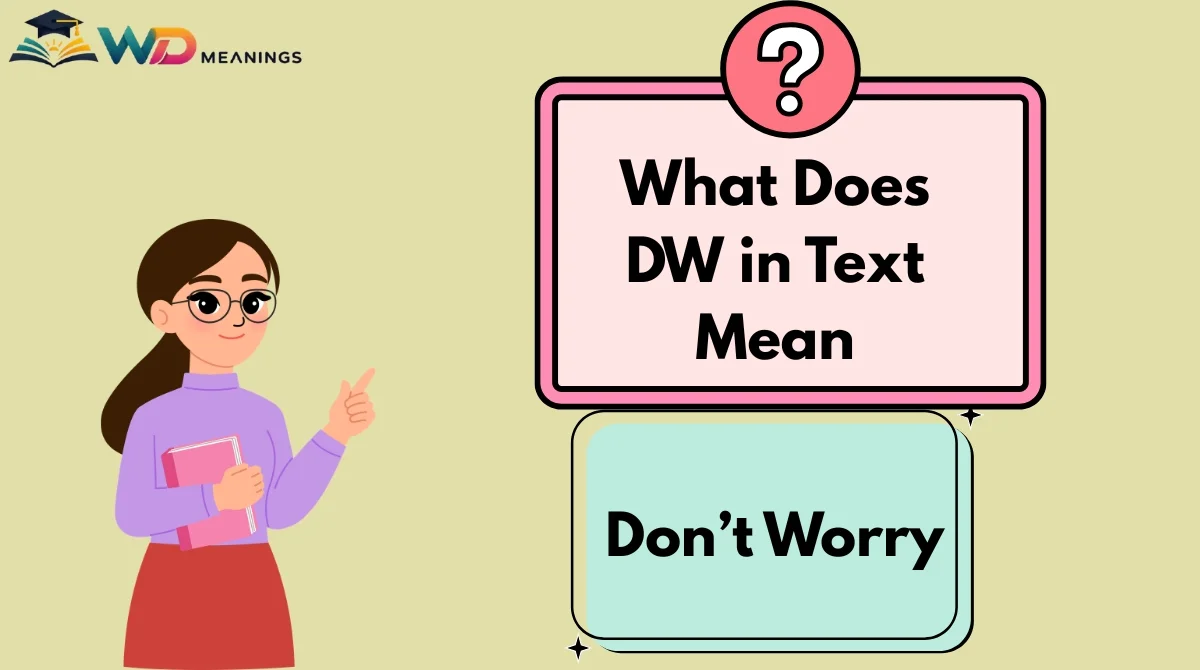
The most common meaning of DW in text is “Don’t Worry.”
People usually use DW in chats, social media messages, and online conversations to reassure someone, reduce stress, or show that something is not a big problem.
It is a casual abbreviation commonly seen among friends, family members, and online communities.
In this guide, you will learn what DW means in texting, where it is used, how its tone changes depending on context, what it means from a girl or guy, possible alternative meanings, and how to reply naturally when someone sends it.
Quick Answer
DW in text means “Don’t Worry.” It is a casual way to reassure someone that everything is okay or that they do not need to stress about something. People commonly use it in friendly conversations, social media chats, gaming messages, and everyday texting.
What Does DW Mean in Text?
The most common meaning of DW in text is “Don’t Worry.” It is a shortened version of the phrase people use when they want to comfort, reassure, or calm someone down.
Instead of typing the full phrase “Don’t worry,” many people simply write DW because texting culture often values speed and convenience.
For example:
Person 1: “Sorry I couldn’t reply earlier. I was busy.”
Person 2: “DW, it’s okay!”
Here, DW means “Don’t worry, it’s okay.”
Full Form of DW in Text
The full form is:
DW = Don’t Worry
It is not usually pronounced as separate letters when speaking. People normally say the full phrase “don’t worry” rather than saying “D-W.”
Tone and Emotional Meaning of DW
The feeling behind DW depends on the situation and the relationship between the people chatting. Most of the time, it sounds:
- Friendly
- Reassuring
- Relaxed
- Supportive
- Casual
However, tone can change. A short “DW” without extra words may sometimes feel less warm than “Don’t worry 😊” or “DW, you’re fine!”
The surrounding messages, punctuation, and emojis often reveal the real intention.
Real Text Example
Friend 1: “I think I deleted the file by mistake 😭”
Friend 2: “DW, I saved a copy.”
In this case, DW is used to reduce worry and offer reassurance.
Origin and Background of DW
The exact first use of DW meaning “Don’t Worry” is difficult to identify because abbreviations developed naturally through informal communication rather than from one specific creator or event.
Shortened phrases became common with early internet chats, text messaging, and online forums where users wanted faster ways to communicate. As mobile phones, instant messaging apps, and social platforms grew, abbreviations like DW became part of everyday digital language.
The abbreviation follows a common texting pattern: taking the first letters of a phrase and removing unnecessary words. Similar examples include:
- BRB = Be Right Back
- IDK = I Don’t Know
- TTYL = Talk To You Later
Today, DW remains a familiar casual abbreviation, especially in personal messages and online conversations.
How DW Is Used in Text Conversations
People use DW in several everyday situations, but the main purpose is usually reassurance.
1. To Comfort Someone
The most common use is telling someone not to stress.
Example:
A: “I’m sorry I forgot your birthday.”
B: “DW, we can celebrate this weekend.”
Here, DW shows understanding and removes pressure.
2. To Say Something Is Not a Problem
Sometimes DW means “it’s fine” or “no problem.”
Example:
A: “Can I send the payment tomorrow instead?”
B: “DW, tomorrow works.”
The sender is showing flexibility.
3. In Friendly Conversations
Friends often use DW casually when someone apologises or feels guilty.
Example:
A: “Sorry for bothering you.”
B: “DW, you’re not bothering me.”
4. In Humorous Situations
DW can also appear in playful conversations.
Example:
A: “I accidentally watched the whole season in one night.”
B: “DW, that’s a normal weekend 😂”
The abbreviation keeps the conversation light.
5. In Romantic Conversations
DW is sometimes used between couples or people who like each other. The meaning stays the same, but the emotional tone may feel more caring.
Example:
A: “I hope you’re not upset with me.”
B: “DW ❤️ I’m not upset.”
The emoji and relationship context add warmth.
6. In Negative or Dismissive Situations
Although DW is usually positive, context matters.
A message like:
“DW.”
with no explanation, especially during an argument, might feel cold or dismissive. It could mean “don’t worry about it,” but the person’s tone is unclear.
Always look at the full conversation instead of only the abbreviation.
What DW Means on Different Platforms
The meaning of DW usually stays the same across platforms. However, the way people use it can vary slightly depending on the type of communication.
On WhatsApp, DW is commonly used in private chats between friends, family members, and couples.
Examples:
- Reassuring someone after an apology
- Responding quickly during busy conversations
- Reducing anxiety about plans or mistakes
Example:
“DW, I’ll bring the documents tomorrow.”
Snapchat
Snapchat conversations are often quick and informal, so abbreviations like DW fit naturally.
Users may send:
“DW 😂”
or
“DW, you’re good”
to keep messages short and casual.
On Instagram DMs, DW may appear when replying to stories, comments, or casual conversations.
Example:
Person A: “Sorry I didn’t like your post earlier!”
Person B: “DW haha”
The tone is usually friendly.
TikTok
TikTok users may use DW in comments or direct messages, especially when responding to concerns.
Example:
“DW, everyone makes mistakes.”
It can also appear in creator communities when people reassure each other.
On Facebook Messenger, DW is often used by people who already know each other. Older and younger users may both understand it, although some people who are less familiar with texting slang may prefer the full phrase.
Discord
Gaming and online communities frequently use DW because conversations move quickly.
Example:
“DW about losing that match, we’ll win the next one.”
Here, it works as encouragement.
Dating Apps
On dating apps, DW can appear in casual conversations.
Example:
A: “Sorry, I replied late. Work was crazy.”
B: “DW, no worries.”
The meaning is still “Don’t worry,” but the overall impression depends on the relationship and conversation style.
What Does DW Mean From a Girl or Guy?
When a girl or guy sends DW, the abbreviation itself does not have a different meaning based on gender.
A person of any gender can use DW to mean “Don’t Worry.” The real meaning comes from:
- The relationship between both people
- The previous messages
- The situation
- Emojis or punctuation
- The person’s communication style
If a Girl Sends DW
If a girl says:
“DW, it’s okay 😊”
she may simply be reassuring you or showing kindness.
If she says:
“DW.”
during a serious conversation, it could sound more distant.
If a Guy Sends DW
If a guy writes:
“DW bro, I got it”
it may sound casual and friendly.
If he writes:
“DW ❤️”
in a romantic conversation, the meaning may feel more caring.
Context Matters More Than Gender
A common mistake is assuming DW has a hidden romantic meaning when sent by someone you like. Usually, it simply means the person is saying not to worry.
The surrounding conversation provides the real clues.
Other Possible Meanings of DW
Although “Don’t Worry” is the most common texting meaning, DW can have other meanings in different contexts.
| Meaning | Context | Example |
|---|---|---|
| Don’t Worry | Everyday texting and chats | “DW, I fixed it.” |
| Dear Wife | Family or personal notes (less common) | “DW asked me to pick this up.” |
| Data Warehouse | Technology and business discussions | “The report comes from the DW.” |
| Doctor Who | Entertainment discussions | “I started watching DW again.” |
The meaning depends heavily on the conversation topic.
If someone sends DW during a normal chat, apology, or stressful situation, “Don’t Worry” is almost always the intended meaning.
How to Respond to DW
Your reply depends on why the person used DW. Here are natural responses for different situations.
Casual Replies
- “Thanks 😊”
- “Okay, appreciate it!”
- “Got it!”
- “Cool, thanks.”
Example:
A: “DW, I handled it.”
B: “Thanks, you’re the best.”
Friendly Replies
- “Glad to hear that!”
- “You’re awesome, thanks.”
- “I appreciate it.”
Example:
A: “DW, everything is sorted.”
B: “That’s a relief, thank you!”
Funny Replies
- “Too late, I already worried 😂”
- “My anxiety didn’t get the memo 😭”
- “I’ll try not to panic lol”
Example:
A: “DW, it’s fine.”
B: “My brain says otherwise 😂”
Romantic Replies
- “Thanks ❤️”
- “You always know how to make me feel better.”
- “I’m lucky to have you.”
Example:
A: “DW, I’m here for you ❤️”
B: “That means a lot.”
If You Are Confused
You can simply ask:
- “DW means don’t worry, right?”
- “What do you mean by DW?”
This is useful because some abbreviations can have multiple meanings depending on context.
(Part 2 continues with Similar Terms, Common Misunderstandings, Safety, Examples, FAQs, Conclusion, and Meta Description.)
p 2
Similar Texting Terms and Differences
Many texting abbreviations have meanings similar to DW, but each one has a slightly different purpose. Understanding these differences helps you choose the right expression in conversations.
| Term | Meaning | Key Difference |
|---|---|---|
| DW | Don’t Worry | Used to reassure someone or tell them not to stress. |
| NP | No Problem | Usually responds to a request, apology, or favour. |
| NVM | Never Mind | Used when something is no longer important or needed. |
| IDC | I Don’t Care | Shows a lack of concern or interest, which can sound negative. |
| It’s OK | It’s Okay | A full phrase that sounds clearer and sometimes warmer than an abbreviation. |
DW vs NP
Although these can feel similar, they are not exactly the same.
DW focuses on reducing someone’s worry.
Example:
“DW, you’ll do great on your exam.”
NP usually responds to an apology or request.
Example:
“Sorry I’m late.”
“NP.”
DW vs NVM
These two abbreviations are often confused because both can appear when something is being dismissed.
- DW = Don’t Worry → reassurance
- NVM = Never Mind → forget it or ignore it
Example:
“DW, I already fixed the issue.”
(You do not need to worry.)
“NVM, I found my keys.”
(The previous problem no longer matters.)
DW vs IDC
These have very different emotional meanings.
- DW shows care or reassurance.
- IDC means “I don’t care” and can sound rude depending on the situation.
Example:
“DW, everything will work out.”
(kind)
“IDC what they think.”
(possibly dismissive)
Common Misunderstandings About DW
Although DW is a simple abbreviation, people sometimes misunderstand its meaning because texting removes facial expressions, voice tone, and body language.
1. Thinking DW Has a Hidden Meaning
Some people wonder if DW is secretly romantic, sarcastic, or emotional. Usually, it is not.
The basic meaning remains:
DW = Don’t Worry
Any extra feeling comes from the conversation, relationship, emojis, and wording around it.
For example:
- “DW 😊” → friendly and comforting
- “DW ❤️” → possibly affectionate
- “DW.” → may feel short or cold
2. Confusing DW With Other Abbreviations
Because many texting terms are only two letters long, people sometimes mix them up.
For example:
- DW = Don’t Worry
- DM = Direct Message
- DP = Display Picture
- DD = Dear Daughter (in some family contexts)
Always consider the topic before deciding what an abbreviation means.
3. Capitalization Differences
You may see DW written in different ways:
- DW
- dw
- Dw
The meaning is usually unchanged.
Texting is informal, so capitalization rarely changes the definition.
4. Assuming Short Replies Are Rude
A message like:
“DW”
may look less friendly than:
“DW, everything is okay 😊”
However, some people naturally text in short forms. A brief reply does not always mean someone is annoyed.
Look at the person’s normal communication style before interpreting their tone.
5. Confusing “Don’t Worry” With “Don’t Want”
Some beginners may misunderstand DW because they only see the letters and try to guess the phrase.
However, in normal texting conversations, DW almost always means “Don’t Worry.”
Is DW Appropriate or Safe to Use?
DW is generally safe, polite, and friendly to use in casual conversations. It is a common informal abbreviation that does not contain offensive, harmful, or inappropriate language.
However, its suitability depends on the situation.
Casual Conversations
DW works well with:
- Friends
- Family
- Classmates
- Online communities
- Gaming groups
Example:
“DW, I’ll send the notes later.”
Professional or Workplace Communication
In formal settings, it is usually better to write the full phrase:
Instead of:
“DW, I’ll handle it.”
Use:
“Don’t worry, I’ll handle it.”
Professional emails, workplace messages, and official communication usually require clearer language.
Can DW Sound Dismissive?
Sometimes, yes.
If someone shares a serious problem and receives only:
“DW.”
they might feel the response is too short or does not acknowledge their feelings.
For sensitive situations, a warmer response is better:
“Don’t worry, I’m here if you need anything.”
When DW Involves Serious Situations
If someone says they are dealing with something serious, such as emotional distress, danger, or a major personal problem, do not rely only on “DW” as a response.
A better approach is to acknowledge their feelings:
“I’m sorry you’re dealing with that. Are you okay?”
The abbreviation itself is harmless, but the surrounding conversation matters.
Examples of DW in Text Messages
Here are realistic examples showing different situations and tones.
1. Reassuring a Friend
Alex: “Sorry I forgot to bring your charger.”
Sam: “DW, I’ll grab it tomorrow.”
Meaning: Don’t worry, it is not a problem.
2. After an Apology
Mia: “I’m sorry I replied so late.”
Jake: “DW, I know you were busy.”
Meaning: The person is accepting the apology.
3. Before an Important Event
Emma: “I’m nervous about my interview.”
Lily: “DW, you’re going to do amazing!”
Meaning: Offering encouragement.
4. In a Gaming Chat
Player 1: “Sorry, I lost the match for us.”
Player 2: “DW, we’ll win the next one.”
Meaning: Encouraging a teammate.
5. In a Group Chat
Friend: “I might be a little late tonight.”
Other friend: “DW, we haven’t started yet.”
Meaning: Saying the delay is okay.
6. Romantic Conversation
Partner 1: “I hope I didn’t upset you.”
Partner 2: “DW ❤️ I’m not mad.”
Meaning: Providing emotional reassurance.
7. Funny Situation
Friend 1: “I accidentally sent that message to the wrong person.”
Friend 2: “DW 😂 It happens.”
Meaning: Making the situation feel less embarrassing.
8. School Conversation
Student 1: “I forgot the homework deadline.”
Student 2: “DW, the teacher extended it.”
Meaning: Removing stress.
9. Work Chat
Colleague 1: “Sorry, the file took longer than expected.”
Colleague 2: “DW, thanks for finishing it.”
Meaning: Showing patience.
10. Online Comment Reply
User: “Sorry my video quality isn’t great.”
Creator: “DW, the content is what matters.”
Meaning: Encouraging someone.
11. Family Conversation
Parent: “Sorry I couldn’t call earlier.”
Child: “DW, I was busy too.”
Meaning: Showing understanding.
12. Casual Short Reply
Friend: “Are you still coming?”
Friend: “DW, I’ll be there.”
Meaning: Reassuring someone about plans.
Frequently Asked Questions
What does DW stand for in texting?
DW usually stands for “Don’t Worry.” People use it in messages to reassure someone, reduce stress, or show that a situation is not a problem. It is a casual abbreviation commonly used in chats, social media, gaming conversations, and personal messages.
Does DW mean something different on Snapchat or WhatsApp?
No. On Snapchat, WhatsApp, Instagram, and most other platforms, DW usually has the same meaning: “Don’t Worry.” The platform may change the style of conversation, but the abbreviation itself generally keeps the same definition.
Is DW a rude response?
Usually, no. DW is normally friendly and reassuring. However, sending only “DW” during a serious emotional conversation may feel too short or dismissive. The tone depends on the situation, the relationship, and any extra words or emojis included.
What does DW mean from a girl?
If a girl sends DW, it usually means “Don’t Worry.” It does not automatically have a romantic meaning. The actual message depends on the conversation, her communication style, and the relationship between both people.
What does DW mean from a guy?
If a guy sends DW, it also usually means “Don’t Worry.” It may show friendliness, support, or reassurance. The meaning should be understood from the complete conversation rather than assuming a special intention.
Can I use DW in professional messages?
You can use DW in casual workplace chats if your company culture allows informal communication. However, in formal emails or professional situations, writing “Don’t worry” is usually clearer and more appropriate.
Conclusion
DW in text means “Don’t Worry.” It is a common casual abbreviation used to reassure someone, reduce stress, or show that something is okay.
The meaning usually stays the same across platforms like WhatsApp, Snapchat, Instagram, Discord, and other messaging apps.
While DW is generally friendly, the tone depends on context.
A simple “DW” may feel casual, while “DW 😊” or “DW, I’m here for you” feels warmer.
When interpreting any texting abbreviation, consider the full conversation, relationship, and emotions behind the message.

Hamz Ellis is a content writer at WD Meanings, specializing in internet slang, texting abbreviations, and digital communication. He creates clear, well-researched, and easy-to-understand content to help readers quickly find the meanings of modern online terms.