If you’ve received a message containing ITR and aren’t sure what it means, you’re not alone.
Text abbreviations often have multiple meanings, and understanding them depends heavily on the conversation.
When people search for what does ITR mean in text, they’re usually trying to decode a short message from a friend, family member, classmate, or someone on social media.
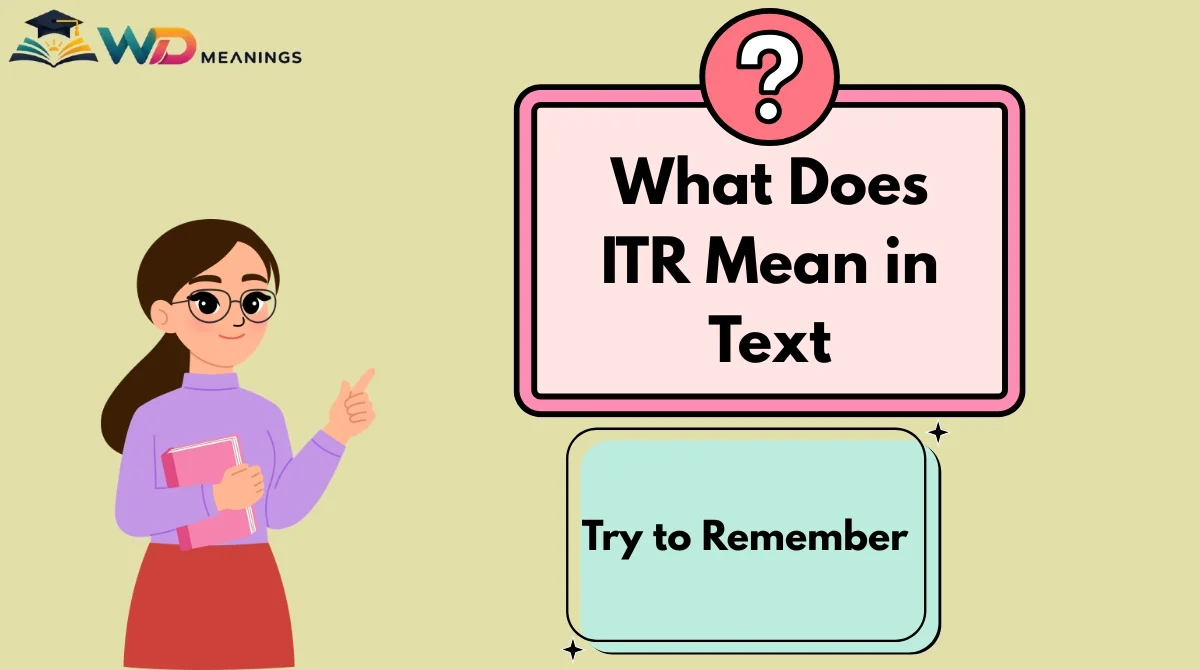
In most casual texting, ITR commonly means “I’ll Try” or “I’ll Try to Remember,” depending on the context. However, it can also represent other phrases in different industries or specialised conversations.
The key is looking at the surrounding words, the relationship between the people chatting, and the topic being discussed.
This guide explains the most common texting meaning of ITR, where it came from, how people use it across different platforms, alternative meanings, example conversations, and the best ways to reply.
Quick Answer
ITR most commonly means “I’ll Try” in text messages. People use it as a quick way to say they’ll make an effort to do something, although they aren’t making a firm promise. In some conversations, it can also mean “I’ll Try to Remember.” The exact meaning depends on the context of the conversation.
What Does ITR Mean in Text?
In everyday texting, ITR usually stands for “I’ll Try.”
It’s an informal abbreviation used when someone wants to show willingness without guaranteeing success. Instead of typing the full phrase, they shorten it to save time.
Full Form
ITR = I’ll Try
In certain conversations, people may also use it to mean:
- I’ll Try to Remember
The second meaning is less common but still understandable when someone is being reminded about something.
Simple Definition
ITR is a casual texting abbreviation that tells someone you’ll make an effort, even if you’re unsure you’ll be able to do it.
Pronunciation
People generally don’t pronounce ITR as individual letters during conversation. It’s almost always written in text rather than spoken aloud. When reading it, most people mentally interpret it as “I’ll try.”
Tone and Emotional Meaning
The tone is usually:
- Friendly
- Casual
- Honest
- Slightly uncertain
- Cooperative
Unlike saying “I will,” which sounds definite, “I’ll try” leaves room for uncertainty while still showing good intentions.
Example
Alex: Can you call me after class?
Taylor: ITR. I might have football practice.
Here, Taylor isn’t refusing. They’re simply saying they’ll do their best.
Origin and Background
Unlike famous internet abbreviations such as LOL, BRB, or IMO, ITR doesn’t have one well-documented origin.
It appears to have developed naturally as texting became faster and people looked for shorter ways to type common phrases. Since “I’ll try” is a frequently used response, reducing it to ITR follows the same pattern as many other text abbreviations.
Because it’s relatively uncommon compared with mainstream slang, not everyone recognises it immediately. Some people may even ask what it means the first time they see it.
Its meaning is driven more by context than by internet culture or any specific platform.
How ITR Is Used in Text Conversations
People mainly use ITR when someone asks for a favour, invites them somewhere, or reminds them to do something.
Friendly Conversation
Friend: Want to play later?
You: ITR. Depends when I finish homework.
Making Plans
Sam: Can you come to dinner tonight?
Jordan: ITR. Work might run late.
Reminder
Emma: Don’t forget my birthday!
Chris: ITR 😂
In this case, it means “I’ll try to remember.”
Light Humour
Friend: Wake up before noon tomorrow.
You: ITR 😂
The laughing emoji makes it clear the reply is playful rather than serious.
Slight Uncertainty
Parent: Can you clean your room today?
Teen: ITR.
This suggests willingness, but not complete commitment.
What ITR Means on Different Platforms
For most social platforms, the meaning stays the same. The surrounding conversation matters more than the app itself.
Usually means “I’ll Try.”
Friends and family often use it when making plans or responding to requests.
Snapchat
The abbreviation keeps the same meaning and often appears in casual chats with photos or quick replies.
You’ll occasionally see ITR in direct messages or comment replies when someone responds briefly.
TikTok
It’s uncommon in public comments but may appear in private messages between users.
Friends may use ITR in Messenger conversations, especially when discussing events or reminders.
Discord
Gamers or online communities sometimes use ITR when responding to requests.
Example:
“I’ll join the raid later. ITR.”
Dating Apps
Someone may reply:
“ITR after work.”
This simply means they’ll try to message or meet later. It doesn’t automatically indicate romantic interest or disinterest.
What Does ITR Mean From a Girl or Guy?
The meaning of ITR doesn’t change because of someone’s gender.
Instead, focus on:
- The conversation
- Their usual texting style
- Emojis
- Punctuation
- Previous messages
- Relationship with you
For example:
“ITR 😊”
Feels warm and friendly.
“ITR…”
May sound hesitant or uncertain.
“ITR 😂”
Usually playful.
“ITR.”
More neutral and straightforward.
Rather than assuming hidden meanings, look at the overall conversation.
Other Possible Meanings
Although “I’ll Try” is the most common texting meaning, ITR has other legitimate meanings in different contexts.
| Meaning | Context | Example |
|---|---|---|
| I’ll Try | Texting (most common) | “ITR after work.” |
| I’ll Try to Remember | Personal reminders | “ITR to bring your book.” |
| Income Tax Return | Finance | “I filed my ITR yesterday.” |
| Invitation to Register | Events or organisations | “Check your email for the ITR.” |
If you’re chatting with friends, “I’ll Try” is usually the correct interpretation.
How to Respond to ITR
Your response depends on the conversation.
Casual
“No worries!”
Friendly
“Thanks! Appreciate it.”
Encouraging
“That’s all I can ask.”
Funny
“I’ll take that as a maybe 😂”
Understanding
“If you can’t, it’s okay.”
Romantic
“I hope you can ❤️”
Clarifying
“Do you mean you’ll try, or are you unavailable?”
Chat Example
You: Can we meet tomorrow?
Friend: ITR.
You: Sounds good. Just let me know.
Similar Texting Terms and Differences
| Term | Meaning | Key Difference |
|---|---|---|
| IMO | In My Opinion | Shares an opinion rather than willingness |
| IDK | I Don’t Know | Expresses uncertainty instead of effort |
| TBH | To Be Honest | Introduces honesty or opinion |
| BRB | Be Right Back | Indicates a temporary absence |
| LMK | Let Me Know | Requests future information |
ITR stands out because it focuses on making an effort, not expressing knowledge or opinion.
Common Misunderstandings
Several factors can cause confusion.
Confusing It With Financial Terms
Outside texting, ITR often means Income Tax Return.
If someone is discussing taxes, government forms, or accounting, that’s almost certainly the intended meaning.
Assuming It’s Always a Promise
Saying ITR is not the same as saying “I definitely will.”
It expresses willingness but also uncertainty.
Capitalisation
You’ll see:
- itr
- ITR
- Itr
All generally mean the same thing.
Different Conversations
Always consider:
- What was asked?
- Is the topic casual or professional?
- Are they responding to a request or discussing finance?
Context solves most confusion.
Is ITR Appropriate or Safe to Use?
Yes.
ITR is a polite, informal abbreviation.
It isn’t offensive, rude, or harmful.
However, because many people don’t recognise it, writing “I’ll try” in professional emails, school assignments, or workplace communication is usually clearer.
It’s perfectly suitable for:
- Friends
- Family
- Casual group chats
- Social media messages
Avoid relying on it in formal communication where clarity matters.
Examples of ITR in Text
Here are some realistic examples.
- “ITR after dinner.”
- “Can you save me a seat?”
“ITR.” - “ITR if traffic isn’t terrible.”
- “Don’t forget your passport.”
“ITR 😅” - “I’ll message you tonight. ITR if work slows down.”
- “ITR but no promises.”
- “ITR 😊 Thanks for reminding me.”
- “Can you help me move Saturday?”
“ITR. I’ll know tomorrow.” - “ITR once I finish studying.”
- “ITR. My schedule’s packed this week.”
- “ITR if my parents say yes.”
- “ITR 😂 You know I’m terrible at remembering birthdays.”
These examples show that ITR often communicates good intentions with realistic uncertainty.
Frequently Asked Questions
Is ITR a common texting abbreviation?
ITR is less common than abbreviations like LOL, BRB, or IDK, but some people use it regularly as a short way to say “I’ll try.” Because it isn’t universally recognised, context is important, and spelling out the full phrase may be clearer if you’re unsure whether the other person will understand it.
Does ITR always mean “I’ll Try”?
No. While “I’ll Try” is the most common meaning in casual text conversations, ITR can also stand for “I’ll Try to Remember” or refer to Income Tax Return in financial discussions. The surrounding conversation usually makes the intended meaning obvious.
Is ITR rude?
No. ITR is generally polite and friendly. It shows that someone is willing to make an effort, even if they can’t guarantee the outcome. Some people may see it as slightly non-committal because it doesn’t promise success.
Can I use ITR in work messages?
You can, but it’s usually better to write “I’ll try” in professional communication. Not everyone is familiar with the abbreviation, and using the full phrase avoids confusion.
Does ITR mean yes or no?
Neither. It sits somewhere in between. It means the person is willing to try, but they aren’t making a definite commitment. Think of it as a cautious “maybe.”
Why do people use ITR instead of typing “I’ll try”?
Some people enjoy using abbreviations because they’re faster to type, especially in quick chats or mobile conversations. However, since ITR isn’t as widely recognised as many other texting shortcuts, many users still prefer writing the full phrase.
Conclusion
When people ask what does ITR mean in text, the answer is usually simple: it stands for “I’ll Try.”
It’s a casual abbreviation that expresses willingness without making a firm promise.
In some situations, it can also mean “I’ll Try to Remember,” while in financial discussions it often refers to an Income Tax Return.
As with many texting abbreviations, context is the key to understanding the intended meaning.
When in doubt, look at the surrounding conversation, and if you’re still unsure, don’t hesitate to ask the sender for clarification.

Hamz Ellis is a content writer at WD Meanings, specializing in internet slang, texting abbreviations, and digital communication. He creates clear, well-researched, and easy-to-understand content to help readers quickly find the meanings of modern online terms.