If you’ve received a message saying “DPMO” from a girl, you might be wondering whether it’s friendly, angry, sarcastic, or something else entirely.
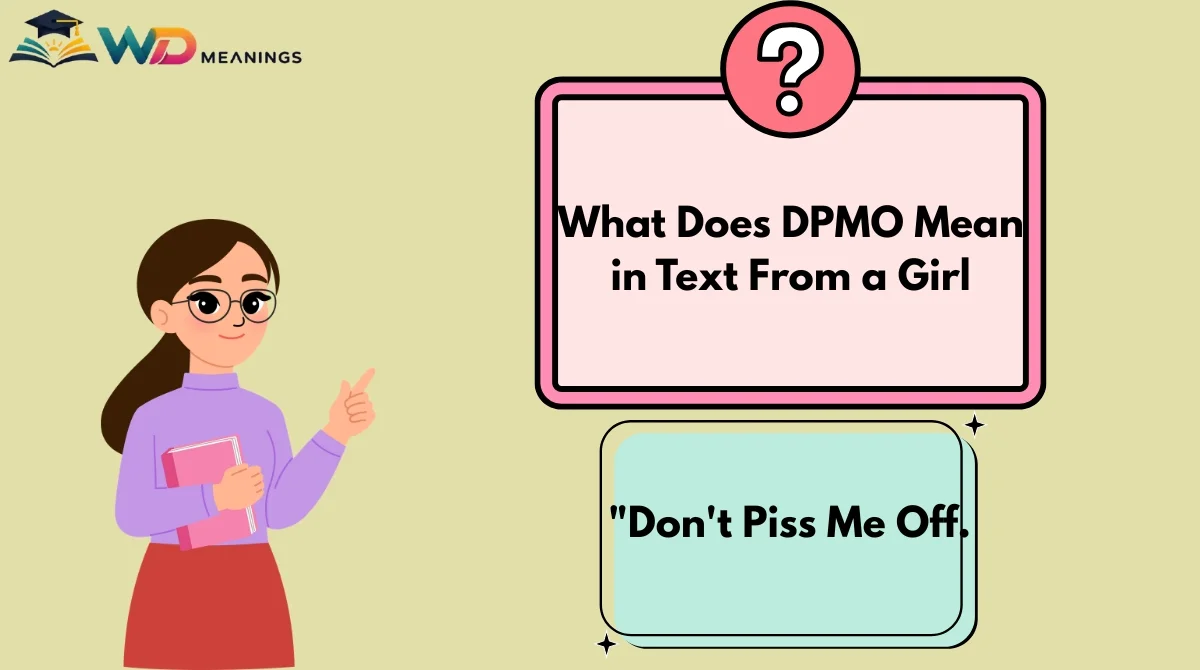
The meaning depends on the conversation, but in most texting situations, DPMO stands for “Don’t Piss Me Off.”
It’s an informal slang abbreviation used to warn someone not to annoy, frustrate, or upset the sender.
While DPMO often sounds blunt, it isn’t always meant as a serious threat.
Friends may use it jokingly, couples may say it playfully during teasing, and sometimes it genuinely expresses irritation.
Understanding the surrounding conversation, emojis, and relationship between the people chatting is the key to interpreting it correctly.
This guide explains exactly what DPMO means in text from a girl, how it’s used across messaging apps, when it’s playful versus serious, and the best ways to respond naturally.
Quick Answer
DPMO most commonly means “Don’t Piss Me Off.” When a girl texts DPMO, she’s usually telling you not to annoy or frustrate her. Depending on the conversation, it may be playful teasing between friends or partners, or it may be a genuine warning that she’s becoming upset. Always use the surrounding context to understand the tone.
What Does DPMO Mean in Text?
The most common texting meaning of DPMO is:
DPMO = Don’t Piss Me Off
Simple definition
It is a casual internet abbreviation used when someone wants another person to stop doing something annoying or irritating.
Pronunciation
People usually say the individual letters:
“Dee-Pee-Em-Oh.”
They rarely pronounce it as a single word.
Emotional tone
The tone can vary depending on the conversation:
- Playfully annoyed
- Frustrated
- Sarcastic
- Warning someone to stop
- Half-joking between close friends or partners
Although the phrase contains profanity, many people use it casually online without intending it to sound extremely aggressive.
Example
Alex: I’m sending another embarrassing photo 😂
Emma: DPMO 😂
Here, Emma is clearly joking rather than expressing real anger.
Origin and Background
DPMO is an internet abbreviation created by shortening the phrase “Don’t Piss Me Off.”
Like many texting abbreviations, it became popular because people wanted quicker ways to communicate on smartphones and social media. There isn’t a documented creator or official origin date, and its exact history is uncertain.
Today, you’ll mostly see DPMO in:
- Private text messages
- Snapchat chats
- Instagram DMs
- TikTok comments
- Group chats
- Discord conversations
Its meaning has remained fairly consistent across platforms.
How DPMO Is Used in Text Conversations
People use DPMO whenever they want someone to stop something annoying. The seriousness depends entirely on context.
Playful teasing
Among close friends, DPMO often signals fake annoyance.
Friend 1: I’m telling everyone your secret.
Friend 2: DPMO 😭😂
The laughter emojis show the speaker isn’t actually angry.
Mild frustration
Someone may use DPMO after repeated teasing.
Chris: I’m calling you five more times.
Taylor: Seriously… DPMO.
This feels firmer than a joke.
Romantic conversations
Couples sometimes use DPMO while flirting.
Him: Bet you miss me.
Her: DPMO 😂❤️
Here, the heart emoji softens the message considerably.
Genuine annoyance
Sometimes the sender truly wants the behaviour to stop.
Person A: I already asked three times.
Person B: DPMO. I’m busy.
Without playful emojis, this should usually be taken seriously.
What DPMO Means on Different Platforms
The meaning of DPMO generally stays the same regardless of where it’s used.
| Platform | Typical Meaning |
|---|---|
| Casual warning not to annoy someone | |
| Snapchat | Often playful between friends or partners |
| Used in DMs and comments, usually joking or mildly annoyed | |
| TikTok | Appears in comments or captions expressing frustration |
| Less common but has the same meaning | |
| Discord | Frequently used during gaming or group chats |
| Dating apps | Can be flirtatious or indicate playful teasing depending on the conversation |
The platform itself doesn’t usually change the definition. Instead, the relationship between the people chatting matters most.
What Does DPMO Mean From a Girl or Guy?
The abbreviation itself does not change meaning based on gender.
Whether it comes from a girl, a guy, or anyone else, DPMO still most commonly means “Don’t Piss Me Off.”
However, context may change how you should interpret it.
From a girl
A girl might text DPMO when she’s:
- Teasing you
- Flirting playfully
- Feeling slightly annoyed
- Seriously asking you to stop something
For example:
You: I’m posting that funny picture.
Her: DPMO 😭
The crying emoji usually suggests she’s joking.
From a guy
A guy may use DPMO in exactly the same ways:
- Friendly banter
- Gaming chats
- Group conversations
- Genuine irritation
Again, emojis, punctuation, and the rest of the conversation reveal the intended tone.
Other Possible Meanings
Although “Don’t Piss Me Off” is by far the most common texting meaning, DPMO can occasionally represent other phrases in specialised settings.
| Meaning | Context | Example |
|---|---|---|
| Don’t Piss Me Off | Texting, social media, chats | “DPMO or I’m leaving 😂” |
| Defects Per Million Opportunities | Manufacturing, quality management | “Our factory reduced its DPMO score this year.” |
If someone sends you DPMO in a casual text message, they almost certainly mean Don’t Piss Me Off, not the manufacturing term.
How to Respond to DPMO
Your reply should match the tone of the conversation.
Casual
Haha, alright, I’ll stop.
Funny
Too late. 😅
Friendly
My bad! Didn’t mean to annoy you.
Romantic
Okay, but you’re still cute when you’re pretending to be mad.
Confused
Wait… are you serious or joking?
Serious
Sorry. I didn’t realise it bothered you.
Giving space
Got it. I’ll back off.
Similar Texting Terms and Differences
| Term | Meaning | Key Difference |
|---|---|---|
| IDC | I Don’t Care | Shows indifference rather than annoyance. |
| ISTG | I Swear to God | Emphasises frustration or sincerity but isn’t a warning. |
| SMH | Shaking My Head | Expresses disappointment or disbelief. |
| GTFO | Get The F*** Out | Usually stronger and more aggressive than DPMO. |
| BRB | Be Right Back | Simply indicates someone is temporarily leaving the conversation. |
Although these abbreviations may appear in similar conversations, they communicate different emotions.
Common Misunderstandings
One of the biggest mistakes is assuming DPMO always means someone is genuinely angry.
In reality, many people use it jokingly while laughing, teasing friends, or flirting.
Other common misunderstandings include:
- Thinking it has a different meaning on Snapchat than on WhatsApp.
- Assuming girls use it differently from guys.
- Believing every capitalisation changes the meaning.
These forms all usually mean the same thing:
- DPMO
- dpmo
- Dpmo
Capital letters are simply a matter of typing style.
Pay attention to:
- Emojis
- Previous messages
- Your relationship
- Whether the conversation is playful or serious
Those clues matter far more than the abbreviation itself.
Is DPMO Appropriate or Safe to Use?
DPMO is informal and includes mild profanity.
It is generally acceptable in:
- Text messages
- Friends’ group chats
- Casual online conversations
- Social media
It is usually not appropriate in:
- Professional emails
- Workplace chats
- School assignments
- Formal conversations with people you don’t know well
Because it contains a swear word, some people may find it rude even when used jokingly.
If someone repeatedly sends DPMO during a serious disagreement, it’s best to respect their request and avoid escalating the conversation.
Examples of DPMO in Text
Here are some realistic examples showing different situations.
- DPMO 😂 You’re making me laugh too much.
- If you hide my charger again, DPMO.
- DPMO, I already told you I’m busy.
- Bro… DPMO 😭
- Don’t tag me in that meme. DPMO.
- You’re lucky we’re friends. DPMO 😂
- DPMO before I mute this group chat.
- Keep talking and you’ll DPMO for real.
- DPMO 😅 I can’t stop laughing.
- Seriously, DPMO today. I’m exhausted.
- DPMO or I’m cancelling movie night.
- You know exactly how to DPMO 😂
Each example relies on context, punctuation, and emojis to show whether the message is playful or serious.
Frequently Asked Questions
Does DPMO always mean “Don’t Piss Me Off”?
In casual texting, yes. That’s the meaning most people intend. However, in technical or business discussions, DPMO may refer to Defects Per Million Opportunities, a quality management measurement. The conversation usually makes the intended meaning obvious.
Is DPMO rude?
It can be. Since it includes mild profanity, some people consider it impolite. Among close friends, however, it’s often used jokingly without causing offence.
What does DPMO mean from a girl who uses laughing emojis?
Laughing emojis usually suggest playful teasing rather than genuine anger. She’s likely jokingly telling you to stop whatever funny or annoying thing you’re doing.
Can DPMO be flirty?
Yes. Couples and people flirting sometimes use DPMO playfully while teasing one another. In those cases, the phrase often sounds more affectionate than hostile.
Should I apologise if someone texts DPMO?
If the conversation seems serious or you’ve genuinely upset them, apologising is a thoughtful response. If it’s clearly a joke with laughing emojis or playful banter, responding with humour is often appropriate.
Is DPMO common on social media?
Yes. You’ll occasionally see it in text messages, Snapchat, Instagram DMs, TikTok comments, Discord chats, and other casual online conversations where abbreviations are popular.
Conclusion
When someone asks “what does DPMO mean in text from a girl,” the answer is usually straightforward:
it means “Don’t Piss Me Off.” Most of the time, the phrase expresses annoyance, but whether it’s playful, flirtatious, sarcastic, or genuinely serious depends on the surrounding conversation.
Look at emojis, punctuation, previous messages, and your relationship with the sender before deciding how to respond.
By considering the full context rather than the abbreviation alone, you’ll be much more likely to understand the sender’s real intention.

Hamz Ellis is a content writer at WD Meanings, specializing in internet slang, texting abbreviations, and digital communication. He creates clear, well-researched, and easy-to-understand content to help readers quickly find the meanings of modern online terms.