Text messages are full of short expressions that can be confusing if you don’t know the context.
If you’ve seen someone type “tsk” in a chat, you might wonder whether they’re annoyed, joking, disappointed, or simply teasing.
The short answer is that tsk usually represents the sound “tsk tsk”—a clicking noise people make with their tongue to express mild disappointment, disapproval, impatience, or sympathy.
Rather than being an abbreviation with a full form, it’s a written version of a sound people make in real life.
Understanding what does tsk mean in text depends on the conversation.
Sometimes it’s playful, sometimes it’s sarcastic, and other times it’s a gentle way of saying, “You should have known better.”
This guide explains exactly what it means, where it came from, how people use it across different messaging apps, and how you can respond naturally.
Quick Answer
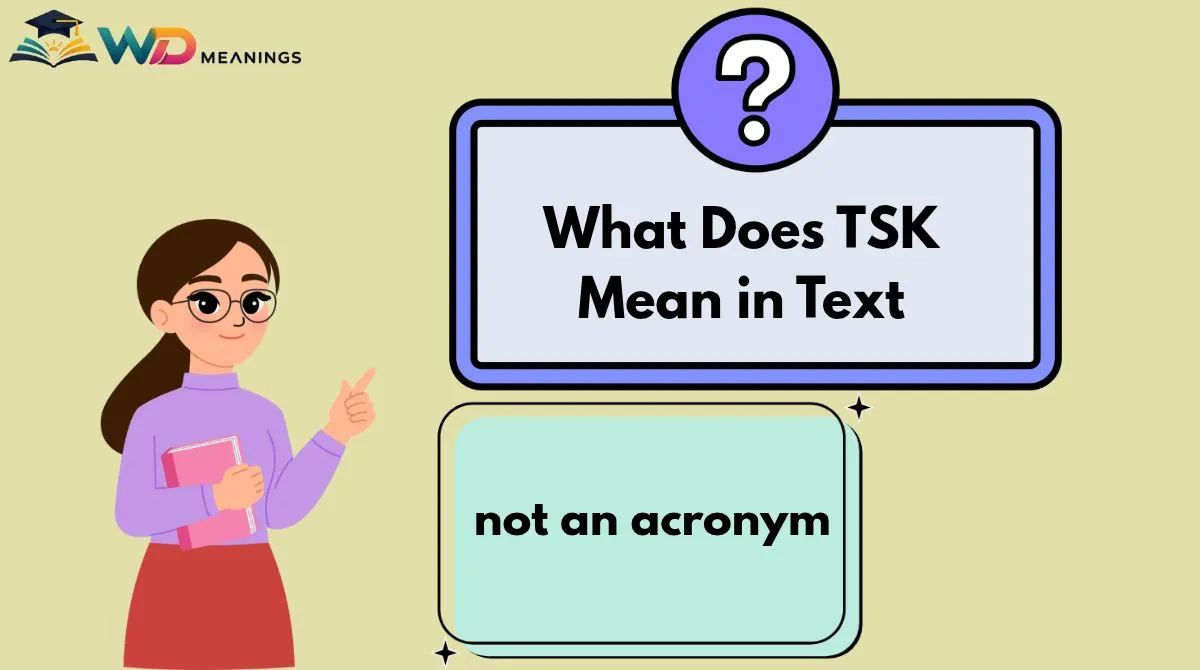
TSK in text is an onomatopoeic expression that represents the tongue-clicking sound “tsk tsk.” People use it to show mild disappointment, disapproval, sympathy, amusement, or playful teasing. It is not an acronym and has no official full form. The intended meaning depends on the tone of the conversation and the relationship between the people chatting.
What Does TSK Mean in Text?
The most common meaning of tsk in text messages is a written version of the tongue-clicking sound people make when reacting to something disappointing, silly, frustrating, or mildly disapproving.
Unlike many texting abbreviations, TSK does not stand for any words. Instead, it imitates a real-life sound.
Full Form
There is no full form for TSK. It is not an acronym.
Simple Definition
TSK means a gentle expression of disappointment, disapproval, impatience, or sympathy written as text.
Pronunciation
Most people pronounce it simply as:
“tsk” (a quick tongue-click)
Sometimes people write it twice as:
- Tsk tsk
- Tsk-tsk
This more closely imitates the spoken sound.
Emotional Tone
Depending on the conversation, tsk can sound:
- Mildly disappointed
- Playfully judgmental
- Teasing
- Sympathetic
- Slightly sarcastic
- Light-hearted
It is usually less harsh than directly criticizing someone.
Example
Alex: I forgot my wallet again.
Jordan: Tsk tsk… that’s the third time this week.
Here, Jordan is gently teasing Alex rather than seriously scolding them.
Origin and Background
The expression “tsk” comes from a tongue-clicking sound that has existed in spoken communication for a very long time across many cultures. People naturally make this sound to express mild disapproval, disappointment, or concern without using words.
Because online conversations lack facial expressions and vocal tone, internet users began writing “tsk” or “tsk tsk” to recreate that sound in digital communication.
There is no single confirmed date or platform where it first entered texting. Instead, it gradually became common in emails, chat rooms, forums, instant messaging, and eventually social media and smartphone texting.
Today, it remains a familiar way to show emotion without writing a full sentence.
How TSK Is Used in Text Conversations
The meaning of tsk depends almost entirely on context. Here are the most common situations where people use it.
Gentle Disappointment
Someone may use tsk when a friend makes a careless mistake.
Emma: I missed the deadline.
Ryan: Tsk… that’s frustrating.
Playful Teasing
Friends often use it jokingly.
Chris: I ate your fries.
Taylor: Tsk tsk. I knew I couldn’t trust you.
The tone here is playful rather than angry.
Friendly Sarcasm
Sometimes it’s used with light sarcasm.
Sam: I stayed up until 4 a.m. gaming.
Lee: Tsk… and now you’re complaining about being tired.
Showing Sympathy
Occasionally, tsk expresses concern.
Jamie: My phone fell into the pool.
Morgan: Tsk… that’s really unlucky.
Instead of criticizing, it shows empathy.
Mild Disapproval
Parents, teachers, or older relatives sometimes use tsk to gently correct someone’s behaviour.
Child: I skipped my homework.
Parent: Tsk tsk. Let’s finish it before dinner.
What TSK Means on Different Platforms
The meaning of tsk stays remarkably consistent across most online platforms.
People usually use it in private conversations with friends or family to tease or express gentle disappointment.
Snapchat
On Snapchat, tsk often accompanies humorous messages or playful reactions to photos and stories.
It commonly appears in comments or direct messages when reacting to funny mistakes or unexpected situations.
TikTok
Users may write tsk in comments to jokingly react to dramatic videos, embarrassing moments, or ironic situations.
Facebook users often use tsk tsk in comment sections to express mild disapproval or playful criticism.
Discord
In gaming communities and group chats, tsk can be used after someone makes a mistake during gameplay or jokes about a poor decision.
Dating Apps
On dating apps, tsk is usually playful.
Example:
“You forgot to reply yesterday? Tsk tsk 😄”
The emoji softens the message and makes it flirtatious rather than critical.
Overall, the meaning remains the same across platforms. What changes is the tone created by emojis, punctuation, and the relationship between the people chatting.
What Does TSK Mean From a Girl or Guy?
The meaning of tsk does not change because it comes from a girl or a guy.
Instead, you should pay attention to:
- Your relationship
- The rest of the conversation
- Emojis
- Punctuation
- Previous messages
For example:
“Tsk.”
May sound more serious.
“Tsk 😂”
Usually means playful teasing.
“Tsk tsk ❤️”
Could be affectionate or flirtatious.
“Tsk…”
May express disappointment or concern.
Rather than focusing on gender, it’s much more accurate to interpret tsk based on the overall conversation.
Other Possible Meanings
Although tsk almost always refers to the tongue-clicking expression in texting, it can occasionally have other meanings in specific contexts.
| Meaning | Context | Example |
|---|---|---|
| Tongue-click expressing disappointment (most common) | Texting and social media | “Tsk tsk, you forgot again.” |
| Sound effect in writing | Stories or dialogue | “Tsk… that wasn’t a good idea.” |
| Initials or abbreviation | Organisation, business, or personal names | “TSK Holdings announced…” |
In everyday texting, the tongue-click meaning is overwhelmingly the most common.
How to Respond to TSK
Your reply depends on why the other person used it.
Casual
“I know—I messed up.”
Funny
“Hey, no judging! 😂”
Friendly
“I’ll do better next time.”
Romantic
“You’ll forgive me, right? ❤️”
Confused
“Wait… what did I do?”
Serious
“You’re right. I should have handled that better.”
Chat Examples
Friend: Tsk tsk.
You: Fair enough—I deserved that.
Friend: Tsk… late again?
You: Traffic won this round.
Partner: Tsk ❤️
You: I’ll make it up to you.
Similar Texting Terms and Differences
| Term | Meaning | Key Difference |
|---|---|---|
| SMH | Shaking my head | Stronger disappointment than TSK |
| Sigh | Frustration or exhaustion | Shows weariness rather than gentle criticism |
| LOL | Laughing out loud | Expresses amusement, not disapproval |
| Oops | Acknowledges a mistake | Usually said by the person who made the mistake |
| Hmm | Thinking or uncertainty | Suggests reflection rather than judgment |
While these expressions may appear in similar conversations, tsk specifically imitates the tongue-clicking sound associated with mild disapproval or teasing.
Common Misunderstandings
Several misconceptions surround tsk.
Thinking It’s an Acronym
Many people assume TSK stands for a phrase.
It doesn’t.
Reading It as Anger
Because it expresses disapproval, some readers think the sender is angry.
Often, the opposite is true. Friends frequently use tsk jokingly.
Ignoring Context
The same tsk can mean sympathy, teasing, or disappointment depending on what was said before it.
Capitalization
These versions all mean the same thing:
- tsk
- TSK
- Tsk
- tsk tsk
- Tsk-tsk
Capitalization rarely changes the meaning.
Is TSK Appropriate or Safe to Use?
Yes.
TSK is generally a safe, informal expression.
It is suitable for:
- Friends
- Family
- Casual chats
- Social media
- Online gaming
However, it may sound slightly patronising if used with someone you don’t know well.
In professional emails or formal workplace communication, it’s usually better to avoid tsk, since it can seem dismissive or overly casual.
It is not considered offensive, but tone matters. Repeatedly using it during disagreements could make the other person feel judged.
Examples of TSK in Text
Here are some realistic examples.
- “Tsk tsk… you forgot my birthday.”
- “You skipped breakfast again? Tsk.”
- “Tsk 😂 I knew you’d choose the spicy option.”
- “Tsk… that’s unfortunate.”
- “Tsk tsk, someone’s running late.”
- “You watched the ending without me? Tsk!”
- “Tsk ❤️ You’re impossible.”
- “Tsk… maybe next time you’ll read the instructions.”
- “Tsk, that wasn’t your best decision.”
- “Tsk tsk. Nice try, but I saw what you did.”
- “Tsk… don’t be so hard on yourself.”
- “Tsk 😂 You actually believed that prank?”
These examples show that the expression can range from teasing to comforting depending on the situation.
Frequently Asked Questions
Is TSK an abbreviation?
No. TSK is not an abbreviation or acronym. It is an onomatopoeic spelling of the tongue-clicking sound people make to express mild disappointment, disapproval, sympathy, or playful teasing.
Is TSK rude?
Usually not. Most people use it jokingly or gently. However, if used repeatedly or in a serious argument, it may come across as patronising or slightly disrespectful.
What is the difference between TSK and SMH?
Both express disappointment, but SMH (shaking my head) generally shows stronger frustration or disbelief. TSK is often lighter, more playful, and sounds closer to spoken conversation.
Can TSK be flirtatious?
Yes. When paired with friendly wording, emojis, or affectionate messages, tsk can become playful or flirtatious rather than critical.
Why do people write “tsk tsk” instead of just “tsk”?
Writing it twice better imitates the real tongue-clicking sound people make in conversation. It often makes the message feel more expressive and natural.
Does TSK always mean someone is upset?
No. It can express disappointment, sympathy, humour, teasing, or affectionate mock criticism. The surrounding conversation is the best clue to the sender’s intended meaning.
Conclusion
If you’ve been wondering what does tsk mean in text, the answer is straightforward:
it’s a written version of the familiar “tsk tsk” tongue-clicking sound used to express mild disappointment, playful teasing, sympathy, or gentle disapproval.
Since it isn’t an acronym, its meaning comes from tone and context rather than a hidden phrase.
Whether it appears in a text message, social media comment, or private chat, looking at the surrounding conversation, punctuation, and emojis will help you understand exactly how the sender intended it.

Hamz Ellis is a content writer at WD Meanings, specializing in internet slang, texting abbreviations, and digital communication. He creates clear, well-researched, and easy-to-understand content to help readers quickly find the meanings of modern online terms.