If you received a message containing “YWA” and wondered what it means, you are not alone.
Texting abbreviations change quickly, and many short forms can be confusing because their meanings depend on the conversation. So, what does YWA mean in text?
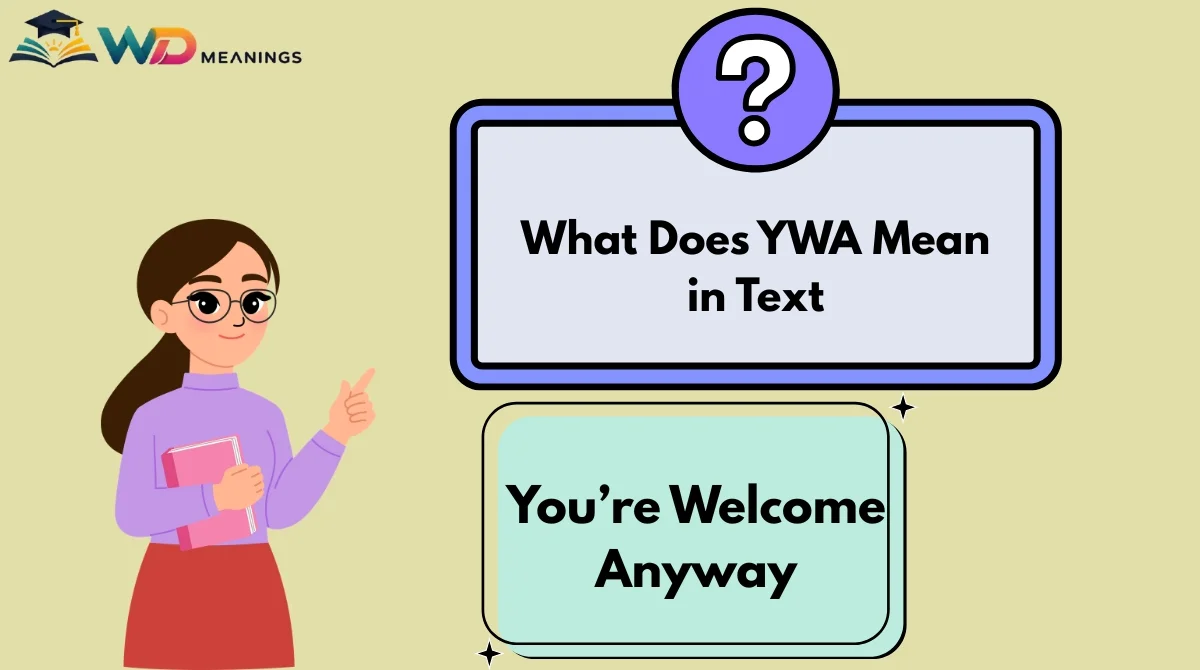
In most online conversations, YWA means “You’re Welcome Anyway.” People usually use it after helping someone, especially when they feel their effort was not fully appreciated or acknowledged.
The phrase can sound friendly, playful, slightly sarcastic, or even a little annoyed depending on the tone.
This guide explains the meaning of YWA, where people use it, how it appears on platforms like WhatsApp and Snapchat, possible alternative meanings, and the best ways to respond when someone sends it.
Quick Answer
YWA usually means “You’re Welcome Anyway” in text messages and online chats. It is often used after someone gives help, advice, or information but feels the other person did not properly thank them. The tone can be polite, joking, or slightly sarcastic depending on the situation.
What Does YWA Mean in Text?
The most common meaning of YWA in texting is “You’re Welcome Anyway.”
It is a shortened version of a phrase people use after doing something helpful. The word “anyway” adds extra emotion because it can suggest that the sender helped despite feeling ignored, unappreciated, or unsure whether their effort mattered.
Simple definition:
YWA = You’re Welcome Anyway
It means:
“I helped you, and even though you didn’t really acknowledge it, you’re welcome.”
The phrase is usually informal and appears in casual conversations, social media messages, gaming chats, and friend groups.
How to pronounce YWA
Because YWA is an abbreviation, most people do not pronounce it as a word. They usually say the full phrase:
“You’re welcome anyway.”
Some people may read it letter-by-letter as:
“Why-W-A”
but this is uncommon in spoken conversations.
Emotional meaning and tone
The meaning of YWA depends heavily on context.
It can be:
- Friendly: “No worries, I helped because I wanted to.”
- Playful: “You forgot to thank me, but I’ll let it slide.”
- Sarcastic: “You could have said thanks, but okay.”
- Slightly annoyed: “I helped you, and you ignored it.”
Example text:
Person 1: Thanks for sending me those notes!
Person 2: YWA, hope they help.
In this example, YWA is simply friendly.
Another example:
Person 1: I finally fixed my laptop.
Person 2: YWA for the troubleshooting tips I sent you yesterday 😂
Here, YWA is more playful and teasing.
Origin and Background
The exact origin of YWA as a texting abbreviation is difficult to confirm, but it follows a common pattern in internet communication: shortening everyday phrases to save time while typing.
Texting culture has created many abbreviations by taking the first letters of common expressions, such as:
- TY = Thank You
- WYD = What You Doing
- LOL = Laugh Out Loud
- BRB = Be Right Back
YWA developed naturally from the phrase “You’re Welcome Anyway.” It is mainly found in casual digital conversations rather than formal writing.
Unlike older internet slang that became widely standardized, YWA remains a less common abbreviation. Many users may understand the full phrase but may not immediately recognize the shortened version.
How YWA Is Used in Text Conversations
People use YWA in several different situations. The meaning often depends on the relationship between the people chatting and the emotions behind the message.
1. Friendly appreciation
Sometimes YWA is simply a relaxed way of saying someone is welcome.
Example:
A: Thanks for helping me study yesterday.
B: YWA! Good luck on your exam.
Here, there is no negative feeling. It is just casual gratitude.
2. Playful teasing
Friends often use YWA jokingly when someone forgets to say thanks.
Example:
A: My presentation went really well.
B: Glad my editing helped. YWA 😄
The sender is teasing rather than complaining.
3. Slight sarcasm
YWA can carry a sarcastic tone when someone feels overlooked.
Example:
A: My computer finally works!
B: YWA for spending an hour helping you fix it.
The sender expects recognition for their effort.
4. Romantic or relationship conversations
In romantic chats, YWA may appear as playful flirting.
Example:
A: You always know how to make me smile.
B: YWA for being amazing 😉
However, the meaning depends more on the relationship than the abbreviation itself.
5. Group chats and online communities
Friends, gaming groups, and online communities may use YWA after sharing information, advice, or support.
Example:
A: The game update finally worked after your instructions.
B: YWA, I knew that guide would help.
What YWA Means on Different Platforms
The meaning of YWA usually stays the same across platforms. However, the way people use it may change depending on the communication style of each platform.
On WhatsApp, YWA is mostly used in private conversations between friends, family members, or couples.
Example:
“I sent you the files already. YWA 😂”
The emoji can make the phrase feel more playful instead of rude.
Snapchat
Snapchat conversations are often casual and quick, so abbreviations appear frequently.
A person may send YWA as a short response after helping someone.
Example:
“Found your lost photo? YWA 😎”
On Instagram, YWA may appear in direct messages, especially between friends.
It can be used after:
- Sharing advice
- Sending a recommendation
- Helping with a post or caption
TikTok
TikTok comments and messages often use humor and sarcasm. YWA may appear as a joke after someone gives information.
Example:
“Explained the trend three times. YWA 😂”
Facebook users may use YWA in Messenger chats, but it is less common than simpler phrases like “yw” or “you’re welcome.”
Discord
In gaming and community chats, YWA may be used after helping someone with:
- Game settings
- Technical problems
- Guides
- Server questions
Dating apps
On dating apps, YWA is uncommon but possible. If used, the tone depends on the conversation.
Example:
“I picked the restaurant. YWA 😉”
This could be playful flirting.
What Does YWA Mean From a Girl or Guy?
YWA does not have a different meaning depending on whether it comes from a girl or a guy.
The meaning comes from:
- The relationship between the people
- Previous messages
- Use of emojis
- Punctuation
- The situation
For example:
“YWA 😊”
usually sounds friendly.
But:
“YWA.”
with a period may sound more serious or slightly annoyed.
A friend saying YWA after helping you may be joking. A coworker using it could sound unusual because it is very casual.
Always look at the entire conversation rather than focusing on who sent it.
Other Possible Meanings of YWA
Although “You’re Welcome Anyway” is the most common texting meaning, YWA can have other meanings in different situations.
| Meaning | Context | Example |
|---|---|---|
| You’re Welcome Anyway | Casual texting and chats | “I fixed the issue. YWA!” |
| Young Writers Association | Organizations or groups | “She joined the YWA this year.” |
| Youth With Attitude | Informal group names or titles | “The YWA event starts Friday.” |
In normal texting conversations, “You’re Welcome Anyway” is the meaning readers should consider first.
How to Respond to YWA
Your reply depends on whether the sender sounds friendly, funny, or annoyed.
Casual replies:
- “Haha thanks again!”
- “I appreciate it!”
- “You’re the best 😂”
Funny replies:
- “I was totally about to thank you… almost 😅”
- “Okay okay, thank you! Happy now? 😂”
Friendly replies:
- “Seriously, thanks for helping me.”
- “I couldn’t have done it without you.”
Romantic replies:
- “I know, and I’m lucky you helped me 😉”
- “Thank you, I owe you one ❤️”
If you are confused:
- “Wait, what does YWA mean?”
- “Are you saying you’re welcome? 😂”
If it sounds annoyed:
- “Sorry, I should have thanked you earlier. I appreciate your help.”
Similar Texting Terms and Differences
| Term | Meaning | Key Difference |
|---|---|---|
| YW | You’re Welcome | Simple thank-you response without extra emotion |
| TY | Thank You | Shows gratitude |
| THX | Thanks | Casual version of thank you |
| NP | No Problem | Says help was not an inconvenience |
| NVM | Never Mind | Used when something is no longer important |
The biggest difference is that YWA can include a feeling of “I helped you even if you didn’t acknowledge it.”
Common Misunderstandings
YWA can confuse people because it is not as common as abbreviations like LOL or BRB.
Confusion with “YW”
Some people recognize YW (“You’re Welcome”) but may not know why someone added an “A.”
The “A” changes the feeling:
- YW = simple and neutral
- YWA = “You’re welcome anyway” with extra emphasis
Capitalization differences
You may see:
- YWA
- ywa
- YwA
They usually mean the same thing.
Misreading the tone
A common mistake is assuming YWA is always rude.
It can be:
- Kind
- Funny
- Teasing
- Slightly sarcastic
The surrounding conversation matters more than the abbreviation itself.
Is YWA Appropriate or Safe to Use?
YWA is generally safe, informal, and harmless.
It is not offensive or inappropriate. However, it may not be suitable for professional communication because the phrase can sound sarcastic.
Good places to use YWA:
- Friends
- Family chats
- Gaming conversations
- Casual messages
Avoid using YWA in:
- Formal emails
- Workplace messages
- Professional customer communication
In professional settings, “You’re welcome” or “Happy to help” sounds clearer and more polite.
Examples of YWA in Text
- A: Thanks for explaining the homework.
B: YWA, hope it makes sense! - A: My phone works now.
B: YWA for the repair tips 😂 - A: I got the tickets!
B: Nice! YWA for reminding you. - A: Sorry I forgot to say thanks earlier.
B: Haha, YWA. - A: Your advice actually worked.
B: YWA 😎 - A: The presentation looks amazing.
B: YWA for helping edit it. - A: I found the answer because of your message.
B: YWA, glad it helped. - A: You saved me today.
B: YWA ❤️ - A: I finally beat that level.
B: YWA for the strategy guide. - A: Thanks for staying late to help.
B: YWA, anytime. - A: I couldn’t have finished without you.
B: YWA 😊 - A: Forgot to thank you yesterday.
B: I noticed. YWA anyway 😂
Frequently Asked Questions
What does YWA stand for in texting?
YWA usually stands for “You’re Welcome Anyway.” It is a casual abbreviation used after someone helps another person. Depending on the situation, it can sound friendly, playful, or slightly sarcastic.
Is YWA the same as YW?
No. YW simply means “You’re Welcome.” YWA adds the word “anyway,” which can suggest extra emotion, such as joking or feeling unnoticed.
Is YWA rude?
YWA is not automatically rude. It depends on the tone. A message like “YWA 😊” is usually friendly, while “YWA.” may sound more sarcastic.
Can YWA be used professionally?
It is better to avoid YWA in professional communication. Because it can sometimes sound sarcastic, phrases like “You’re welcome” or “Happy to help” are safer.
Why do people use abbreviations like YWA?
People use abbreviations because texting is fast and informal. Short forms save time and help conversations feel more casual.
What should I reply when someone says YWA?
A good reply depends on the tone. You can say “Thanks again,” “I appreciate it,” or make a joke if the conversation is friendly.
Conclusion
YWA means “You’re Welcome Anyway” in most text conversations. People use it after helping someone, especially when they want to add a playful, friendly, or slightly sarcastic tone.
The meaning does not change much across platforms like WhatsApp, Snapchat, Instagram, or Discord, but the emotion behind it depends on context.
Before interpreting YWA, consider the relationship, previous messages, punctuation, and emojis.
In casual chats, it is usually harmless and fun, but in professional situations, a clearer phrase like “You’re welcome” is a better choice.

Hamz Ellis is a content writer at WD Meanings, specializing in internet slang, texting abbreviations, and digital communication. He creates clear, well-researched, and easy-to-understand content to help readers quickly find the meanings of modern online terms.