If you’ve received a message that simply says “AY” and wondered what it means, you’re not alone.
Texting slang changes quickly, and many short expressions can have different meanings depending on who sends them and the conversation around them.
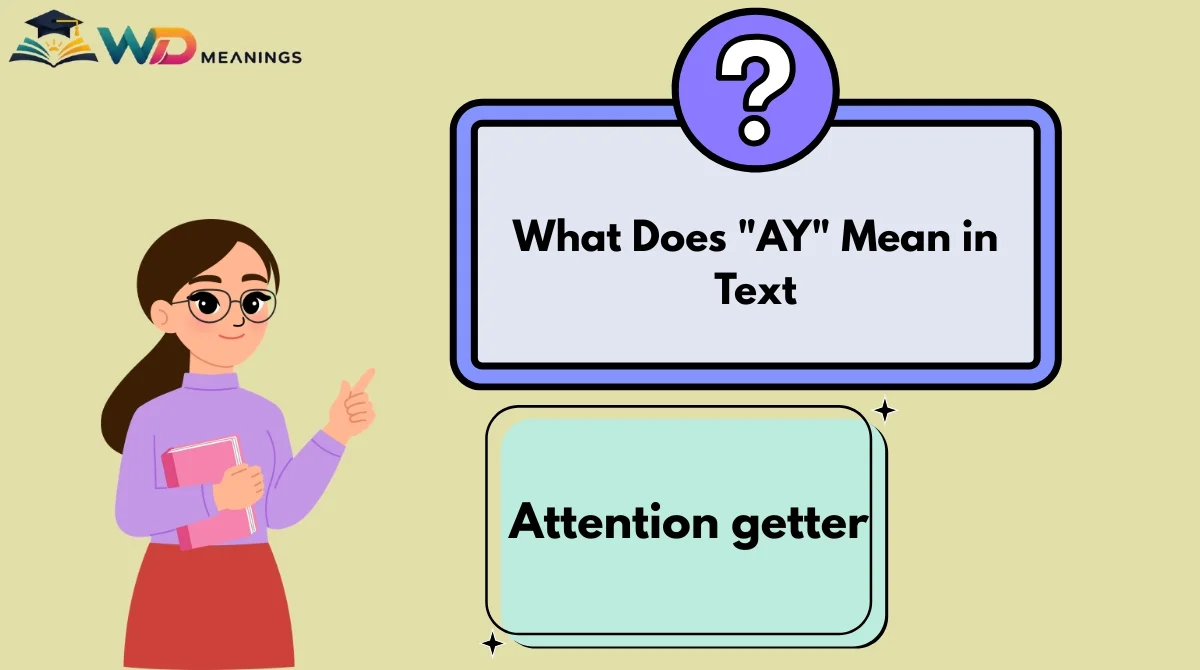
In most text messages and social media chats, “AY” is an informal way to get someone’s attention, greet them, express excitement, agreement, or surprise.
It’s similar to saying “hey,” “yo,” or “oh!” in everyday conversation.
The exact meaning depends on the tone, punctuation, emojis, and the messages before and after it.
This guide explains what AY means in texting, how people use it across popular messaging platforms, when it sounds friendly or playful, and how you can respond naturally.
Quick Answer
AY in text usually means “hey” or “attention!” It’s an informal expression people use to greet someone, get their attention, celebrate good news, show excitement, or react to something surprising. It doesn’t have a universally accepted full form and is understood through the context of the conversation.
What Does AY Mean in Text?
The most common meaning of AY in text is a casual expression similar to “hey,” “yo,” or “ah!” Rather than being a formal abbreviation, it’s an informal interjection that helps start or continue a conversation.
There is no official full form for AY in everyday texting. It’s simply written as “ay” or “AY” to represent the way people naturally speak.
Pronunciation
Most English speakers pronounce it as:
“Ay” (rhyming with day, say, or play).
In some conversations, especially among bilingual speakers, it may sound slightly different depending on regional accents, but the meaning usually stays the same.
Emotional Tone
Depending on the context, AY can sound:
- Friendly
- Cheerful
- Excited
- Playful
- Surprised
- Encouraging
- Attention-grabbing
Example
Alex: Ay! Are you still coming tonight?
Jordan: Yep, I’ll be there around 7.
Here, AY simply replaces “Hey.”
Origin and Background
Unlike many texting abbreviations, AY didn’t begin as an acronym.
It’s an informal spoken expression that has existed in various English dialects and has also appeared in Spanish-influenced conversations, where “¡Ay!” expresses emotion such as surprise, pain, excitement, or sympathy. In modern online communication, English speakers commonly use “ay” as a relaxed greeting or attention-getter rather than following one specific linguistic tradition.
Because texting reflects spoken language, people naturally began typing “ay” exactly as they would say it in conversation.
Its meaning remains flexible, which is why context matters more than the spelling itself.
How AY Is Used in Text Conversations
People use AY in several different ways depending on the situation.
As a Greeting
Instead of writing “Hey,” someone may simply type:
Ay! What’s up?
The meaning is identical to saying hello.
To Get Someone’s Attention
Someone may begin a conversation with:
Ay, can you check your email?
Here, AY simply catches the other person’s attention.
To Celebrate Good News
Friends often react with excitement.
You passed the exam!
Ay!! That’s awesome!
In this case, it expresses happiness and enthusiasm.
As Playful Excitement
Ay 😂 You actually did it!
The emoji reinforces that the message is light-hearted.
During Friendly Teasing
Ay… look who’s finally awake.
The tone depends entirely on the relationship between the people chatting.
In Casual Group Chats
Friends sometimes reply with:
Ay let’s go!
This means they’re excited or ready.
What AY Means on Different Platforms
Although every platform has its own culture, AY generally keeps the same meaning everywhere.
On WhatsApp, AY usually starts conversations or grabs attention.
Example:
Ay, did you get home safely?
Snapchat
On Snapchat, people often use AY with photos or quick replies.
Example:
Ay 😎 Nice picture!
AY commonly appears in comments and direct messages to show excitement or encouragement.
Example:
Ay! You look amazing!
TikTok
Comment sections frequently use AY to react to funny or impressive videos.
Example:
Ay this edit is incredible.
On Facebook, AY often functions like “Hey” when messaging friends.
Example:
Ay, long time no see!
Discord
Gaming communities may use AY before asking a question or inviting someone.
Example:
Ay, who’s joining the next match?
Dating Apps
On dating apps, AY is usually a relaxed conversation starter.
Example:
Ay 😊 How’s your day going?
Its meaning stays friendly unless the rest of the conversation suggests flirting.
What Does AY Mean From a Girl or Guy?
The meaning of AY doesn’t automatically change based on whether a girl or guy sends it.
Instead, consider these clues:
Relationship
A close friend saying “Ay!” usually sounds warm and casual.
Someone you’re dating might use it to start a playful conversation.
Emojis
Compare these examples:
Ay 😊
Friendly.
Ay ❤️
Potentially affectionate.
Ay 😂
Playful.
Ay 👀
Curious or teasing.
Punctuation
Ay!
Energetic.
Ay…
More thoughtful or teasing.
AY!!
Very excited.
The surrounding conversation matters much more than the sender’s gender.
Other Possible Meanings
Although greeting someone is the most common meaning in texting, AY can occasionally represent other ideas.
| Meaning | Context | Example |
|---|---|---|
| Hey / Hi (Most common) | Casual texting | “Ay! How are you?” |
| Attention getter | Beginning a conversation | “Ay, can I ask something?” |
| Excitement | Celebrating good news | “Ay! You won!” |
| Surprise | Reacting to unexpected news | “Ay! I didn’t know that.” |
| Emotional expression (similar to “¡Ay!”) | Expressing sympathy, shock, or pain | “Ay…that must have hurt.” |
The first meaning—a casual greeting or attention-getter—is by far the most common in English texting.
How to Respond to AY
Your reply depends on the conversation.
Casual
Hey! What’s up?
Friendly
Ay! How have you been?
Funny
Ay yourself 😂
Romantic
Hey 😊 I’ve been waiting for your message.
Confused
Hey! What’s going on?
Serious
Hi. What happened?
Short Chat Examples
Sam: Ay!
Chris: Hey! What’s new?
Taylor: Ay 😂
Morgan: Haha, what’s so funny?
Lee: Ay ❤️
Jamie: Hi ❤️ Good to hear from you.
Similar Texting Terms and Differences
| Term | Meaning | Key Difference |
|---|---|---|
| Hey | Greeting | More standard spelling |
| Yo | Informal greeting | Often sounds more energetic |
| Hi | Greeting | More neutral and polite |
| Sup? | What’s up? | Usually asks how someone is doing |
| Oi | Attention getter | Common in British and Australian English; can sound more direct |
Although these expressions are related, AY often feels slightly more playful and conversational.
Common Misunderstandings
One common mistake is assuming AY is always an abbreviation. In most cases, it isn’t.
People also confuse:
- AY with AYE, which often means “yes” in some dialects.
- AY with AI, especially when messages are typed quickly.
- AY with the Spanish interjection ¡Ay!, which usually expresses emotion rather than greeting someone.
Capitalization rarely changes the meaning.
- ay
- Ay
- AY
All usually communicate the same idea, although all capitals can appear more enthusiastic.
Because AY has several possible uses, always read the surrounding messages before deciding what the sender means.
Is AY Appropriate or Safe to Use?
Yes. AY is generally a safe, friendly, and informal expression.
It’s suitable for:
- Friends
- Family
- Classmates
- Casual online conversations
- Gaming chats
- Social media
However, it may sound too informal in professional emails, business meetings, or formal workplace communication. In those situations, writing “Hello,” “Hi,” or “Good morning” is usually a better choice.
AY is not considered rude or offensive on its own. Any negative impression usually comes from the rest of the conversation rather than the word itself.
Examples of AY in Text
Here are several realistic examples.
- Ay! Want to grab coffee later?
- Ay 😂 That joke was actually funny.
- Ay, I completely forgot about today’s meeting.
- Ay! Congratulations on your new job!
- Ay ❤️ I’ve missed talking to you.
- Ay, are you free this weekend?
- Ay…I wasn’t expecting that news.
- Ay! Nice game last night.
- Ay 👏 You finally finished the project!
- Ay, thanks for helping me earlier.
- Ay 😄 That picture made my day.
- Ay, let’s meet after class.
Each example shows how context changes the tone without changing the basic meaning.
Frequently Asked Questions
Does AY always mean “hey” in text?
No. While “hey” is the most common meaning, AY can also express excitement, surprise, encouragement, or simply grab someone’s attention. Reading the surrounding messages helps determine the intended meaning.
Is AY an abbreviation?
Usually, no. AY is generally an informal expression rather than an acronym with an official full form. People type it because it reflects how they naturally speak in casual conversation.
Is AY flirty?
It can be, but only if the rest of the conversation suggests romantic interest. By itself, AY is simply a casual greeting or attention-getter and isn’t automatically flirtatious.
What’s the difference between AY and HEY?
The meanings are almost identical. “Hey” is the standard spelling, while “Ay” often sounds more playful, relaxed, or expressive depending on the sender’s style.
Can I use AY in professional messages?
It’s better not to. AY is considered informal and is best reserved for friends, family, or casual online chats. For work or formal communication, “Hello” or “Hi” is usually more appropriate.
Why do people type AY instead of HEY?
Some people prefer shorter, more casual spellings that match the way they speak. Others use AY to add personality or enthusiasm to their messages without changing the overall meaning.
Conclusion
AY is a simple but flexible expression that usually means “hey” or serves as a friendly way to get someone’s attention.
Depending on the conversation, it can also express excitement, surprise, encouragement, or playful energy.
Rather than focusing only on the word itself, pay attention to emojis, punctuation, previous messages, and your relationship with the sender.
Once you understand the context, responding to AY becomes as natural as replying to any casual greeting.

Hamz Ellis is a content writer at WD Meanings, specializing in internet slang, texting abbreviations, and digital communication. He creates clear, well-researched, and easy-to-understand content to help readers quickly find the meanings of modern online terms.