If you’ve received a message containing EYM and found yourself wondering what it means, you’re not alone.
Texting abbreviations change quickly, and many are used only within certain friend groups, online communities, or social media platforms.
That can make it difficult to know exactly what someone is trying to say.
The meaning of EYM depends heavily on the conversation.
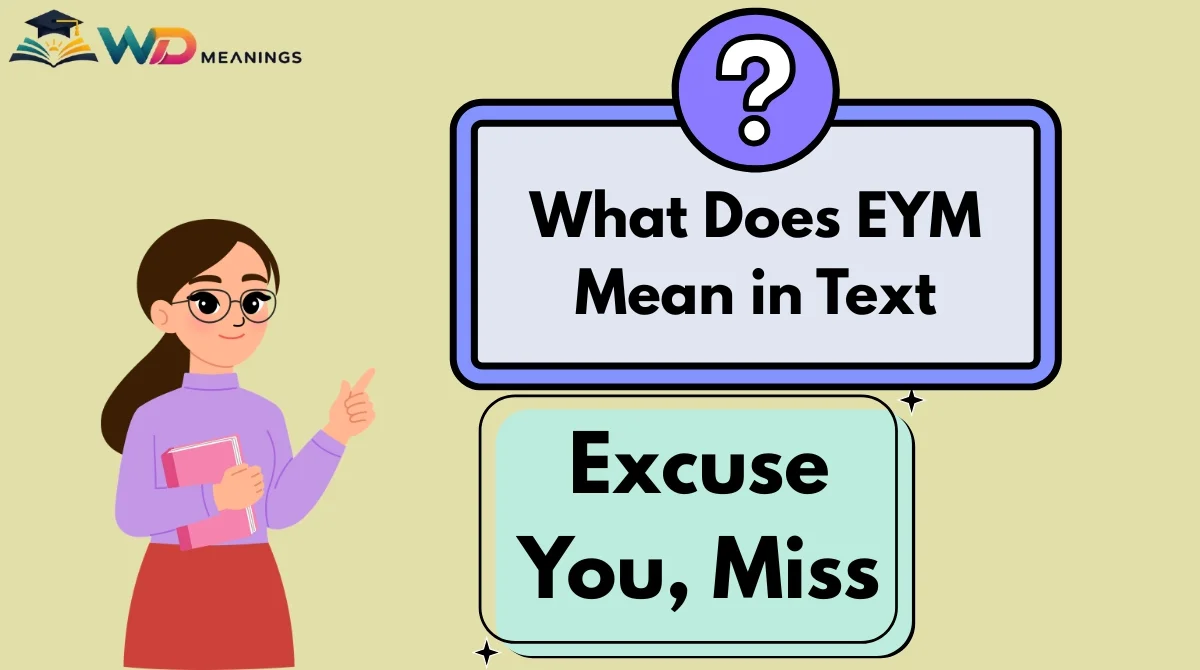
In modern texting, it is most commonly used as a shorthand for “Excuse You, Miss” or simply “Excuse You”, often in a playful, teasing, or mildly sarcastic way.
However, because EYM is not a universally standard abbreviation, some people may use it differently or not recognise it at all.
This guide explains what EYM means in text, how people use it across different platforms, possible alternative meanings, how to respond, and when it is appropriate to use.
Quick Answer
EYM most commonly means “Excuse You, Miss” or “Excuse You” in text messages. It’s usually a light-hearted way to react when someone says something cheeky, surprising, or slightly rude. Because EYM isn’t a widely standardised abbreviation, always use the surrounding conversation to confirm its intended meaning.
What Does EYM Mean in Text?
In everyday texting, EYM is generally interpreted as “Excuse You, Miss” or a shortened version of “Excuse You.”
Rather than expressing genuine offence, it’s typically used playfully between friends, siblings, partners, or people who know each other well.
Pronunciation: Most people simply say each letter individually: “E-Y-M.”
Simple Definition
EYM is an informal texting abbreviation used to playfully call someone out after they make a bold, funny, teasing, or unexpected comment.
Emotional Tone
The tone depends on context but is commonly:
- Playful
- Teasing
- Mock offended
- Flirty
- Light sarcasm
It’s rarely intended as serious criticism.
Example
Alex: You’re definitely paying for dinner tonight.
Jamie: EYM 😂
Here, Jamie isn’t upset. They’re jokingly reacting to Alex’s confident statement.
Origin and Background
Unlike abbreviations such as LOL, BRB, or IMO, EYM doesn’t have a well-documented origin. There is no official dictionary entry or universally accepted history explaining when it first appeared.
Instead, it seems to have developed naturally through informal online conversations where users shortened familiar expressions such as “Excuse you.” Some friend groups expanded it to “Excuse You, Miss”, while others simply used the letters as a quick reaction.
Because it spread informally rather than through a single platform or trend, its exact origin remains uncertain. Different communities may even interpret it differently.
How EYM Is Used in Text Conversations
Most uses of EYM are friendly rather than serious.
Playful Response
Someone says something unexpected.
Friend: I beat your score again.
You: EYM 😆
Friendly Teasing
Person A: You’re always late.
Person B: EYM! I was only two minutes late.
Flirty Conversation
Them: You’re lucky I like you.
You: EYM ❤️😂
Here, EYM adds playful banter instead of conflict.
Mock Surprise
Friend: I ate the last slice.
You: EYM!! That’s rude 😂
The sender isn’t genuinely angry.
Mild Sarcasm
Sometimes EYM lightly calls attention to an exaggerated or dramatic comment.
Friend: I’m the smartest person here.
You: EYM 😅
What EYM Means on Different Platforms
The meaning usually stays consistent across platforms. The conversation matters more than the app itself.
Usually exchanged between friends or family as playful teasing.
Example:
“I’m stealing your fries.”
“EYM 😂”
Snapchat
Often appears alongside selfies, snaps, or humorous replies.
Because Snapchat conversations are casual, EYM often feels light-hearted.
People may use EYM in comments or direct messages after playful jokes or bold captions.
Example:
Caption: “I’m everyone’s favourite.”
Comment: “EYM 😂”
TikTok
TikTok users occasionally include EYM in comments reacting to funny videos or confident statements.
Its meaning usually remains “Excuse you.”
Less common than on newer platforms but still understandable among younger users.
Discord
Can appear during gaming conversations or friendly banter within servers.
Dating Apps
Sometimes used flirtatiously after teasing messages.
Example:
“I’ll let you buy me coffee.”
“EYM 😄”
What Does EYM Mean From a Girl or Guy?
The abbreviation itself does not change meaning based on gender.
Instead, pay attention to:
- Your relationship
- Previous messages
- Emojis
- Punctuation
- Overall mood
For example:
From a close friend
“EYM 😂”
Almost certainly playful.
From someone you’re flirting with
“EYM 😉”
Likely playful flirting.
Without emojis
“EYM.”
Could sound slightly more serious, though context still matters.
The sender’s personality matters much more than whether they’re a girl or a guy.
Other Possible Meanings
Although “Excuse You, Miss” or “Excuse You” is the most common texting interpretation, EYM is not a fixed abbreviation. In specialised organisations, businesses, or internal groups, the same letters may represent something entirely different.
| Meaning | Context | Example |
|---|---|---|
| Excuse You, Miss | Casual texting | “EYM 😂 That was rude!” |
| Excuse You | Informal chat | “EYM! I was talking.” |
| Organisation or project initials | Company or school | “The EYM meeting starts at 3.” |
When reading text messages, the casual conversational meaning is usually the correct interpretation.
How to Respond to EYM
Your reply should match the tone of the conversation.
Casual
“Oops, my bad 😂”
Funny
“I said what I said.”
Friendly
“Haha, I couldn’t resist.”
Flirty
“You’re cute when you’re fake offended 😉”
Confused
“Wait…what did I do? 😂”
Apologetic
“Sorry! I was only joking.”
Continue the Joke
“You started it!”
Mini Chat Example
Alex: You’re getting old.
Taylor: EYM 😂
Alex: Just telling the truth!
Similar Texting Terms and Differences
| Term | Meaning | Key Difference |
|---|---|---|
| LOL | Laughing Out Loud | Expresses laughter rather than playful objection. |
| SMH | Shaking My Head | Shows disappointment or disbelief. |
| IDC | I Don’t Care | Indicates indifference instead of teasing. |
| JK | Just Kidding | Clarifies that a statement was a joke. |
| OOF | Reaction to something awkward or painful | Shows sympathy or surprise rather than mock offence. |
While these abbreviations express reactions, EYM specifically playfully calls someone out for what they just said.
Common Misunderstandings
Since EYM isn’t universally recognised, misunderstandings happen.
Common mistakes include:
- Assuming everyone knows what it means.
- Thinking it has one official full form.
- Believing it’s always serious.
- Confusing it with workplace or organisation initials.
- Reading too much into punctuation.
Capitalisation
You’ll see:
- EYM
- eym
- Eym
All usually mean the same thing.
Context Matters
If someone sends only “EYM,” read the earlier messages before deciding what they mean.
Is EYM Appropriate or Safe to Use?
Yes, EYM is generally safe and polite in casual conversations.
It works best when:
- Chatting with friends
- Talking to siblings
- Messaging classmates
- Flirting playfully
- Sharing jokes
It is not recommended for:
- Professional emails
- Workplace communication
- Formal business messages
- Academic writing
- Conversations with people unfamiliar with texting slang
Because many people don’t recognise EYM, writing “Excuse you” in full is often clearer in formal situations.
Examples of EYM in Text
Here are several realistic examples.
- “EYM 😂 I wasn’t even talking to you.”
- “You finished my snacks? EYM!”
- “EYM…who gave you permission? 😆”
- “EYM ❤️ You’re being dramatic.”
- “EYM! That’s my favourite hoodie.”
- “I can’t believe you said that. EYM 😂”
- “EYM 😅 I was only joking.”
- “Seriously? EYM.”
- “EYM! You’re lucky we’re friends.”
- “EYM 🤣 That’s actually hilarious.”
- “EYM, now explain yourself.”
- “EYM 😂 You’re too confident.”
These examples show how the abbreviation fits naturally into playful conversations rather than serious disagreements.
Frequently Asked Questions
Is EYM a common texting abbreviation?
Not as common as abbreviations like LOL, OMG, or BRB. EYM appears mainly in informal conversations and isn’t universally recognised, so some people may need clarification when they first see it.
Does EYM always mean “Excuse You, Miss”?
No. While that’s one of the most common texting interpretations, EYM doesn’t have one official universal meaning. In some workplaces, schools, or organisations, it may represent something completely different.
Can EYM be used sarcastically?
Yes. Many people use EYM to express mock offence or playful sarcasm after someone makes a bold, funny, or cheeky comment. The tone is usually light rather than genuinely upset.
Is EYM rude?
Usually not. Between friends or people who understand each other’s humour, it comes across as playful. However, without context or with someone unfamiliar with the abbreviation, it could be confusing or seem abrupt.
Should I use EYM at work?
It’s generally better not to. Because many people don’t know what EYM means, writing “Excuse me” or “Excuse you” in full is clearer and more professional in workplace communication.
What should I do if I don’t understand someone’s EYM message?
Look at the previous messages first. Since EYM depends heavily on context, the surrounding conversation usually explains whether the sender is joking, teasing, or reacting to something you said. If you’re still unsure, simply ask what they meant.
Conclusion
EYM most commonly means “Excuse You, Miss” or “Excuse You” in casual text conversations.
It’s typically used as a playful reaction to a teasing, surprising, or cheeky comment rather than as genuine criticism.
Since EYM isn’t a universally standard abbreviation, context is essential.
Look at the conversation, emojis, and your relationship with the sender before interpreting it.
When used with friends or people who understand your humour, EYM can add personality and playful banter to everyday chats.

Hamz Ellis is a content writer at WD Meanings, specializing in internet slang, texting abbreviations, and digital communication. He creates clear, well-researched, and easy-to-understand content to help readers quickly find the meanings of modern online terms.