If you’ve received a message saying something is “iffy” and weren’t sure what the sender meant, you’re not alone.
word iffy is commonly used in text messages, social media posts, and everyday conversations to describe something that feels uncertain, questionable, unreliable, or not entirely convincing.
While it’s not a texting abbreviation, it has become a popular part of modern online communication because it’s quick, casual, and easy to understand.
If you’re wondering what does iffy mean in text, the answer usually depends on the situation rather than the platform.
Whether someone is talking about plans, a decision, a person’s behavior, or even the weather, “iffy” generally suggests doubt or uncertainty.
In this guide, you’ll learn exactly what iffy means, where it came from, how people use it in messages, and how to interpret it correctly in different conversations.
Quick Answer
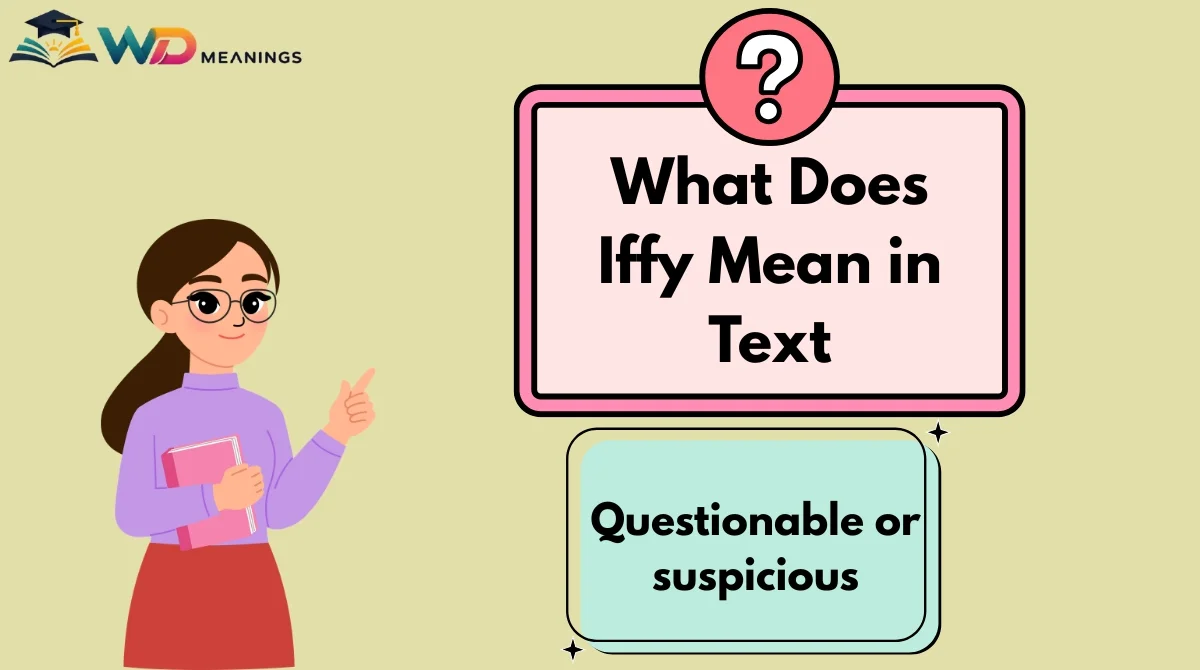
Iffy in text means uncertain, doubtful, unreliable, or questionable. People use it when they aren’t confident about something or when a situation doesn’t seem completely trustworthy or guaranteed. For example, “The weather looks iffy today” means the weather is uncertain and may not be good.
What Does Iffy Mean in Text?
The most common meaning of iffy in texting is that something is uncertain, questionable, unreliable, or not guaranteed.
Unlike many internet slang terms, iffy is not an acronym or abbreviation. It’s simply an informal English adjective that has become widely used in digital conversations.
Simple Definition
Iffy means something doesn’t inspire complete confidence. It may or may not happen, or it may not be as good or dependable as expected.
Is There a Full Form?
No. Iffy does not stand for anything. It is a regular English word rather than an acronym.
Pronunciation
Iffy is pronounced:
IF-ee
The first syllable rhymes with “if.”
Tone and Emotional Meaning
Depending on the conversation, iffy can express:
- Mild doubt
- Uncertainty
- Hesitation
- Concern
- Skepticism
- Casual caution
It usually isn’t aggressive or insulting. Instead, it politely signals that someone isn’t completely convinced.
Example Text Message
Alex: Are we still going hiking tomorrow?
Taylor: The forecast looks a little iffy. Let’s decide in the morning.
Here, iffy means the weather is uncertain, so the plan may change.
Origin and Background
The exact origin of iffy isn’t completely certain, but language experts generally agree that it developed from the word “if.” Since the word if introduces conditions or uncertainty, iffy naturally evolved to describe situations that depend on conditions or aren’t guaranteed.
Over time, the word became common in spoken English before making its way into emails, instant messaging, online forums, and social media. Today, it’s used naturally in both face-to-face conversations and digital communication.
Unlike internet slang that originates from specific apps or gaming communities, iffy is an established informal English word that simply adapted well to texting because it’s short, expressive, and easy to understand.
How Iffy Is Used in Text Conversations
People use iffy whenever they’re uncertain about something or feel that a person, plan, or situation may not be reliable.
Here are the most common ways it’s used.
Talking About Uncertain Plans
One of the most frequent uses is discussing plans that might change.
Emma: Are you coming tonight?
Ryan: It’s still a bit iffy. I’ll let you know after work.
This means Ryan isn’t sure yet.
Describing Bad or Unpredictable Weather
People often use iffy when weather forecasts aren’t reliable.
Sam: Beach tomorrow?
Chris: Weather looks pretty iffy.
The forecast is uncertain, so the trip might not happen.
Expressing Doubt About a Decision
Someone may use iffy when they aren’t confident about an idea.
Jamie: Should I buy this laptop?
Morgan: The reviews are kind of iffy.
Here, the reviews aren’t convincing enough to inspire confidence.
Talking About Trust or Reliability
Sometimes iffy describes a person, website, offer, or situation that seems suspicious or unreliable.
Olivia: Should I order from this website?
Liam: It looks a little iffy to me.
This doesn’t necessarily mean the website is fake—it simply means Liam has doubts.
Showing Hesitation Without Being Harsh
Instead of directly saying something is bad, people often soften their opinion with iffy.
Nina: How was the restaurant?
Leo: Food was okay, but the service was pretty iffy.
This politely suggests the service wasn’t very good.
Romantic Conversations
In relationships, iffy often refers to uncertain feelings or plans.
Taylor: Are we still meeting Friday?
Jordan: It’s looking a bit iffy because my schedule changed.
The meeting isn’t cancelled yet, but it’s uncertain.
Humorous Conversations
Friends sometimes use iffy jokingly.
Ben: Think I can cook dinner?
Ella: Based on last time… that’s a little iffy 😂
Here, it’s playful teasing rather than criticism.
What Iffy Means on Different Platforms
The meaning of iffy stays remarkably consistent across most messaging and social media platforms. The surrounding conversation—not the app itself—is what determines its exact meaning.
On WhatsApp, iffy usually refers to uncertain plans, delayed replies, or situations that aren’t guaranteed.
Example:
“Saturday is still iffy. I’ll confirm tomorrow.”
Snapchat
Snapchat conversations are casual, so iffy often expresses uncertainty about meeting up, attending events, or someone’s availability.
Example:
“Tonight’s kinda iffy rn.”
On Instagram, people may use iffy in comments, captions, or direct messages when talking about opinions, fashion, travel, weather, or experiences.
Examples:
- “The lighting was iffy.”
- “Internet connection was iffy all weekend.”
TikTok
TikTok users commonly use iffy in comments to react to videos, trends, advice, or product reviews.
Examples include:
- “That advice seems a little iffy.”
- “This challenge looks iffy.”
It usually means something appears questionable or uncertain rather than definitely wrong.
Facebook users often use iffy in discussions about:
- Local weather
- Travel plans
- Marketplace listings
- Community recommendations
- News stories
Example:
“Seller’s profile looks a bit iffy.”
Discord
In Discord servers, especially gaming communities, iffy often refers to:
- Unstable internet connections
- Risky strategies
- Uncertain updates
- Server performance
- Questionable information
Example:
“The server’s been pretty iffy tonight.”
Dating Apps
On dating apps, iffy may describe:
- Mixed feelings
- Uncertain interest
- Suspicious profiles
- Plans that aren’t confirmed
Example:
“I’m still iffy about meeting this weekend.”
The word doesn’t automatically signal rejection—it usually indicates hesitation or uncertainty rather than a final decision.
What Does Iffy Mean From a Girl or Guy?
Many people wonder whether “iffy” carries a different meaning depending on whether it comes from a girl or a guy. In most cases, it doesn’t. The word itself has the same definition regardless of who says it. What changes is the context, the relationship between the people talking, and the overall tone of the conversation.
For example:
From a girl:
You: Want to grab dinner Friday?
Her: It’s a little iffy right now. I’ll let you know tomorrow.
This usually means she’s genuinely unsure about her schedule or plans.
From a guy:
You: Are you joining the road trip?
Him: It’s still iffy. Depends on work.
Again, the message simply expresses uncertainty.
Context Matters More Than Gender
Pay attention to clues such as:
- The rest of the conversation
- Emojis 😊😅🤔
- Punctuation
- Whether they offer an explanation
- Whether they suggest another plan
For instance:
“Maybe. It’s iffy 🤞”
sounds hopeful.
Whereas:
“Honestly… it’s looking pretty iffy.”
suggests stronger doubt.
Rather than assuming hidden meanings, it’s usually best to take iffy at face value unless other messages suggest otherwise.
Other Possible Meanings
Although iffy almost always means uncertain or questionable in texting, it can describe different kinds of uncertainty depending on the topic.
| Meaning | Context | Example |
|---|---|---|
| Uncertain or not guaranteed (most common) | Plans | “Our trip is still iffy.” |
| Questionable or suspicious | People or websites | “That deal looks iffy.” |
| Unreliable | Internet, equipment | “My Wi-Fi has been iffy all day.” |
| Poor or inconsistent quality | Products or services | “The food was good, but the service was iffy.” |
| Doubtful outcome | Decisions or predictions | “Winning this game looks iffy.” |
The first meaning—uncertain or doubtful—is by far the most common in text messages.
How to Respond to Iffy
Your reply depends on what the sender is uncertain about. Here are several natural responses.
1. Casual Reply
Them: The weather looks iffy.
You: Let’s check again tomorrow.
2. Friendly Reply
Them: My schedule’s pretty iffy.
You: No worries. Just let me know when you know.
3. Funny Reply
Them: Dinner plans are looking iffy.
You: Guess we’ll let fate decide. 😂
4. Romantic Reply
Them: Friday’s still iffy.
You: That’s okay. I’d still love to see you whenever you’re free.
5. Confused Reply
Them: It’s kind of iffy.
You: What do you mean? Are you unsure or did something happen?
6. Serious Reply
Them: This offer seems iffy.
You: Better be careful. Maybe double-check before deciding.
7. Supportive Reply
Them: I’m feeling iffy about accepting the job.
You: That’s understandable. Take your time and think it through.
Similar Texting Terms and Differences
| Term | Meaning | Key Difference |
|---|---|---|
| Maybe | Possibly | Simply expresses possibility without suggesting concern. |
| Sketchy | Suspicious | Stronger than iffy and usually implies something may be unsafe or dishonest. |
| Doubtful | Unlikely | More formal and often more negative than iffy. |
| Unsure | Not certain | Focuses on a person’s feelings rather than the situation itself. |
| Shaky | Unstable | Often describes weak performance, unstable plans, or uncertain conditions rather than general doubt. |
While these words are related, iffy has a softer, more conversational tone that fits everyday texting.
Common Misunderstandings
Because iffy is informal, people sometimes misunderstand it.
Mistake 1: Thinking It’s a Text Abbreviation
It isn’t.
Unlike LOL, BRB, or IMO, iffy is a normal English adjective, not an acronym.
Mistake 2: Assuming It Always Means “Bad”
Not necessarily.
“Iffy” often means uncertain, not terrible.
For example:
“Our plans are iffy.”
doesn’t mean the plans are bad—it simply means they aren’t confirmed.
Mistake 3: Reading Too Much Into It
Sometimes people interpret iffy as rejection.
Example:
“I’m iffy about tomorrow.”
This usually means the person is unsure, not that they definitely don’t want to meet.
Mistake 4: Confusing It With “Sketchy”
Although they’re similar, sketchy suggests suspicion or possible danger, while iffy simply indicates doubt or uncertainty.
Capitalisation
You’ll commonly see:
- iffy
- Iffy
Both are correct depending on sentence placement.
Writing it in all caps (“IFFY”) usually adds emphasis rather than changing the meaning.
Is Iffy Appropriate or Safe to Use?
Yes. Iffy is generally safe, polite, and appropriate in casual conversations.
It’s commonly used among:
- Friends
- Family
- Classmates
- Coworkers
- Online communities
However, because it’s informal, it may not be the best choice for highly professional writing.
Instead of writing:
“The proposal seems iffy.”
a business email might say:
“The proposal raises some concerns.”
Is It Offensive?
No.
The word isn’t considered rude, insulting, or offensive.
Its tone is usually mild and conversational.
When to Be Careful
If someone says they feel “iffy” about an important decision, relationship, or situation, they may simply be expressing uncertainty. Rather than jumping to conclusions, ask a polite follow-up question if clarification is needed.
Examples of Iffy in Text
Here are some original examples showing how people naturally use iffy in messages.
- “The internet has been iffy since this morning.”
- “I’m still iffy about buying that car.”
- “The forecast looks iffy, so bring a jacket.”
- “His explanation sounded a little iffy.”
- “Saturday is iffy because I might have to work.”
- “That website seems kind of iffy. I’d avoid it.”
- “Our team’s chances are looking iffy now.”
- “The restaurant was nice, but the service was iffy.”
- “I’m feeling iffy about changing jobs.”
- “The package delivery date is still iffy.”
- “Her Wi-Fi connection keeps getting iffy during calls.”
- “I’m iffy on that idea, but I’m willing to hear more.”
These examples show that iffy can describe uncertainty, reliability, quality, or confidence depending on the situation.
Frequently Asked Questions
Is “iffy” a slang word?
Not exactly. Iffy is an informal English word rather than internet slang. It existed before texting became popular, but it naturally fits casual digital conversations because it’s short and expressive.
Does “iffy” always mean something is bad?
No. It usually means something is uncertain or questionable, not necessarily bad. A plan can be “iffy” simply because it hasn’t been confirmed yet.
Can I use “iffy” in professional emails?
It’s better to avoid it in formal business writing. Words like uncertain, unclear, unreliable, or questionable sound more professional depending on the situation.
Is “iffy” positive or negative?
It’s generally neutral to mildly negative. It communicates doubt or hesitation rather than certainty, but it doesn’t automatically mean something is wrong.
Can “iffy” describe a person?
Yes. Someone might say a person seems iffy if they appear unreliable, suspicious, or inconsistent. Even then, it’s usually a cautious opinion rather than a strong accusation.
Is “iffy” common in everyday English?
Yes. Native English speakers in countries such as the United States, the United Kingdom, Canada, and Australia frequently use iffy in casual conversations, text messages, and social media.
Conclusion
If you’ve been wondering what does iffy mean in text, the answer is usually simple: it means something feels uncertain, doubtful, unreliable, or questionable.
It isn’t an abbreviation or internet acronym—it’s an informal English word that’s widely used in texting and everyday conversations.
Whether someone is talking about plans, the weather, a website, or a decision, iffy signals hesitation rather than certainty.
By paying attention to the surrounding conversation, tone, and context, you’ll be able to understand exactly what the sender means and respond naturally.

Hamz Ellis is a content writer at WD Meanings, specializing in internet slang, texting abbreviations, and digital communication. He creates clear, well-researched, and easy-to-understand content to help readers quickly find the meanings of modern online terms.