If someone texts you “likewise,” you might wonder whether it is a simple agreement, a polite reply, or something with a deeper meaning.
The phrase is common in everyday conversations, emails, social media chats, and online messaging, but its exact tone depends on the situation.
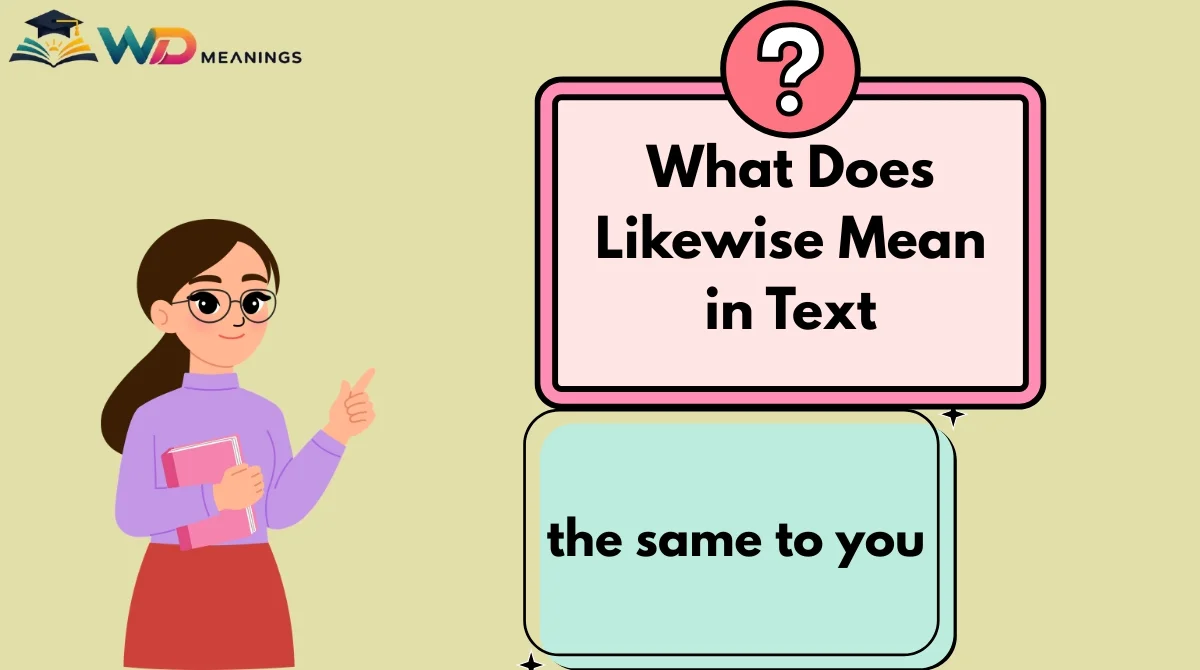
So, what does likewise mean in text? In most cases, it means “same to you,” “me too,” or “I feel the same way.”
People use it to return a greeting, compliment, wish, or feeling without repeating the entire sentence.
This guide explains the meaning of likewise in texting, where it came from, how people use it on different platforms, how to reply, and how to understand its tone in friendly, romantic, casual, or professional conversations.
Quick Answer
Likewise in text means “the same to you” or “I feel the same way.” People usually use it to return a message, compliment, greeting, or good wish. For example, if someone says “Have a great day,” replying “Likewise” means “I hope you have a great day too.”
What Does Likewise Mean in Text?
The word likewise means “in the same way,” “similarly,” or “also.” In texting, it is most commonly used as a short way to return the same feeling, action, or statement to another person.
Unlike many modern texting abbreviations, likewise is not an acronym or shortened form. It is a complete English word that has simply become popular as a quick digital response.
Simple Definition
When someone says “likewise” in a text message, they usually mean:
- “Same here.”
- “Me too.”
- “I feel the same.”
- “Right back at you.”
- “The same applies to you.”
Pronunciation
Likewise is pronounced:
LIKE-wise
/ˈlaɪk.waɪz/
The first part sounds like “like,” and the second part sounds like “wise.”
Tone and Emotional Meaning
The emotional tone of “likewise” depends on the conversation.
It can sound:
- Friendly: “Have a good weekend!” → “Likewise!”
- Polite: “Nice meeting you.” → “Likewise.”
- Romantic: “I miss you.” → “Likewise ❤️”
- Professional: “It was great working with you.” → “Likewise.”
However, by itself, “likewise” can sometimes feel slightly formal compared with casual phrases like “same” or “you too.”
Text Example
Person 1:
“Hope you’re having an amazing day!”
Person 2:
“Likewise 😊”
Meaning: “I hope you’re having an amazing day too.”
Origin and Background
The word likewise has been part of the English language for centuries. It comes from the combination of two older English words: “like” and “wise,” where “wise” historically meant “way” or “manner.”
The original idea behind the word was “in a similar way.”
Over time, people began using “likewise” as a polite response to return a statement or feeling. Digital communication did not create the word, but texting and online messaging helped make it a convenient one-word reply.
Unlike modern slang terms, “likewise” is not tied to a specific app, generation, or internet trend. It works across many forms of communication because the meaning is already widely understood.
How Likewise Is Used in Text Conversations
People use “likewise” in several everyday situations. The meaning usually comes from the message before it.
1. Returning Greetings
One of the most common uses is replying to a greeting or good wish.
Example:
A: “Good morning! Hope you have a productive day.”
B: “Likewise!”
Meaning: “Good morning, and I hope you have a productive day too.”
2. Agreeing With Someone’s Feelings
Likewise can show that you share the same emotion.
Example:
A: “I’m really excited for the trip.”
B: “Likewise! I can’t wait.”
Meaning: “I’m excited too.”
3. Responding to Compliments
It can politely return a compliment.
Example:
A: “You’re such a kind person.”
B: “Likewise 😊”
Meaning: “You’re kind too.”
4. Romantic Conversations
In romantic chats, likewise can show shared feelings.
Example:
A: “I love talking with you.”
B: “Likewise ❤️”
Meaning: “I love talking with you too.”
The romantic meaning comes from the surrounding conversation, not the word itself.
5. Humorous or Casual Use
Friends may use likewise in a playful way because it sounds slightly formal.
Example:
A: “May your coffee be strong today.”
B: “Likewise 😂”
The humor comes from using a formal-sounding word in a casual situation.
6. Sarcastic Use
Although uncommon, someone may use “likewise” sarcastically depending on the conversation.
Example:
A: “You’re impossible sometimes.”
B: “Likewise.”
This could mean “You are impossible too.”
The tone depends heavily on the relationship and previous messages.
What Does Likewise Mean on Different Platforms?
The meaning of likewise usually stays the same across platforms. The main difference is the style of communication.
On WhatsApp, “likewise” is often used in personal conversations to return wishes, greetings, or emotions.
Example:
“Enjoy your holiday!”
“Likewise 😊”
It may sound a little more polite than casual alternatives like “you too.”
Snapchat
On Snapchat, users often prefer shorter slang, but “likewise” may appear when someone wants to sound playful, polite, or slightly mature.
Example:
“Have fun tonight!”
“Likewise 😎”
Instagram messages may include “likewise” when responding to compliments or friendly comments.
Example:
“You always have the best photos.”
“Likewise ❤️”
TikTok
TikTok conversations usually use more casual language, so “same,” “fr,” or “me too” may be more common. However, “likewise” still works when someone wants to politely return a comment.
Because Facebook has a wider age range of users, “likewise” is common among adults replying to greetings, congratulations, and supportive messages.
Discord
On Discord, “likewise” may appear in gaming communities, group chats, or casual conversations. It can sound slightly formal compared with typical gamer slang.
Dating Apps
On dating apps, “likewise” can show shared interest.
Example:
A: “I love travelling and trying new food.”
B: “Likewise!”
Meaning: “I enjoy those things too.”
The surrounding messages determine whether it sounds friendly or romantic.
What Does Likewise Mean From a Girl or Guy?
The word likewise does not have a different meaning depending on whether a girl or guy uses it.
The important factors are:
- The relationship between both people
- The previous message
- Emojis
- Punctuation
- Conversation style
Example: Friendly Meaning
A: “Have a great weekend!”
B: “Likewise!”
This is simply polite.
Example: Romantic Meaning
A: “I really enjoy spending time with you ❤️”
B: “Likewise ❤️”
Here, it suggests shared romantic interest because of the emotional context.
Example: Short or Distant Meaning
A: “I had fun yesterday.”
B: “Likewise.”
This could feel polite but slightly less enthusiastic, especially without emojis or extra words.
A single word rarely reveals someone’s feelings. Look at the full conversation.
Other Possible Meanings of Likewise
The most common meaning in texting is “same to you.” However, the word can have broader meanings in English.
| Meaning | Context | Example |
|---|---|---|
| Same to you | Texting and conversation | “Have a nice day.” “Likewise.” |
| In the same way | General English writing | “The first method worked; likewise, the second method succeeded.” |
| Similarly | Formal explanations | “The two teams performed likewise.” |
In text messages, the “same to you” meaning is by far the most common.
How to Respond to Likewise
Your reply depends on the situation.
Casual Reply
“Same 😊”
Example:
A: “I’m tired today.”
B: “Likewise.”
A: “Hopefully tomorrow is better!”
Friendly Reply
“Glad we agree!”
Funny Reply
“Copy-paste feelings activated 😂”
Romantic Reply
“I was hoping you’d say that ❤️”
Confused Reply
If you are unsure:
“Likewise to what? 😅”
Professional Reply
“Thank you, I appreciate that.”
Similar Texting Terms and Differences
| Term | Meaning | Key Difference |
|---|---|---|
| Same | I agree or feel the same | More casual than likewise |
| You too | Returning a wish | Usually used for greetings |
| Me too | Sharing the same experience | Focuses on the speaker |
| Same here | Similar feeling or situation | More conversational |
| Ditto | The same as what was said | More playful or informal |
Common Misunderstandings
Although “likewise” is simple, people sometimes misunderstand its tone.
1. Thinking It Means Strong Agreement
“Likewise” usually means similarity, but it does not always show deep emotion.
Example:
“I love you.”
“Likewise.”
This could mean “I love you too,” but some people may find it less warm than a direct reply.
2. Confusing It With “Like”
Likewise does not mean “like this” or “similar-looking.”
It means “in the same way.”
3. Assuming It Is Always Formal
The word can sound polite, but people use it casually too.
Adding emojis can make it warmer:
“Likewise 😊”
4. Forgetting Context
A single word reply can feel different depending on the conversation.
“Likewise!” feels more enthusiastic than:
“Likewise.”
Is Likewise Appropriate or Safe to Use?
Yes. Likewise is a polite and safe word to use in most conversations.
It is:
- Not offensive
- Not rude
- Not inappropriate
- Not a slang term with hidden meanings
Workplace Use
“Likewise” is acceptable in professional communication.
Example:
“It was great meeting you.”
“Likewise. I enjoyed our conversation.”
However, in very formal situations, a complete sentence may sound better.
Personal Conversations
Among friends, family, or romantic partners, it is completely normal. Some people may prefer warmer phrases like:
- “You too ❤️”
- “Same here”
- “I feel the same”
because “likewise” can occasionally sound a little reserved.
Examples of Likewise in Text
Example 1: Greeting
A: Good morning! Have a wonderful day.
B: Likewise 😊
Example 2: Friendship
A: I always enjoy our conversations.
B: Likewise! They’re always fun.
Example 3: Romantic
A: I miss you.
B: Likewise ❤️
Example 4: Work
A: It was great collaborating with you.
B: Likewise. Thanks for everything.
Example 5: Casual
A: I’m ready for the weekend.
B: Likewise 😂
Example 6: Compliment
A: You’re really talented.
B: Likewise!
Example 7: Travel
A: Enjoy your vacation!
B: Likewise, have fun too.
Example 8: Funny
A: May your internet connection survive today.
B: Likewise 😂
Example 9: Agreement
A: I think this movie is underrated.
B: Likewise. More people should watch it.
Example 10: Support
A: I’m proud of you.
B: Likewise. Keep going!
Example 11: Friendly Ending
A: Take care!
B: Likewise, see you soon.
Example 12: Short Reply
A: Hope everything goes well.
B: Likewise.
Frequently Asked Questions
What does likewise mean in a text message?
Likewise in a text message usually means “same to you” or “I feel the same way.” People use it to return greetings, wishes, compliments, or emotions without repeating the entire sentence.
Is likewise a romantic word?
Likewise can have a romantic meaning, but the word itself is not romantic. The romantic feeling comes from the conversation around it. For example, “I miss you” followed by “Likewise ❤️” may sound affectionate.
Is likewise rude in texting?
No, likewise is not rude. However, a short “likewise” without an emoji or extra words may sometimes feel less warm than “you too” or “same here,” depending on the situation.
What is another word for likewise?
Common alternatives include “same,” “you too,” “me too,” “same here,” and “ditto.” The best choice depends on whether the conversation is casual, professional, or emotional.
Can I use likewise in professional messages?
Yes. Likewise is commonly used in workplace communication. It is a polite way to return appreciation, greetings, or positive comments.
Why do people say likewise instead of you too?
People may choose “likewise” because it sounds more polished, concise, or slightly formal. It allows them to return the same message without repeating the exact words.
Conclusion
So, what does likewise mean in text? It usually means “same to you,” “me too,” or “I feel the same way.”
It is a simple, polite word used to return greetings, compliments, emotions, and good wishes.
The meaning of likewise depends less on the word itself and more on the conversation, relationship, punctuation, and emojis around it.
In friendly chats, it can feel warm and positive. In professional messages, it sounds respectful. When you understand the context, “likewise” is an easy and useful expression for everyday communication.

Hamz Ellis is a content writer at WD Meanings, specializing in internet slang, texting abbreviations, and digital communication. He creates clear, well-researched, and easy-to-understand content to help readers quickly find the meanings of modern online terms.