Texting abbreviations can sometimes make conversations confusing, especially if you come across one you’ve never seen before.
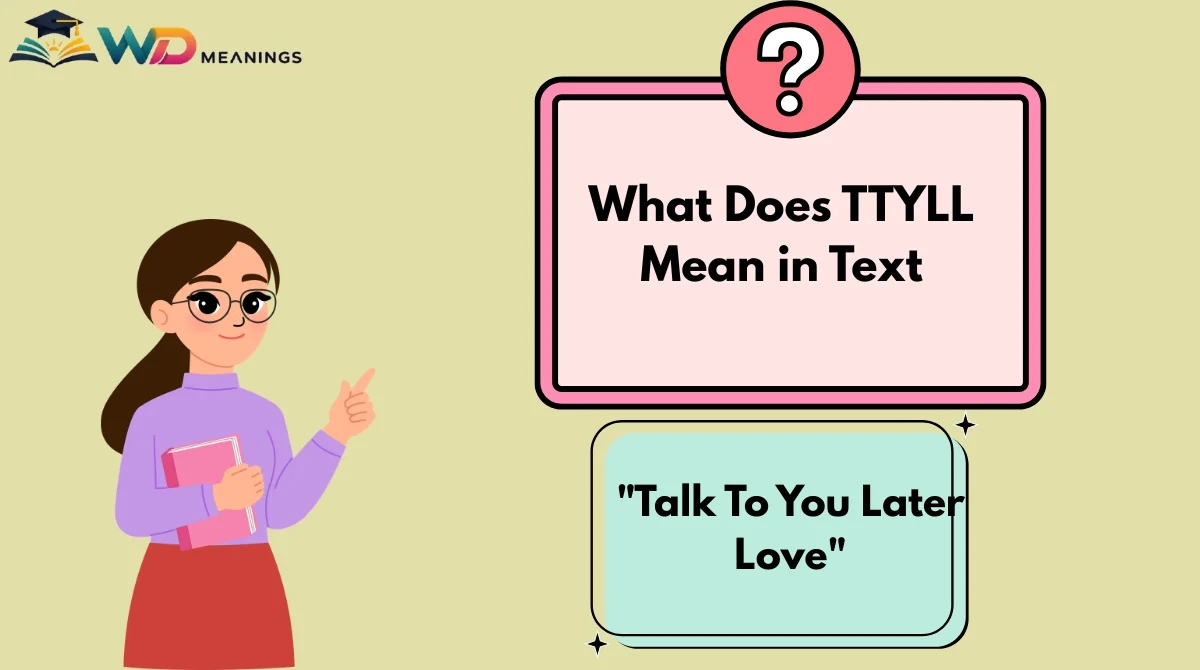
If you’ve been wondering what does TTYLL mean in text, the good news is that it’s a friendly and informal abbreviation used in everyday online conversations.
You’ll often see it in text messages, WhatsApp chats, Snapchat conversations, Instagram DMs, and other messaging apps when someone is ending a conversation but expects to talk again later.
Understanding the tone and context behind TTYLL can help you avoid misunderstandings and respond naturally.
This guide explains exactly what TTYLL means, how people use it, whether it has different meanings on various social media platforms, how to reply, common mistakes people make, and plenty of realistic examples.
Quick Answer
TTYLL means “Talk To You Later Love.” It’s an informal texting abbreviation used to end a conversation warmly and affectionately. The word “love” doesn’t always imply romance—it can simply express friendliness or closeness between family members, friends, or romantic partners. The exact meaning depends on the relationship and the conversation’s context.
What Does TTYLL Mean in Text?
In texting, TTYLL stands for “Talk To You Later Love.”
People use it when they’re about to leave a conversation but want to end it on a warm, caring, or affectionate note.
Simple Definition
TTYLL is a casual way of saying goodbye while letting the other person know you’ll chat again later.
Pronunciation
Most people either:
- Say each letter individually: “T-T-Y-L-L”
- Or simply read it as the full phrase: “Talk to you later, love.”
Emotional Tone
TTYLL usually sounds:
- Friendly
- Caring
- Affectionate
- Warm
- Informal
Its emotional meaning depends on who sends it.
For example:
Emma: I have to head into work now.
Lucas: No worries. TTYLL ❤️
Here, Lucas is simply ending the conversation kindly.
Origin and Background
TTYLL appears to be a variation of the much older texting abbreviation TTYL, which stands for “Talk To You Later.”
As digital communication evolved, people started adding an extra L to represent “Love.” This created a warmer version that feels more personal than the original abbreviation.
Unlike some internet slang with clearly documented origins, there isn’t one confirmed moment or platform where TTYLL first appeared. Instead, it seems to have developed naturally as people personalised common texting shortcuts.
Today, it’s most commonly seen in private conversations rather than public social media posts.
How TTYLL Is Used in Text Conversations
TTYLL is mainly used when ending a conversation in a positive way.
Friendly Use
Friend 1: I’m off to class.
Friend 2: Good luck! TTYLL 😊
Romantic Use
Alex: Sweet dreams.
Jamie: You too. TTYLL ❤️
Family Use
Mum: Dinner’s ready.
Daughter: I’ll be there in five. TTYLL ❤️
Caring Goodbye
Friend: Hope your meeting goes well.
You: Thanks! TTYLL.
Humorous Use
Friend: Don’t forget our movie night.
You: Never! TTYLL 😂
Can It Be Sarcastic?
Not usually.
TTYLL naturally sounds warm and affectionate. It would only appear sarcastic if the surrounding conversation was already clearly sarcastic or tense.
What TTYLL Means on Different Platforms
The meaning of TTYLL stays largely consistent across messaging apps and social media.
TTYLL commonly ends chats between:
- Friends
- Family
- Couples
It usually expresses warmth before signing off.
Snapchat
On Snapchat, TTYLL often accompanies quick daily conversations before someone logs off or becomes busy.
In Instagram direct messages, TTYLL works the same way as in texting.
People often pair it with emojis like:
- ❤️
- 😊
- 🥰
- 👋
TikTok
TTYLL is less common in public comments but occasionally appears in direct messages between users.
Facebook Messenger users sometimes use TTYLL when ending longer conversations with friends or relatives.
Discord
Discord users tend to prefer shorter abbreviations like TTYL, but TTYLL still appears in private chats between close friends.
Dating Apps
On dating apps, TTYLL can feel slightly more affectionate because of the added “love.”
However, it doesn’t automatically indicate a serious romantic relationship. Some people simply use “love” as part of their everyday vocabulary.
What Does TTYLL Mean From a Girl or Guy?
The meaning doesn’t change based on whether a girl or guy sends it.
Instead, consider these factors:
Your Relationship
A romantic partner using TTYLL usually expresses affection.
A close friend may simply be ending the conversation kindly.
Tone
Adding emojis like ❤️🥰 generally increases the affectionate tone.
Without emojis, it often sounds simply friendly.
Conversation Context
Compare these examples:
Partner:
“I have to sleep now. TTYLL ❤️”
This clearly feels romantic.
Friend:
“I’ve got football practice. TTYLL!”
This simply means they’ll talk later.
Personal Communication Style
Some people regularly call everyone “love,” while others reserve it only for close relationships.
Always interpret TTYLL within the person’s normal texting habits rather than assuming hidden meaning.
Other Possible Meanings
Although “Talk To You Later Love” is by far the most common meaning in texting, abbreviations can occasionally represent different phrases in specialised communities.
| Meaning | Context | Example |
|---|---|---|
| Talk To You Later Love | Texting, social media, messaging | “I’m heading out now. TTYLL ❤️” |
| Talk To You Later Lovely | Casual nickname between close friends | “Have fun! TTYLL!” |
The first meaning is overwhelmingly the one most people intend in everyday text conversations.
How to Respond to TTYLL
Your reply depends on your relationship and the tone of the conversation.
Casual
“Talk later!”
Friendly
“Sounds good. Have a great day!”
Affectionate
“Can’t wait. TTYLL ❤️”
Funny
“Only if you remember me! 😂”
Romantic
“Miss you already ❤️”
Polite
“Take care. Speak soon.”
If You’re Confused
“What does TTYLL mean?”
Most people will happily explain it.
Example Conversation
Chris: Got to run. TTYLL ❤️
Taylor: Sure! Have fun. Talk later.
Similar Texting Terms and Differences
| Term | Meaning | Key Difference |
|---|---|---|
| TTYL | Talk To You Later | Standard version without added affection. |
| BRB | Be Right Back | Temporary pause, not ending the conversation. |
| GTG | Got To Go | Indicates someone has to leave immediately. |
| CU | See You | Casual goodbye without promising another chat. |
| BBL | Be Back Later | Suggests returning later rather than simply ending the conversation. |
Common Misunderstandings
One common mistake is assuming every L means “love” in a romantic sense.
In many English-speaking countries, especially the UK and Australia, people casually call friends or family members “love.” Because of this, TTYLL often carries no romantic intention.
Another misunderstanding involves confusing TTYLL with TTYL.
Both essentially mean the conversation will continue later, but TTYLL adds a warmer or more affectionate feeling.
Capitalisation doesn’t matter.
These versions all mean the same thing:
- ttyll
- TTYLL
- Ttyll
Occasionally, someone may accidentally type an extra letter or misspell the abbreviation, but the intended meaning is usually obvious from the conversation.
Is TTYLL Appropriate or Safe to Use?
Yes.
TTYLL is generally considered:
- Polite
- Friendly
- Informal
- Safe
- Non-offensive
It’s perfectly suitable for:
- Friends
- Family
- Romantic partners
- Casual acquaintances
However, because it contains an affectionate element, it may feel overly personal in formal workplace communication or professional emails.
In business settings, simply writing “Talk to you later” or “Speak soon” is usually more appropriate.
Examples of TTYLL in Text
- “I’m about to board my flight. TTYLL!”
- “Dinner’s ready, so I’ve got to go. TTYLL ❤️”
- “Hope your exam goes well. TTYLL.”
- “I’ll message you after work. TTYLL 😊”
- “Have an amazing weekend! TTYLL.”
- “Need to finish this assignment. TTYLL.”
- “Sweet dreams! TTYLL ❤️”
- “I’ll call once I’m home. TTYLL.”
- “Good luck with your interview. TTYLL!”
- “Thanks for chatting tonight. TTYLL 🥰”
- “Catch you after football practice. TTYLL.”
- “I’m logging off for the evening. TTYLL!”
Frequently Asked Questions
Does TTYLL always mean “Talk To You Later Love”?
Almost always. In everyday texting, TTYLL is widely understood as “Talk To You Later Love.” While someone could technically use it differently, the texting meaning is by far the most common and the one most people expect.
Is TTYLL romantic?
Not necessarily. It can be romantic between partners, but many people use “love” as a friendly or affectionate term for close friends or family members. The relationship and conversation provide the real meaning.
Is TTYLL different from TTYL?
Yes, slightly. TTYL simply means “Talk To You Later.” TTYLL adds an affectionate touch by including “love,” making the goodbye feel warmer and more personal.
Can I use TTYLL with friends?
Absolutely. Many people send TTYLL to close friends, especially if they naturally use affectionate language. Just consider whether it matches your usual communication style and the other person’s comfort level.
Is TTYLL common on Snapchat and WhatsApp?
Yes. TTYLL is most often found in private messaging apps like WhatsApp, Snapchat, Instagram DMs, Facebook Messenger, and standard text messages rather than in public posts.
Should I use TTYLL at work?
Usually not. Because it sounds affectionate, TTYLL isn’t ideal for professional communication. In workplace conversations, phrases like “Talk to you later,” “Speak soon,” or “Have a good day” are generally more appropriate.
Conclusion
If you’ve been searching what does TTYLL mean in text, the answer is straightforward: it most commonly stands for “Talk To You Later Love.”
It’s a friendly, informal way to end a conversation while showing warmth and letting someone know you’ll chat again soon.
Although it can sound romantic between partners, it’s also widely used among friends and family.
As with most texting abbreviations, the surrounding conversation, your relationship with the sender, and their usual communication style provide the best clues for interpreting its exact tone.

Hamz Ellis is a content writer at WD Meanings, specializing in internet slang, texting abbreviations, and digital communication. He creates clear, well-researched, and easy-to-understand content to help readers quickly find the meanings of modern online terms.