Texting abbreviations can be confusing because many of them have more than one meaning.
If you’ve received “FI” in a message and aren’t sure what the sender meant, the answer depends on the conversation.
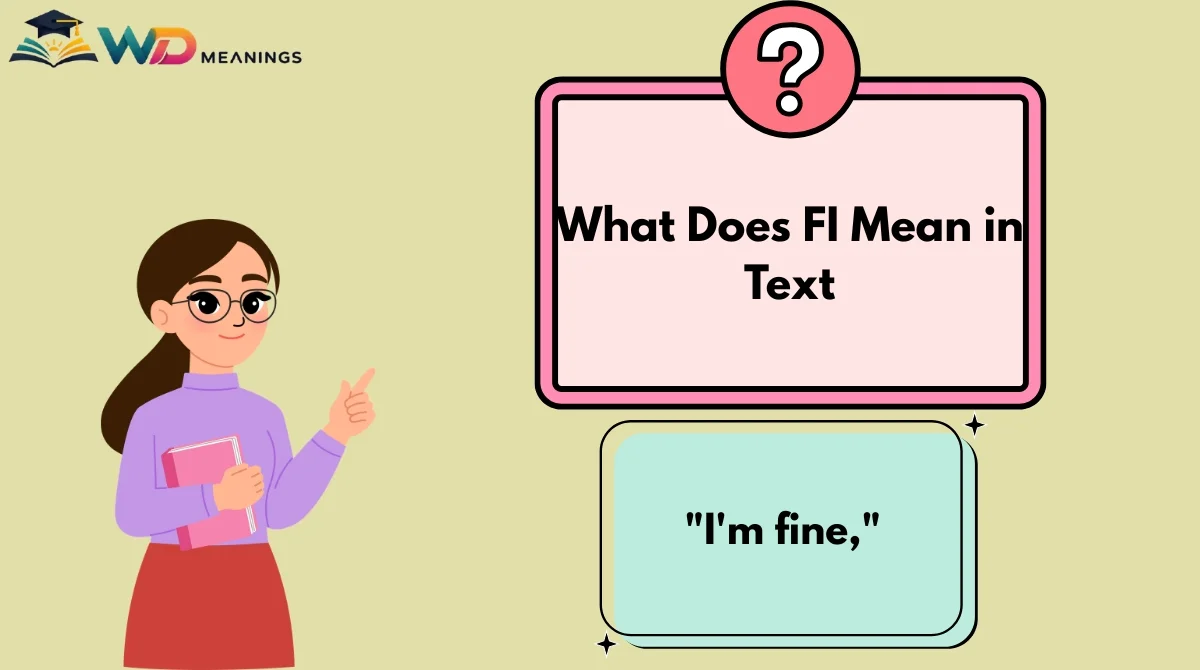
In most casual texting, FI usually means “Fine.”
It’s often used as a quick, shortened response instead of typing the full word.
However, in some conversations, FI can also stand for “Fiancé” or “Fiancée,” “Financial Independence,” or other context-specific meanings.
Understanding what does FI mean in text becomes much easier when you look at the topic of the conversation, the relationship between the people chatting, and any surrounding messages.
This guide explains the most common meaning, other genuine interpretations, examples from real conversations, and how to respond naturally when someone sends “FI.”
Quick Answer
FI most commonly means “Fine” in text messages. People use it as a brief reply to show they’re okay or to agree with something. Depending on the context, FI may also refer to fiancé/fiancée or financial independence, but these meanings are much less common in everyday texting.
What Does FI Mean in Text?
The most common texting meaning of FI is “Fine.”
Rather than typing the complete word, some people simply shorten it to “FI,” especially in fast conversations.
Full Form
FI = Fine (most common in casual texting)
Other possible expansions depend entirely on the conversation.
Definition
When someone texts “FI,” they’re usually saying:
- They’re okay.
- They agree.
- They accept something.
- They don’t want to continue discussing the topic.
Pronunciation
People generally read it as:
- “Fine” when used as the abbreviation.
- Occasionally letter by letter (“F-I”) if discussing initials or another meaning.
Tone and Emotional Meaning
The tone changes depending on context.
It may sound:
- Neutral
- Friendly
- Relaxed
- Slightly annoyed
- Passive-aggressive (if used as a very short reply)
A one-word answer like “FI” can sometimes feel colder than writing “I’m fine,” so it’s important to consider the rest of the conversation.
Example
Alex: Are you okay after work?
Jordan: FI, just tired.
Here, “FI” simply means “Fine.”
Origin and Background
Unlike many well-known internet abbreviations, FI doesn’t have one universally recognised texting origin.
It appears to have developed naturally as another shortcut used during quick mobile conversations, where users often shorten common words to save time.
Outside texting, the letters FI have long represented many different terms in business, technology, finance, and education. Because of this, context has always been important when interpreting the abbreviation.
Rather than being tied to one specific website or app, FI is simply another example of how people shorten everyday language in digital communication.
How FI Is Used in Text Conversations
The meaning of FI becomes clear once you see how people actually use it.
Casual Conversation
Emma: Everything good?
Noah: FI now. Thanks.
Friendly Reply
Friend: Did your exam go okay?
You: FI! I think I passed.
Slight Frustration
Parent: Clean your room first.
Teen: FI…
The short reply may suggest reluctant agreement.
Ending a Discussion
Person A: Can we just move on?
Person B: FI.
This often means the conversation is ending rather than expressing excitement.
Romantic Conversation
Partner: Are we okay?
Partner: FI ❤️
The heart emoji changes the tone completely, making the reply feel warm rather than distant.
What FI Means on Different Platforms
Although the platform changes, the meaning usually doesn’t.
| Platform | Typical Meaning |
|---|---|
| Fine or another context-based meaning | |
| Snapchat | Usually “Fine” in casual chats |
| Fine in DMs and comments | |
| TikTok | Rarely used; meaning depends on context |
| Facebook Messenger | Fine or other conversation-specific meaning |
| Discord | Could mean Fine or another abbreviation depending on the community |
| Dating Apps | Usually Fine or occasionally fiancé/fiancée if discussing relationships |
Most platforms don’t assign a unique meaning to FI. Instead, readers rely on surrounding messages.
What Does FI Mean From a Girl or Guy?
The meaning of FI generally does not change based on gender.
Instead, interpretation depends on:
- The relationship between the people
- The conversation topic
- The tone
- Emojis
- Punctuation
- Previous messages
For example:
“FI 😊”
Sounds warm and reassuring.
“FI.”
May feel more serious or final.
“FI!!!”
Can sound enthusiastic or playful.
Someone close to you might use “FI” casually, while a short reply during an argument may suggest irritation or emotional distance. Context matters far more than who sends it.
Other Possible Meanings
Although “Fine” is one of the most common texting meanings, FI has several legitimate alternative meanings.
| Meaning | Context | Example |
|---|---|---|
| Fine (Most common in texting) | Everyday conversation | “I’m FI now.” |
| Fiancé / Fiancée | Relationships | “My FI is travelling next week.” |
| Financial Independence | Personal finance | “I’m working toward FI before 45.” |
| Finland (FI) | Country code | “The package came from FI.” |
| Family Income | Finance or forms | “Enter your FI here.” |
Always use the surrounding conversation to determine which meaning fits best.
How to Respond to FI
Here are natural responses for different situations.
Casual
Them: FI.
You: Glad to hear it!
Friendly
Them: FI now.
You: Awesome! Hope the rest of your day goes well.
Funny
Them: FI 😂
You: I’ll take that as a victory!
Romantic
Them: FI ❤️
You: Good. I was worried about you.
Confused
Them: FI.
You: Do you mean you’re fine?
Serious
Them: FI.
You: Just checking—you really okay?
If someone suddenly becomes unusually brief after a disagreement, asking a gentle follow-up question is often better than making assumptions.
Similar Texting Terms and Differences
| Term | Meaning | Key Difference |
|---|---|---|
| OK | Everything is okay | More universally recognised |
| NM | Not much | Answers “What’s up?” rather than expressing how someone feels |
| IDC | I don’t care | Can sound dismissive; unlike FI |
| IMO | In my opinion | Used to introduce an opinion |
| TBH | To be honest | Signals honesty before a statement |
These abbreviations serve different purposes, even though they all appear frequently in online conversations.
Common Misunderstandings
One of the biggest mistakes is assuming every use of FI means the same thing.
Some common misunderstandings include:
- Thinking it always means fiancé or fiancée.
- Assuming it always means financial independence.
- Reading a short “FI” as anger when the sender simply prefers brief messages.
- Missing emotional clues provided by emojis or punctuation.
Capitalisation usually doesn’t matter.
These forms are commonly understood:
- FI
- Fi
- fi
However, writing style varies from person to person.
When uncertain, it’s perfectly acceptable to ask politely:
“What do you mean by FI?”
Is FI Appropriate or Safe to Use?
Yes. FI is generally a safe and informal abbreviation.
It is:
- Not offensive
- Not considered rude by itself
- Suitable for casual conversations
- Common among friends and family
However, because it can sound abrupt, using the full phrase “I’m fine” may feel warmer in professional or sensitive conversations.
If someone repeatedly answers only with “FI” after an emotional discussion, avoid jumping to conclusions. A kind follow-up such as “Are you sure you’re okay?” can help clarify how they’re feeling.
Examples of FI in Text
Here are several realistic examples.
- FI, thanks for asking.
- Everything’s FI now.
- FI 😊 Don’t worry about me.
- I’m FI. Just busy today.
- FI… let’s talk tomorrow.
- The project is FI now after the edits.
- FI ❤️ Thanks for checking in.
- Yeah, FI with me.
- I’m FI, honestly just exhausted.
- FI! See you later tonight.
- We’re FI now after talking everything through.
- FI, but I could definitely use some sleep.
These examples show how tone changes naturally depending on punctuation, emojis, and the surrounding message.
Frequently Asked Questions
Is FI a common texting abbreviation?
It exists in texting but is less common than abbreviations like OK, LOL, BRB, or TBH. Many people still prefer typing the full word “fine,” while others shorten it to FI during quick conversations.
Does FI always mean “Fine”?
No. While “Fine” is one of the most common meanings in casual texting, FI can also refer to fiancé, fiancée, financial independence, Finland, or another phrase depending on the conversation.
Can FI sound rude?
Not by itself. However, because it’s very short, it may seem cold or passive-aggressive if someone expected a longer response. The surrounding conversation usually reveals the sender’s true tone.
Should I reply if someone only texts “FI”?
Yes. If the conversation is casual, a simple reply works well. If you’re discussing something emotional, it’s worth checking whether they genuinely mean they’re okay.
Is FI used on Snapchat and Instagram?
Yes. When it appears in direct messages on Snapchat, Instagram, WhatsApp, or Facebook Messenger, it usually carries the same meaning as in regular texting. The platform rarely changes its interpretation.
How can I tell which meaning of FI is correct?
Look at the topic of the conversation. If you’re discussing feelings, FI probably means “Fine.” If the discussion is about relationships, money, or travel, another meaning may fit better.
Conclusion
The answer to what does FI mean in text depends on context, but in everyday conversations it most commonly means “Fine.”
It’s a quick, informal way to reassure someone, agree with a statement, or end a discussion.
In other situations, FI can stand for terms such as fiancé/fiancée or financial independence, so always consider the surrounding conversation before interpreting it.
When you’re unsure, a polite follow-up question is the easiest way to avoid misunderstandings.

Hamz Ellis is a content writer at WD Meanings, specializing in internet slang, texting abbreviations, and digital communication. He creates clear, well-researched, and easy-to-understand content to help readers quickly find the meanings of modern online terms.