Have you received a message saying “IDNC” and wondered what it means? You’re not alone.
Texting abbreviations evolve quickly, and some are far less common than familiar shortcuts like “IDK” or “IMO.” That can make them confusing, especially when the meaning depends on the conversation.
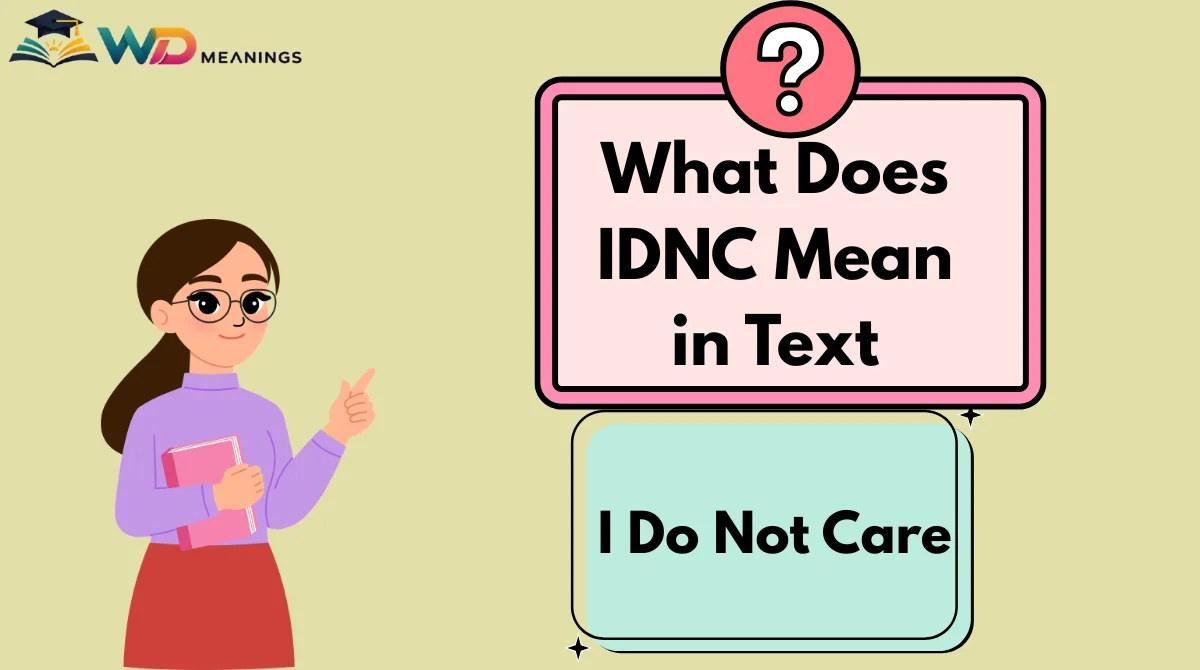
If you’re searching for what does IDNC mean in text, the most common interpretation is “I Do Not Care.
“ People use it to show indifference, a lack of preference, or sometimes frustration.
However, the tone can range from relaxed and friendly to blunt or even dismissive, depending on who sends it and how it’s written.
This guide explains the meaning of IDNC, where you might see it, how people use it across messaging platforms, how to respond naturally, and the situations where it may be misunderstood.
Quick Answer
IDNC most commonly stands for “I Do Not Care” in text messages and online chats. It usually means the sender has no preference or isn’t emotionally invested in the topic. Depending on the context and wording, it can sound casual, neutral, annoyed, or dismissive, so it’s important to consider the surrounding conversation before interpreting its tone.
What Does IDNC Mean in Text?
In texting, IDNC usually means “I Do Not Care.”
People use it when they want to express that they’re fine with any option, don’t have a strong opinion, or no longer wish to discuss a topic. Sometimes it’s simply another way of saying, “It’s up to you.”
Full Form
IDNC = I Do Not Care
Pronunciation
Since it’s an abbreviation, people normally read each letter individually:
“Eye-Dee-En-See.”
When speaking, they usually say the full phrase instead of the letters.
Simple Definition
IDNC means the sender isn’t concerned about the outcome or doesn’t mind which choice is made.
Emotional Tone
The meaning changes with context.
It can sound:
- Neutral
- Relaxed
- Easy-going
- Slightly annoyed
- Frustrated
- Dismissive
- Sarcastic (less commonly)
Example
Alex: Pizza or burgers tonight?
Jordan: IDNC. You choose.
Here, IDNC simply means Jordan has no preference.
Origin and Background
Unlike many internet abbreviations with well-documented origins, IDNC doesn’t have a clearly documented starting point. It appears to have developed naturally as people shortened the common phrase “I do not care” while texting and chatting online.
Because the phrase itself is simple and frequently used in everyday conversation, the abbreviation occasionally appears in messaging apps, gaming chats, forums, and social media comments. However, it is less common than abbreviations like IDK (“I don’t know”) or IDC (“I don’t care”).
In fact, many people use IDC instead of IDNC, since both communicate nearly the same idea.
How IDNC Is Used in Text Conversations
The exact meaning depends on the situation and relationship between the people talking.
Casual Conversations
Friends often use IDNC when they’re happy with any decision.
Emma: Which movie should we watch?
Jake: IDNC. Pick your favourite.
The message feels relaxed and cooperative.
Friendly Conversations
Someone might use IDNC to avoid making unnecessary decisions.
Taylor: Blue shirt or black shirt?
Chris: IDNC—they both look good.
Here, the abbreviation isn’t rude at all.
Romantic Conversations
Between partners, the tone depends heavily on context.
Sam: Want Italian or Mexican tonight?
Morgan: IDNC ❤️
The heart emoji softens the message and makes it sound affectionate.
Without an emoji:
Morgan: IDNC.
This version may sound colder, even if that wasn’t the intention.
Humorous Use
Sometimes people exaggerate their lack of preference.
Friend: Beach or mountains?
You: IDNC. As long as there’s food.
The humour makes the response feel friendly.
Negative or Frustrated Use
Sometimes IDNC signals irritation.
Person A: Keep arguing if you want.
Person B: IDNC anymore.
Here, the sender is expressing emotional exhaustion rather than genuine indifference.
What IDNC Means on Different Platforms
The meaning of IDNC generally stays consistent across platforms. The surrounding conversation matters much more than the app itself.
Usually means the sender has no preference or doesn’t wish to continue discussing something.
Snapchat
Often appears in quick chats where someone is being casual or uninterested.
You may see IDNC in direct messages or comments expressing indifference toward a topic.
TikTok
Occasionally used in comment sections when users don’t have a strong opinion or want to dismiss a debate.
Appears in Messenger chats or comments, though many people simply type the full phrase instead.
Discord
Gamers and online communities sometimes use IDNC during discussions or while making group decisions.
Dating Apps
On dating platforms, context is especially important.
If someone replies with “IDNC” about choosing a restaurant, it probably means they’re flexible.
If they repeatedly answer important questions with “IDNC,” it may come across as disinterested or emotionally distant.
What Does IDNC Mean From a Girl or Guy?
The abbreviation itself doesn’t change meaning based on gender.
Instead, interpretation depends on:
- Relationship
- Conversation topic
- Previous messages
- Emojis
- Punctuation
- Overall tone
For example:
“IDNC 😊”
Feels relaxed and friendly.
“IDNC…”
May suggest disappointment or emotional distance.
“IDNC!!!”
Can sound irritated or impatient.
Instead of focusing on whether the sender is a girl or a guy, pay attention to how they’ve been communicating throughout the conversation.
Other Possible Meanings
Although “I Do Not Care” is the most common meaning in texting, abbreviations can occasionally have different meanings in specialised communities or organisations.
| Meaning | Context | Example |
|---|---|---|
| I Do Not Care | Texting, messaging, social media | “IDNC. You decide.” |
| Internal or organisation-specific acronym | Schools, workplaces, projects | “The IDNC meeting starts at 2 PM.” |
For everyday text conversations, “I Do Not Care” is almost always the intended meaning.
How to Respond to IDNC
Your reply should match the sender’s tone.
Casual Reply
“Okay, I’ll choose.”
Friendly Reply
“Sounds good. I’ll surprise you.”
Funny Reply
“Great! That makes my job easier.”
Romantic Reply
“I’ll pick something you’ll love.”
If You’re Unsure
“Do you really not mind, or do you have a favourite?”
If They Sound Upset
“Everything okay?”
If They Seem Frustrated
“We don’t have to decide right now if you’d rather wait.”
Example Conversation
Alex: IDNC.
Jamie: Okay, I’ll book the Italian restaurant.
Similar Texting Terms and Differences
| Term | Meaning | Key Difference |
|---|---|---|
| IDC | I Don’t Care | More common abbreviation than IDNC. |
| IDK | I Don’t Know | Expresses uncertainty rather than indifference. |
| IMO | In My Opinion | Shares a personal opinion instead of dismissing one. |
| NVM | Never Mind | Ends or drops the topic rather than showing no preference. |
| TBH | To Be Honest | Introduces an honest opinion rather than expressing indifference. |
Common Misunderstandings
One common mistake is confusing IDNC with IDC.
Since IDC is much more widely used, many readers assume IDNC is a typing error. In practice, both usually communicate nearly the same idea.
Another misunderstanding happens when people interpret every use of IDNC as rude.
Sometimes it simply means:
- “Either option is fine.”
- “I’m happy with whatever you decide.”
- “I don’t mind.”
Capitalisation usually doesn’t matter.
These versions all mean the same thing:
- IDNC
- idnc
- Idnc
The surrounding conversation provides the real clue to the sender’s intent.
Is IDNC Appropriate or Safe to Use?
IDNC is generally an informal texting abbreviation.
It’s appropriate for:
- Friends
- Family
- Casual group chats
- Gaming conversations
- Informal social media discussions
It may be less suitable for:
- Professional emails
- Business communication
- Academic writing
- Formal customer service messages
Because “I do not care” can sometimes sound dismissive, consider using a gentler alternative if you want to remain polite.
For example:
- “I’m happy with either option.”
- “I don’t have a preference.”
- “Whatever works best for you.”
These alternatives usually sound warmer than simply saying “IDNC.”
Examples of IDNC in Text
Here are some realistic examples showing different situations.
- “IDNC which café we visit.”
- “You can choose the movie. IDNC.”
- “Honestly, IDNC anymore.”
- “IDNC 😊 Whatever makes everyone happy.”
- “IDNC if we leave early.”
- “IDNC about the colour. Both look nice.”
- “IDNC. I’m just excited to hang out.”
- “IDNC what time we start tomorrow.”
- “If everyone’s okay with it, IDNC either.”
- “IDNC 😂 Just don’t make me cook.”
- “IDNC whether we drive or take the train.”
- “IDNC this time—you decide.”
These examples show how the same abbreviation can sound friendly, humorous, neutral, or frustrated depending on the wording and punctuation.
Frequently Asked Questions
Is IDNC the same as IDC?
Almost. Both usually mean “I don’t care.” IDC is much more common in texting, while IDNC is a less frequently used variation that expresses nearly the same idea.
Is IDNC rude?
Not necessarily. It can sound completely polite when someone genuinely has no preference. However, if used during an argument or without any friendly context, it may seem dismissive or uncaring.
Does IDNC always mean “I Do Not Care”?
In everyday texting, yes. While the letters could represent other organisation-specific phrases, “I Do Not Care” is by far the most common interpretation in personal messages.
Can I use IDNC in professional messages?
It’s better to avoid it. Professional communication is usually clearer and more courteous when you write the full sentence, such as “I don’t have a preference” or “Either option works for me.”
Is IDNC more common than IDC?
No. IDC is significantly more common across messaging apps and social media. Many people may never encounter IDNC because IDC is shorter and widely recognised.
How do I know whether IDNC is friendly or negative?
Look at the surrounding conversation. Emojis, punctuation, previous messages, and the topic all influence the tone. “IDNC 😊” usually feels relaxed, while “IDNC anymore.” may suggest frustration or emotional distance.
Conclusion
If you’ve been wondering what does IDNC mean in text, the answer is usually simple:
it stands for “I Do Not Care.” Most of the time, it expresses a lack of preference rather than hostility.
However, the tone can shift from friendly and flexible to blunt or frustrated depending on the context, punctuation, and relationship between the people chatting.
When you see IDNC, don’t judge the abbreviation alone—read the surrounding conversation to understand what the sender really means.

Hamz Ellis is a content writer at WD Meanings, specializing in internet slang, texting abbreviations, and digital communication. He creates clear, well-researched, and easy-to-understand content to help readers quickly find the meanings of modern online terms.